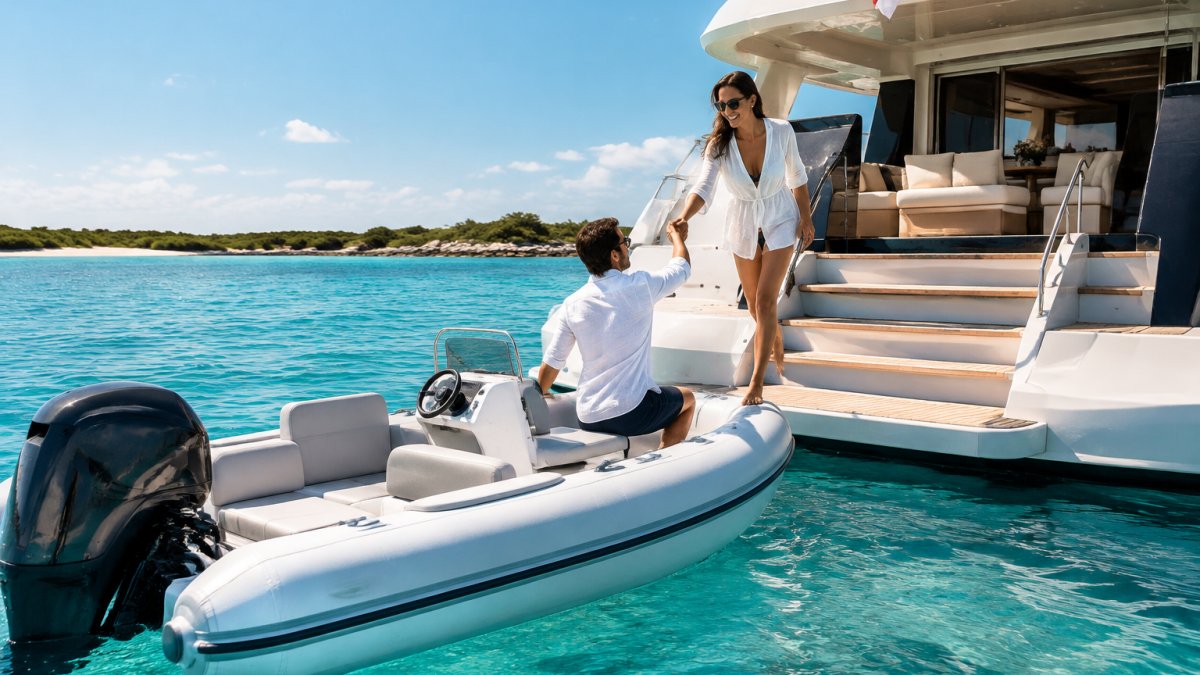
Does Tender Size Make or Break a Bahamas Yacht Charter?
Last Updated: November 4, 2026
Quick Summary
Tender size shapes your Bahamas yacht tender plan because shallow draft decides which sandbars, reefs and beach landings you can reach. Match the tender to the mother yacht's stowage, davit capacity and launch method, then confirm the captain approves the fit before you commit.
- Tender size is defined by length overall, beam, tube diameter and weight, not the model name.
- Shallow draft is the most useful specification for reaching the Great Bahama Bank's sandbars and reefs.
- Check stowage fit, davit capacity, launch method and route in that order before committing.
- Deck-loading versus towing shapes a Gulf Stream crossing to Bimini or the Berry Islands.
- Match the tender to the week's dominant activity, then confirm the yacht can carry it.
Table of Contents
- Bahamas Yacht Tender Size: What Actually Fits Your Charter
- How Tender Dimensions Are Measured
- Why a Shallow Draft Yacht Tender Opens Up the Bahamas
- Matching Tenders to Yachts: A Compatibility Guide
- Yacht Charter Water Toy Selection for Bahamas Conditions
- Water Activities by Destination: Exumas, Nassau and Bimini
- Tender Logistics, Transport and Compliance
- Planning Your Charter Around the Tender
- Frequently Asked Questions
Bahamas Yacht Tender Size: What Actually Fits Your Charter
The tender is the piece of equipment that decides how much of the Bahamas you actually touch. At YCN Yachts, we plan Bahamas charters around one question before anything else: what does the tender let you reach? A Bahamas yacht tender that matches the mother yacht and the anchorages on your route turns a good itinerary into a great one. Get it wrong and you spend the week looking at shallow water you cannot enter.
Tender size is not a numbers contest. Bigger is not better, and the fastest RIB is useless if the davit cannot launch it or the beach is too shallow to land on.
Below, we break down how tender dimensions work, which hulls suit which anchorages, and how to match a tender to the yacht you charter.
How Tender Dimensions Are Measured
Tender size is defined by length overall (LOA), beam, tube diameter and weight, not by the model name on the console. LOA runs bow to stern including the outboard; beam sets whether the tender fits the garage or sits on the hydraulic platform.
Three figures matter most when you match a tender to a yacht:
- LOA and beam against the garage opening, davit reach and deck footprint.
- Dry weight plus fuel against the davit or crane's safe working load.
- Horsepower and hull design against the job: flat-water shuttling, open-water crossings, or beach landings.
A common mistake is comparing tenders by length alone, since a wide-beam RIB and a narrow inflatable of the same LOA behave differently on a davit and at a beach.
Why a Shallow Draft Yacht Tender Opens Up the Bahamas
Shallow draft is the single most useful specification on a Bahamas charter. The Great Bahama Bank is vast and often knee-deep for miles, and the best sandbars, snorkel patches and beach landings sit in water a deep-keel yacht cannot enter.
A shallow draft yacht tender changes the day. It can slide over the bank where the mother yacht anchors off, land on a sandbar, and run snorkelers out to a reef without a long swim. Power catamarans draw little water and stay stable at anchor, which makes them a natural fit for shallow-bank routes.
If shallow-water access is central to your plan, our guide to Bahamas yacht charters for shallow water anchorages covers the specific banks and approaches worth building a route around.
Matching Tenders to Yachts: A Compatibility Guide
Tender-to-yacht compatibility comes down to four checks: stowage fit, davit or crane capacity, launch method, and the route you intend to run. Run them in that order and most mismatches surface before you commit.
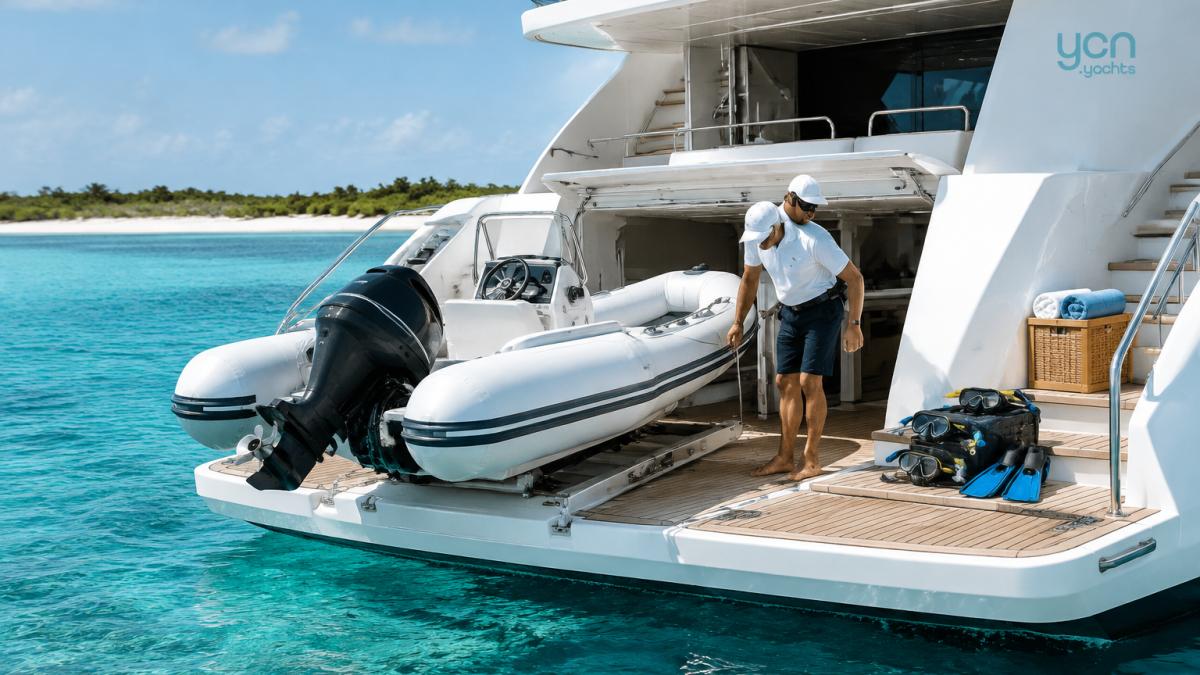
Start with stowage. A tender that lives in a garage must clear the opening with the outboard trimmed and the console folded where the builder designed it to fold; a tender on a hydraulic platform needs the platform rated for the loaded weight, not the dry weight. Next, confirm the davit or crane's safe working load against the tender's dry weight plus fuel, outboard, and gear. Then check launch method: a crew-launched RIB on a platform is faster for beach days than a garage-stored tender that needs the transom opened and the crane swung out.
Tender sizing is generally matched to the mother yacht's length, with larger yachts able to carry bigger tenders and a second inflatable for beach runs. These are general starting points only; the captain's confirmation of davit ratings and garage clearance is what settles the choice.
Tender-to-Yacht Compatibility Matrix
| Mother Yacht LOA | Typical Tender Class | Stowage | Launch Method | Best Bahamas Use |
|---|---|---|---|---|
| Under 80 ft | 3 to 4 m RIB or inflatable | Hydraulic platform or davit | Davit or manual | Sandbar shuttles, snorkel runs, short beach hops |
| 80 to 100 ft | 4 to 5 m RIB or center console | Garage or crane | Crane or platform | Beach landings, reef access, light fishing |
| 100 to 130 ft | 5 to 6 m center console | Garage | Crane or hydraulic platform | Long bank runs, fishing, towing, dive support |
| 130 ft and above | 6 to 7 m tender plus inflatable | Garage and platform | Crane and davit | Multi-stop Exumas routes, dive and fishing programs |
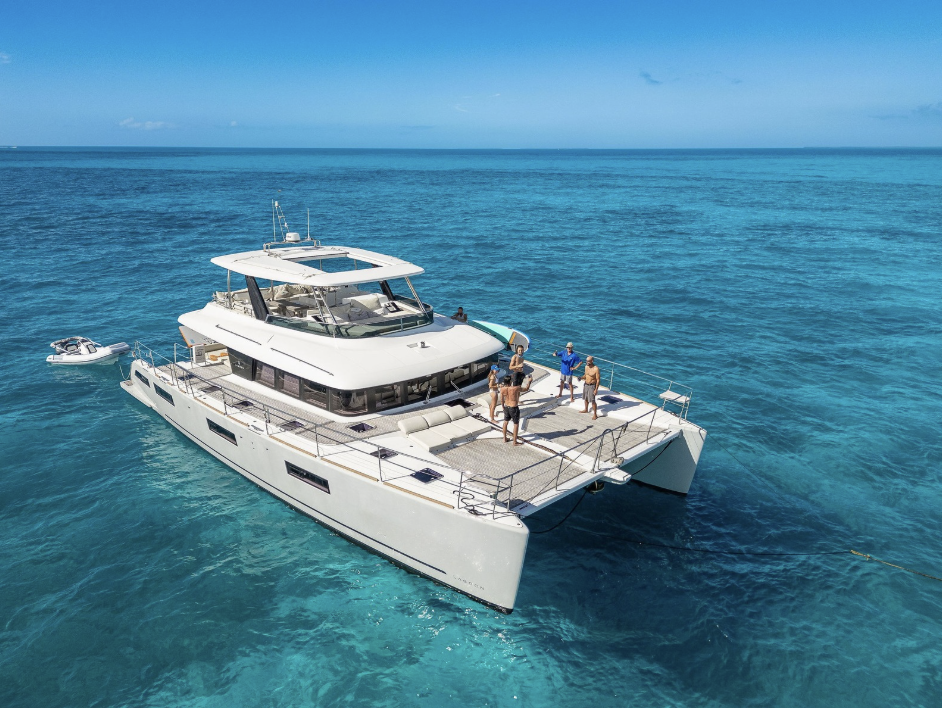
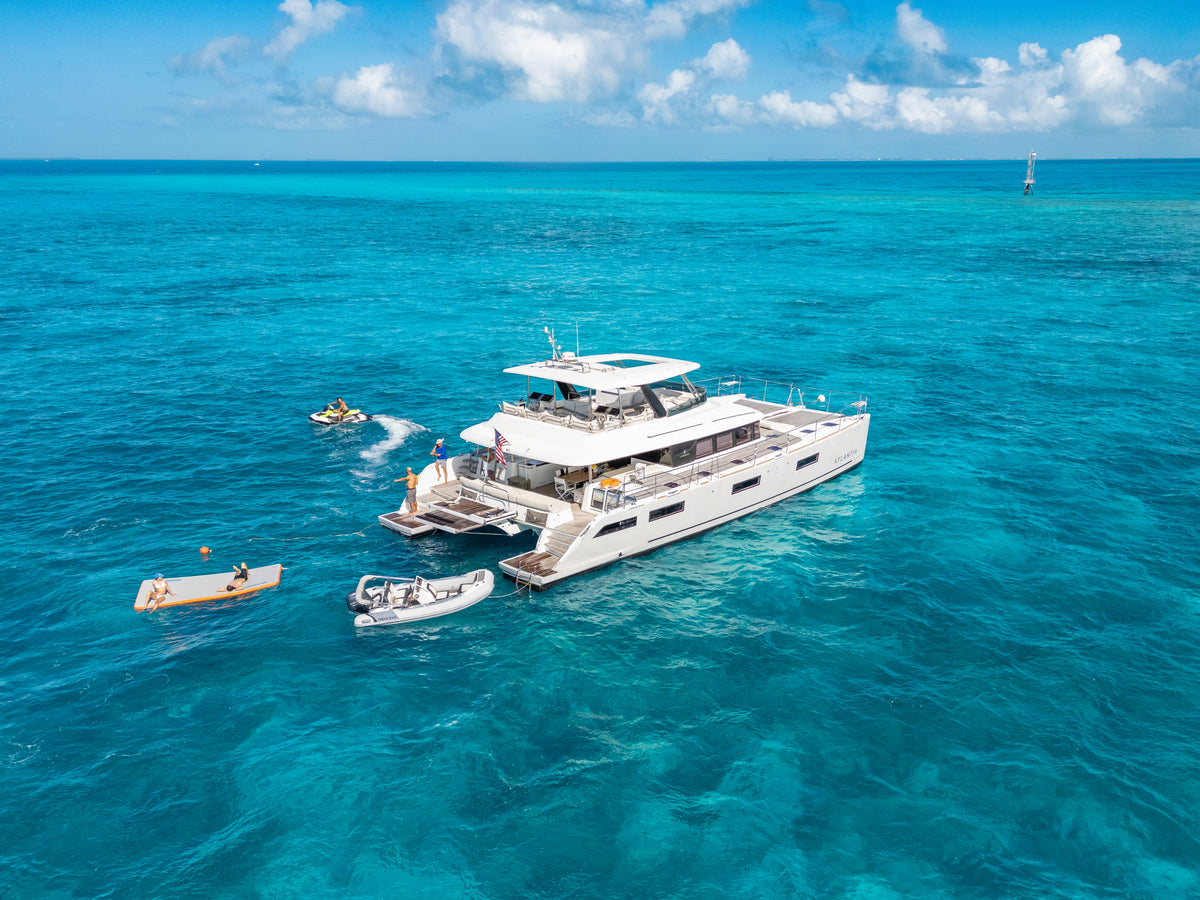
| Power catamaran | 3 to 4 m RIB or inflatable | Aft platform | Manual or crane | Family swim stops, shallow banks, beach landings |
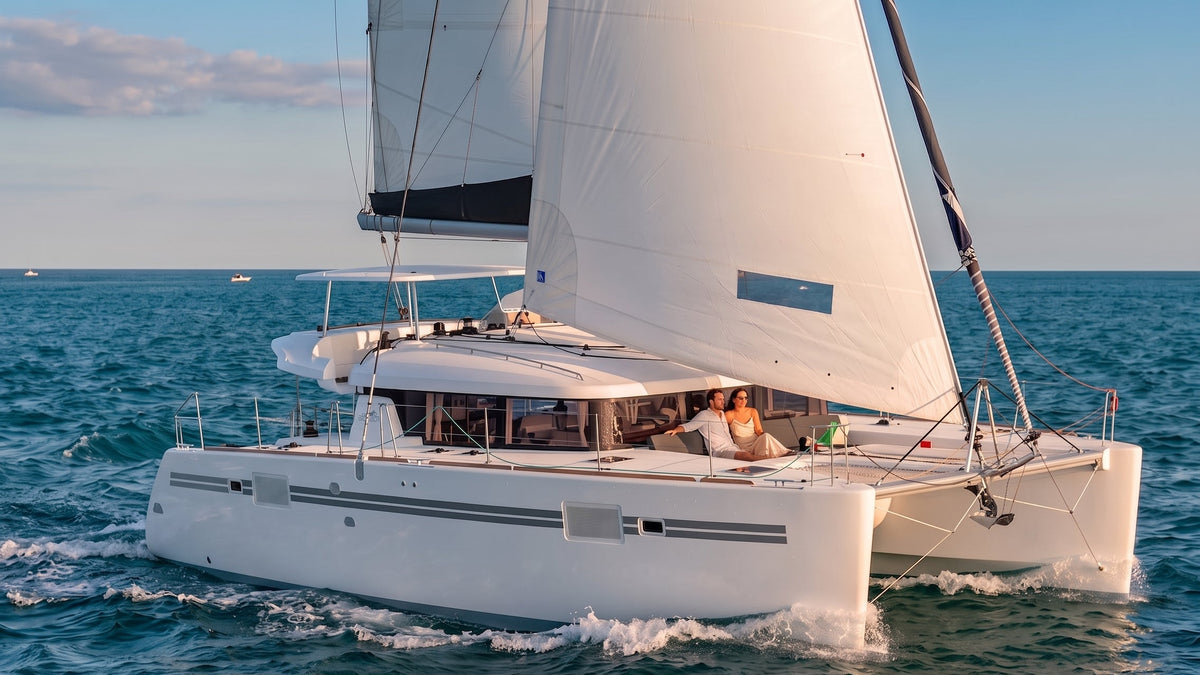
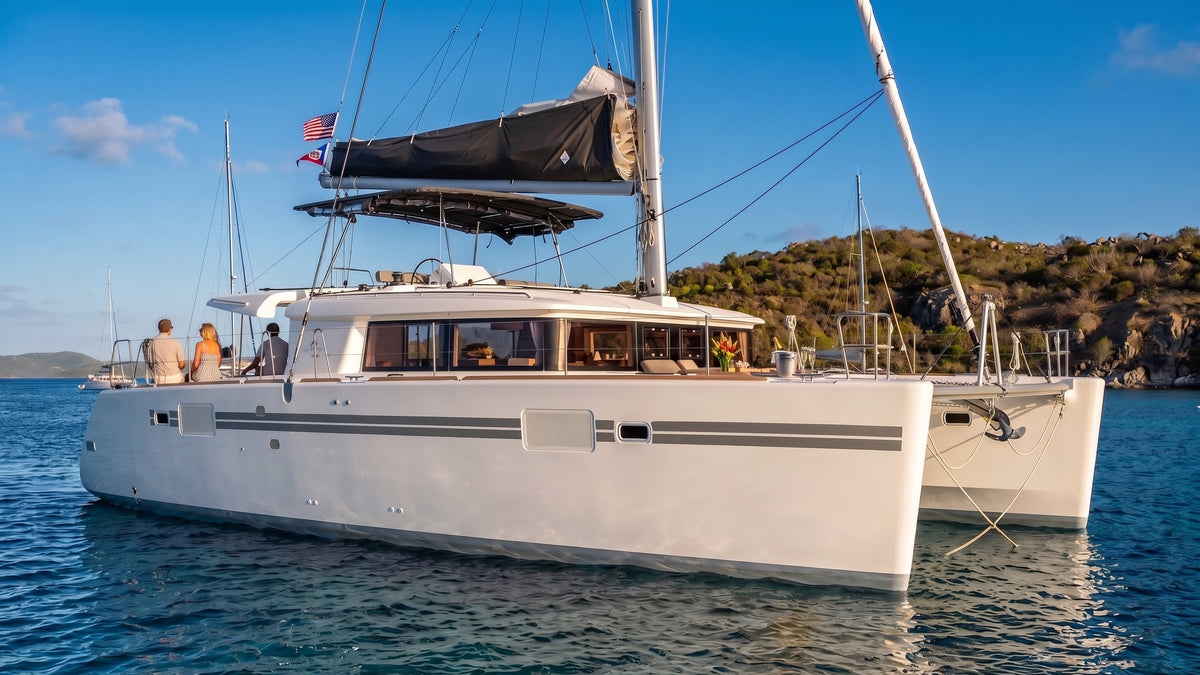
| Sailing catamaran | 3 to 3.5 m inflatable dinghy | Stern davits | Davits | Anchorages, provisioning runs, snorkel drops |
Treat the matrix as a starting point, not a rule. Every hull differs, and a wide-beam RIB and a narrow inflatable of the same LOA behave completely differently on a davit and at a beach.
Towing Versus Deck-Loading for the Gulf Stream Crossing
If your charter begins in South Florida and runs to Bimini or the Berry Islands, the tender has to get there too, and that decision shapes the whole plan. Deck-loading keeps the tender out of the water and protected from spray, but it consumes deck space and requires a davit or crane rated for the loaded weight. Towing is simpler on paper but adds drag, slows the crossing, and exposes the tender to the chop that builds across the Gulf Stream, especially when an easterly wind opposes the current.
Deck-loading and towing each carry trade-offs for a crossing of this kind, and the choice is best made with the captain. Confirm with your captain how the tender will travel before you finalize embarkation.
Matching the Tender to the Anchorage, Not Just the Yacht
The last check is the one most guides skip: does the tender suit the water you actually plan to visit? Match the tender to the dominant activity of the week, then confirm the mother yacht can carry it.
Yacht Charter Water Toy Selection for Bahamas Conditions
Water toy selection should follow the conditions. Gear that handles shallow, warm, often choppy water suits the Bahamas, with a tender for transport and toys that work from the beach or swim platform.
Our shortlist for a Bahamas week:
- Snorkel gear for reef edges and shallow coral heads.
- Paddleboards for calm mornings on the bank.
- Seabobs or a tender-towed tube for guests who want speed.
- A floating water hammock for long afternoons at anchor.
That last one earns its place. A floating water hammock gives you a shaded, netted retreat right off the swim platform, and you can add a floating water hammock to your charter before you sail. Watch out: toys with batteries or chargers need charging time built into the day, and a captain will not run a generator all afternoon just for one Seabob.
Water Activities by Destination: Exumas, Nassau and Bimini
Water activities vary sharply by island group, and the tender is what unlocks each one. The Exumas are well known for snorkeling and shallow-bank cruising; Nassau combines marina access with nearby sandbars and reefs; Bimini sits closest to Florida and suits day trips.
In the Exumas, tenders can take guests to reef edges and sandbars around the cays. Nassau's appeal is convenience, with sheltered beaches and shallows within an easy run of many marinas. Bimini rewards a fast tender and a captain familiar with the local cuts.
For snorkelers, our guide to the best yacht for snorkeling in the Exumas goes deeper on which hulls and anchorages suit reef access.
Tender Logistics, Transport and Compliance
Tender logistics shape whether a multi-day plan holds together. Fuel range, launch and recovery time, crew training, and local rules all affect the daily schedule, and they matter more on a seven-day route than a single afternoon.
Fuel Range and the Daily Run
A tender's usable range sets how far it can run from the mother yacht and back with a reserve. A long run to a distant cay, a fishing session, or a full afternoon of towing uses fuel faster than guests may expect, so planning tender-dependent activities around the mother yacht's position helps keep runs manageable.
Launch and Recovery Time
Every launch and recovery adds minutes to a stop, and those minutes compound across a week. Launch methods differ, and the difference shapes how many anchorages you can realistically visit. Ask your captain how the tender launches before you build an itinerary around it.
Crew and Operator Responsibilities
On a crewed charter, the captain and crew generally handle tender operations, towing, and guest safety, and the captain confirms current requirements before you sail. Guests should expect to operate a tender only with the captain's authorization.
Bahamian Rules, Marine Parks, and Insurance
Cruising permits, customs and immigration clearance, and marine park rules can apply to a mother yacht and the tenders and water toys it operates in Bahamian waters. The captain confirms current requirements before you sail.
Insurance is also worth confirming. A guest bringing a personal watercraft or privately owned tender into the Bahamas should confirm coverage and registration with the captain before the trip.
Eco-Conscious Operation Around Reefs and Sandbars
Reef-friendly habits matter in the Bahamas. Running at idle near reef edges, using mooring balls where they are provided, and keeping prop wash away from shallow grass beds help protect the water that makes a charter worth taking. Reef-safe sunscreen is also a sensible choice (Skincare Chemicals and Marine Life).
If you are mapping a full week, our 7-day Bahamas yacht charter itinerary shows how tenders and water activities fit into real cruising days.
Planning Your Charter Around the Tender
Plan the tender first and the itinerary writes itself. Decide which anchorages you want, confirm the draft and tender each one needs, then choose the yacht that carries it. That order saves more disappointment than any brochure.
Two of our own boats show how it works. The 44ft Aquila Let It Be 3, a power catamaran based at Nassau, pairs stable twin hulls with a swim platform for tender and beach access. The 70ft Sunreef Orca carries a tender alongside Seabobs, paddleboards and snorkel gear for guests who want an active week. Both are booked through our Bahamas yacht charters collection, where you can compare regions, yachts and embarkation options.
From our Miami base we coordinate charters across South Florida and the Bahamas, and through our wider network we arrange yachts worldwide. Share your dates, group and the water you want to reach, and we can help match a yacht to the plan.
Frequently Asked Questions
What is the ideal tender size for exploring the Bahamas?
There is no single ideal size, but tender size is generally matched to the yacht and the route. Smaller tenders are easier to beach at sandbars, while larger ones add range and comfort for longer runs. Smaller tenders are easier to beach at sandbars, while larger ones add range and comfort for longer runs to remote anchorages.
Why is a shallow draft yacht tender important for Bahamas yacht charters?
Much of the Bahamas sits on the Great Bahama Bank, where depths can drop to a few feet without warning. A shallow draft yacht tender lets you cross those flats, approach sandbars at low tide, and reach beaches that deeper-keel boats cannot. It also reduces the risk of grounding when you explore mangrove creeks and sheltered coves in the Exumas.
Do I need a specific type of tender for visiting Bahamas sandbars?
A rigid inflatable boat, or RIB, is the most practical choice for sandbars. Its inflatable tubes absorb contact with the bottom, it sits shallow at rest, and it is light enough to push off if you touch ground. Pair it with a beach anchor and a boarding ladder so guests can step off into ankle-deep water without soaking gear.
How does yacht charter water toy selection change between day and multi-day trips?
Day charters usually focus on one or two activities, so a tender plus snorkel gear and a paddleboard covers most groups. Multi-day trips need more variety because guests repeat anchorages and want options. On longer charters, guests often add more toys, and it is worth confirming with the captain that the tender has the horsepower and capacity to tow or carry everything.
A Bahamas charter succeeds or fails on the tender, and the right match is easier to arrange than to fix mid-trip. YCN Yachts matches yacht, tender and itinerary before you book, with live availability across our Bahamas fleet and access to roughly 1,700 yachts worldwide through our charter network. Get a quote from YCN Yachts and let our charter specialists build the week around the water you want to reach.











Leave a comment
This site is protected by hCaptcha and the hCaptcha Privacy Policy and Terms of Service apply.