
Article: Bahamas-Capable Yacht Safety Equipment: What to Carry?
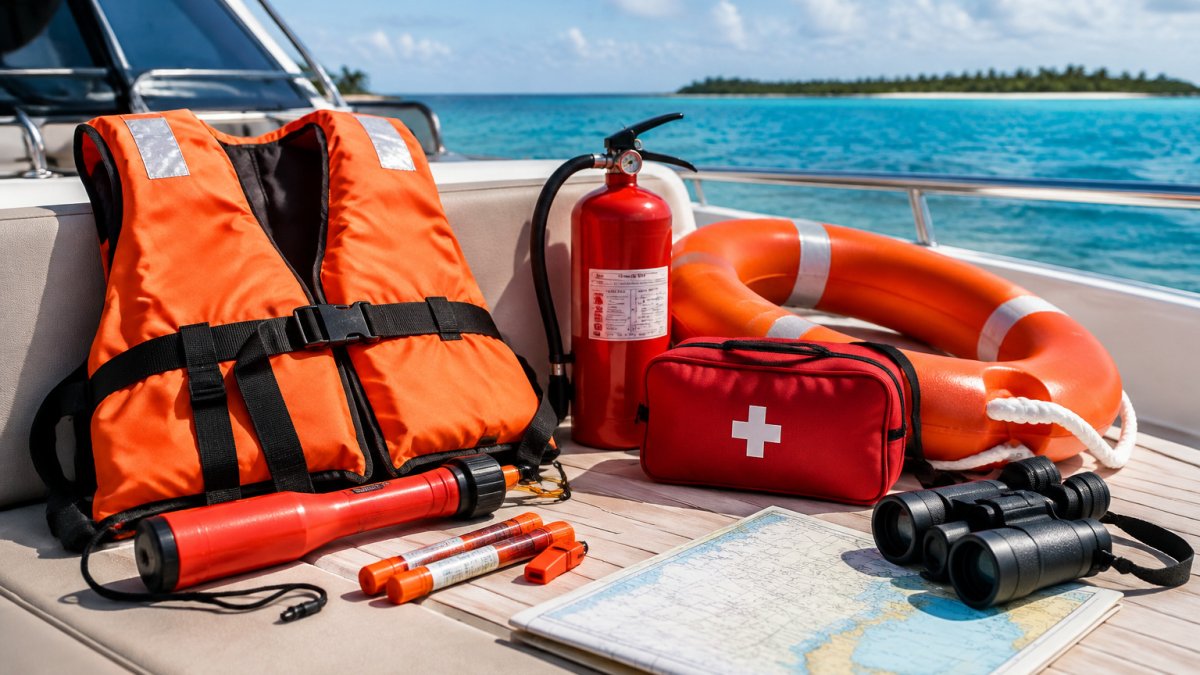
Bahamas-Capable Yacht Safety Equipment: What to Carry?
Last Updated: November 4, 2026
Quick Summary
Bahamas-capable yacht safety equipment should include a tested marine VHF radio, a backup satellite communicator or emergency beacon, and a life raft where required for crossings beyond sight of land. Exact requirements depend on vessel length, propulsion and route, so confirm them with the U.S. Coast Guard and the vessel's documentation before departure.
- A marine VHF radio is the standard tool for contacting the Coast Guard and nearby vessels.
- Test the radio before every departure.
- Do not rely on a mobile phone alone, since coverage drops quickly offshore.
- Life raft requirements depend on vessel size and distance from shore.
- Brief crew on the raft location, deployment and assigned flotation devices before sailing.
Table of Contents
- Why Bahamas Crossings Demand More Than the Basics
- USCG Safety Requirements for International Voyages
- Emergency Communication Equipment for Yachts
- Life Raft Requirements for Bahamas Crossings
- Booking Your Charter With Safety Equipment Confirmed
- Frequently Asked Questions
Why Bahamas Crossings Demand More Than the Basics
Crossing from Miami to the Bahamas is one of the most rewarding day-and-overnight passages in American yachting, but it asks more of a vessel than an afternoon on Biscayne Bay does, and the yacht safety equipment aboard becomes central to every passage. Open water, changing conditions and the distance from the nearest assistance all mean that the safety equipment aboard matters. At YCN Yachts, we review the equipment on every vessel we place in a Bahamas itinerary, because a checklist that works in Miami may fall short once you are offshore.
The gap between a day charter and a Bahamas-capable yacht is largely about preparation. Guests expect a seamless experience, and the crew expects the boat to be ready for what lies beyond the sandbars. Knowing what to carry, and confirming it before you sail, is the foundation of a safe and relaxed crossing.
USCG Safety Requirements for International Voyages
The United States Coast Guard sets the baseline for safety equipment on vessels operating in U.S. waters and on passages that leave them. Requirements vary with vessel length, propulsion, and the routes it covers, so the exact list for a given yacht should be confirmed directly with the Coast Guard and the vessel's documentation. For current regulations, refer to the official source at U.S. Coast Guard Boating Safety resources.
Captains should review the regulations that apply to their specific voyage well in advance.
Requirements vary with vessel length, propulsion, and route, so the key points are worth checking before you sail.
| Item | Value | Note |
|---|---|---|
| Governing body | U.S. Coast Guard | Sets the baseline for U.S. waters and passages |
| Requirements depend on | Length, propulsion, route | Exact list varies per vessel |
| Confirm with | Coast Guard and vessel documentation | Use the official source |
| Review timing | Well in advance | Before the voyage begins |
Emergency Communication Equipment for Yachts
Reliable communication is the most important safety system on any offshore passage. A marine VHF radio is the standard tool for contacting the Coast Guard and nearby vessels, and it should be tested before every departure. Many captains also carry a satellite communicator or emergency beacon as a backup where cellular coverage fades.
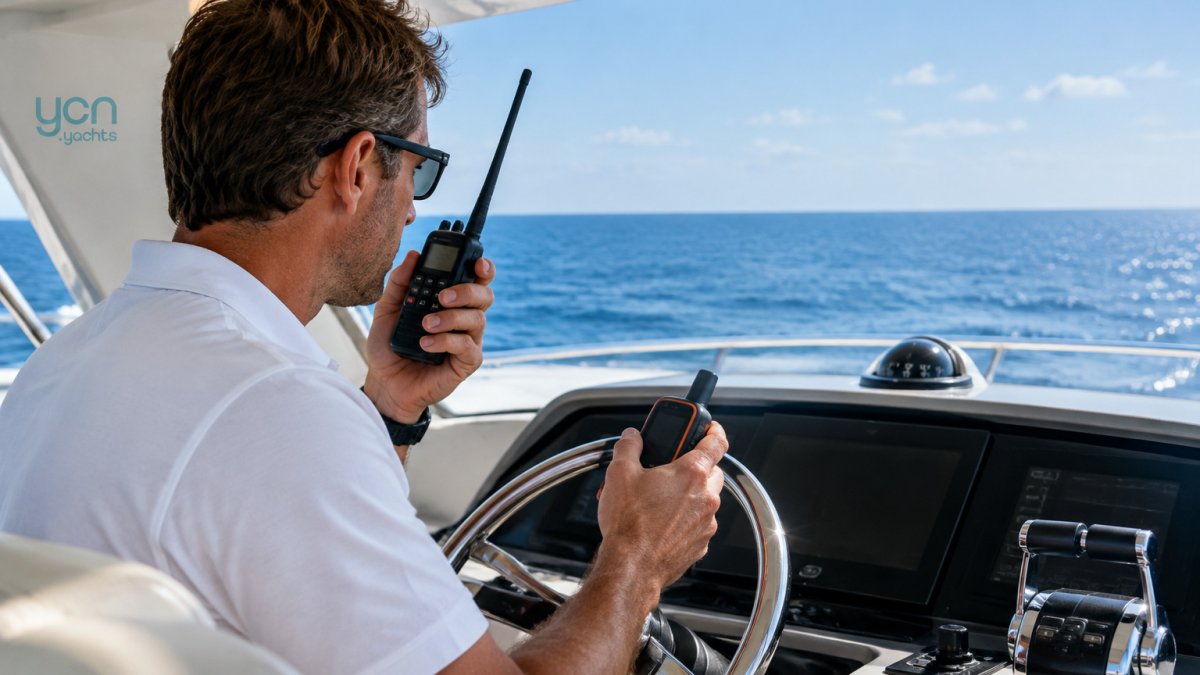
A common mistake is relying on a mobile phone alone. Coverage drops quickly once you leave the coast, so a phone is useful for convenience but should never be the only line of contact. Confirm that every crew member knows how to use the radio and how to send a distress call.
Life Raft Requirements for Bahamas Crossings
A life raft is a serious piece of yacht safety equipment for any crossing that moves beyond sight of land. Requirements depend on the vessel, its size, and the distance from shore, so the decision should be made with the captain and confirmed against current Coast Guard guidance. Where a raft is carried, it should be inspected, serviced on schedule, and stored where the crew can reach it quickly.
Crew should be briefed on the location of the raft, the deployment procedure, and the personal flotation devices assigned to each guest. A brief drill before departure is time well spent.
Booking Your Charter With Safety Equipment Confirmed
When you book, ask the charter team to confirm the safety equipment aboard the yacht for your intended route. A reputable operator will be able to walk you through the radio, the emergency equipment, and the crew's experience with Bahamas passages. If you are planning a crossing from South Florida, our Bahamas Yacht Charters team can match you with a vessel already equipped for open-water runs, and you can review the 62ft Pershing | Sea Suite for an example of a vessel built for that kind of passage. You can also explore Discover The Bahamas by Yacht to compare regional options and embarkation points. Crossing from Miami? See Alquiler de yate de Miami a las Bahamas for route options and availability.

For a deeper look at vessel selection, our Catamarán vs. yate a motor: recorrido por las islas de las Bahamas comparison covers stability, draft and space. Planning distance and range? Our Motor Yacht Range for Bahamas Crossings: Planning Guide explains how far a motor yacht can travel safely.
Ready to plan your crossing with the right equipment aboard? Request a private yacht charter quote from YCN Yachts and our charter specialists will confirm the safety details for your itinerary.
Frequently Asked Questions
What safety equipment is required for a private yacht crossing to the Bahamas?
A private yacht crossing to the Bahamas falls under US Coast Guard rules for vessels operating in international waters. The specific items required depend on the vessel and route, so confirm them with the USCG and your captain before departure. The exact list depends on vessel length, propulsion and route, so confirm your yacht's requirements with the USCG and your captain before departure. Carrying a complete, serviced set of gear is the safest starting point for any crossing.
Do I need an EPIRB for a Bahamas yacht crossing?
An EPIRB, or emergency position-indicating radio beacon, is strongly recommended for any offshore crossing and is required on many vessels operating beyond coastal waters. Make sure everyone aboard knows where the beacon is mounted and how to deploy it.
What are the US Coast Guard requirements for vessels leaving US waters?
Vessels leaving US waters must meet USCG equipment carriage rules that depend on size, type and route. Review the current USCG equipment requirements for your vessel class before every international voyage, since regulations are updated periodically.
What emergency communication tools are essential for Bahamas cruising?
A marine VHF radio is the primary tool for close-range communication and distress calls on Channel 16. For crossings where VHF coverage fades, a satellite messenger or satellite phone provides reliable contact with shore and rescue services. Pair these with a charted, waterproof backup for navigation data and a fully charged, spare power supply. Test every device before departure and make sure the crew knows how to use it.













Leave a comment
This site is protected by hCaptcha and the hCaptcha Privacy Policy and Terms of Service apply.