
Article: 7 Steps to Arrange Yacht Provisioning for a Bahamas Trip
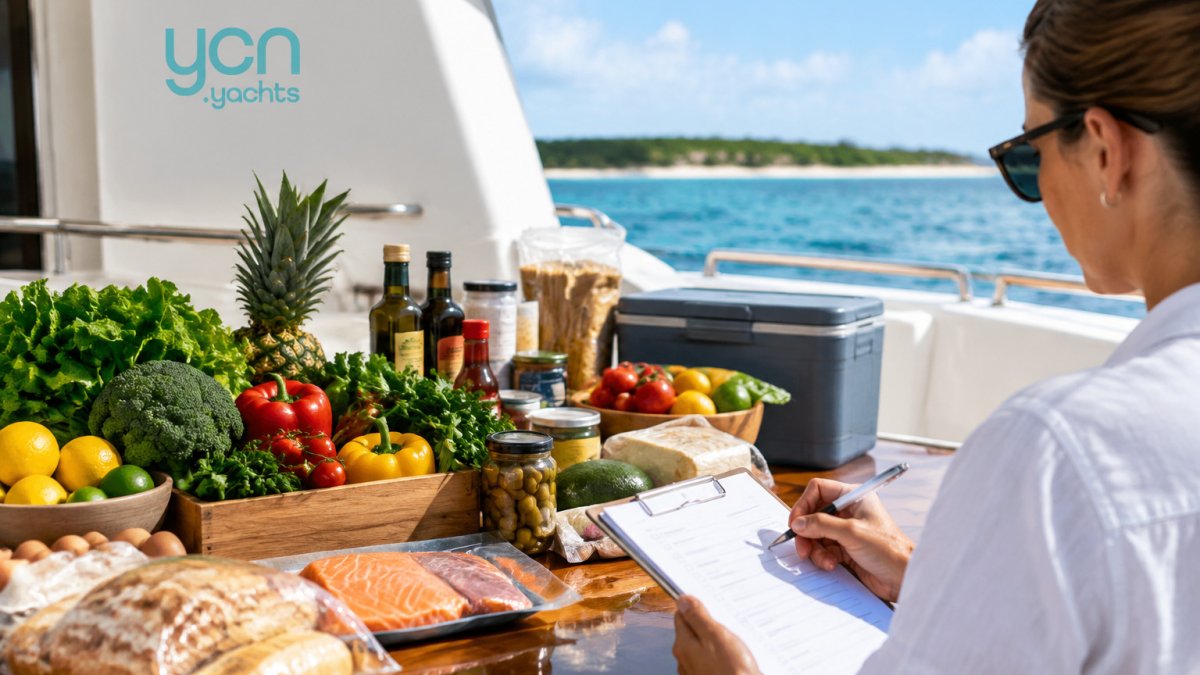
7 Steps to Arrange Yacht Provisioning for a Bahamas Trip
Last Updated: November 22, 2026
Quick Summary
Yacht provisioning for a multi-day Bahamas trip starts with a written brief covering dates, guest count, departure marina, cabin plans, dietary needs, and food budget, shared with your charter team before anyone shops. Build a provisioning list in four blocks, assign every item to fridge, freezer, or dry storage, and buy heavy items in Miami with a light island top-up.
- Plan drinking water at roughly one gallon per person per day, plus extra for heat and activity.
- Buy fresh food for the first three days only and shelf-stable food for the back half.
- Confirm refrigerator, freezer, and dry-locker capacity with the captain before ordering.
- Settle dietary requirements and allergies at booking, not on departure day.
- Load non-perishables one to two days out and fresh items the afternoon before or morning of departure.
Table of Contents
- Start With a Provisioning Brief, Not a Grocery List
- Build Your Bahamas Yacht Charter Provisioning List
- Use a Yacht Charter Provisioning Form to Lock the Details
- Handle Yacht Charter Dietary Requirements Early
- Provisioning a Yacht for a Week: Quantities, Storage and Budget
- Plan the Miami Departure and Bahamas Handoff
- Frequently Asked Questions
Start With a Provisioning Brief, Not a Grocery List
Yacht provisioning for a multi-day Bahamas trip starts with a written brief, not a shopping cart, and that brief is the first step in yacht provisioning done right. Share your dates, guest count, departure marina, cabin plans, dietary needs, and a realistic food budget with your charter team before anyone opens a grocery app.
Most first-timers do this backwards: they fill a cart, then discover the galley storage, crossing schedule, and crew's prep window don't match what they bought.
What the Crew Needs Before Anyone Shops
Your captain and chef need five things in writing:
- Exact dates, departure time, and return time
- Guest count, plus overnight guests versus day guests
- Dietary requirements and allergies, per person
Build Your Bahamas Yacht Charter Provisioning List
A Bahamas yacht charter provisioning list separates what you buy in Miami from what you buy on arrival. Selection in Miami is typically broader than in the islands, where availability can narrow.
- Shelf-stable staples: rice, pasta, canned goods, coffee, spices, crackers, nut butters, and boxed broth
- Refrigerated fresh food: produce, dairy, eggs, and proteins for the first two to three days
- Freezer items: meats, prepped meals, and ice for later in the week
Our rule of thumb: buy the heavy, bulky, and hard-to-find items in Miami. Save island markets for fresh bread, local produce, and ice.
Plan Meals Before You Plan Quantities
Quantities follow from a meal grid, not from a feeling. List every day of the trip and mark each meal as aboard, ashore, or open. A common pattern on a Bahamas multi-day charter is breakfast and lunch aboard, dinner ashore two or three nights, and one or two dinners prepared by the chef on board.
Then estimate by trip length and group size. Round up rather than down: a mid-trip restock takes time out of your day, and island sourcing can be limited.
Calculate Drinking Water Separately
Drinking water is its own line, not a footnote. Plan roughly one gallon per person per day, plus extra for heat, sun, and activity; on a warm-weather trip, carry extra beyond that baseline. Confirm with your captain whether the yacht's water supply is suitable for drinking; if not, plan for bottled or jugged water loaded before departure.
Choose Food That Stores Well Aboard
Storage life drives the order of the list. Fresh produce, dairy, and soft fruit belong in the first three days; hardy items such as cabbage, carrots, citrus, potatoes, onions, and winter squash hold longer in dry storage.
Watch out: buying fresh produce for the whole week at once is the most common provisioning mistake on a Bahamas charter, because refrigeration space and shelf life rarely match the shopping cart.
Organize Refrigeration, Freezer, and Dry Storage
Before you order, ask the captain or charter operator for three numbers: refrigerator capacity, freezer capacity, and dry-locker volume, plus how loading access works at your departure marina. Then assign every item to a zone. A simple storage map prevents spoilage and double-buying:
| Zone | What Goes There | What to Confirm First |
|---|---|---|
| Refrigerator | Dairy, produce for days 1-3, open condiments | Shelf count and door space |
| Freezer | Portioned proteins, prepped meals, ice | Freezer volume and whether it runs continuously |
| Dry locker | Canned goods, grains, snacks, beverages | Ventilation and access during the trip |
| Coolers | Day-use drinks and fragile produce | Whether the crew supplies them |
Label containers by meal and day so anyone can find an item without unpacking the locker. Keep a running inventory check each morning so the chef knows what needs to be used first.
Buy in Miami, Then Top Up Locally
Confirm with your charter team whether groceries can be ordered in Miami for delivery to the marina, or whether a provisioning service is available. If you are weighing a full week afloat, our 7-day Bahamas yacht charter itinerary shows how many meals and stops a sample route involves, which makes the quantity math far easier.
Use a Yacht Charter Provisioning Form to Lock the Details
A yacht charter provisioning form turns scattered texts into one approved document, capturing guest names, dietary flags, beverage counts, delivery timing, and who pays for what.
Here is the structure we use:
| Form Field | What to Record | Why It Matters |
|---|---|---|
| Guest roster | Names, ages, allergies | Prevents a mid-trip reaction |
| Meal grid | Day, meal, headcount, location | Stops overbuying |
| Beverage list | Type, quantity, brand | Avoids duplicates |
| Storage map | Fridge, freezer, dry | Prevents spoilage |
| Delivery window | Date, time, marina, contact | Keeps loading on schedule |
Send the completed form to your charter team before the shopping day. If you are ready to lock those details, contact YCN Miami and we will confirm the arrangements for your trip.
Handle Yacht Charter Dietary Requirements Early
Yacht charter dietary requirements need to be settled at booking, not at the dock.
Ask every guest three questions:
- Do you have any food allergies or intolerances?
- Do you follow any religious or ethical diet?
- What do you genuinely dislike eating?
Then confirm how the galley will handle it. A private chef can build separate dishes. Self-provisioning means labeling containers clearly and keeping a dedicated shelf.
Watch out: a guest who mentions an allergy for the first time on departure day leaves little time to arrange alternatives.
Provisioning a Yacht for a Week: Quantities, Storage and Budget
Provisioning a yacht for a week comes down to three numbers: how many people, how many meals aboard, and how much cold storage you actually have. Get those right and quantities follow.
Use this planning checklist:
- Count meals eaten aboard versus ashore
- Plan drinking water at roughly one gallon per person per day, plus extra for heat
- Assign every item to fridge, freezer, or dry storage before buying
If you are weighing a full week afloat, our 7-day Bahamas yacht charter itinerary shows how many meals and stops a sample route involves, which makes the quantity math far easier.
Where the Money Goes
Provisioning costs split into four buckets: food, beverages, non-food supplies, and delivery or restocking fees. Alcohol is usually the largest single line. Fresh produce and specialty items cost more in the islands than in Miami.
Some crewed charters handle this through an advance provisioning allowance (APA), a fund you pay in advance that the crew spends on your behalf and reconciles with receipts.
Request a written breakdown that separates the base charter rate from provisioning, fuel, crew, taxes, dockage, and gratuity.
Plan the Miami Departure and Bahamas Handoff
Miami departure planning decides whether provisioning runs smoothly. Groceries must be loaded before departure, ideally the afternoon before or early on the morning of, and the crew needs time to stow everything in the right zone before guests arrive.
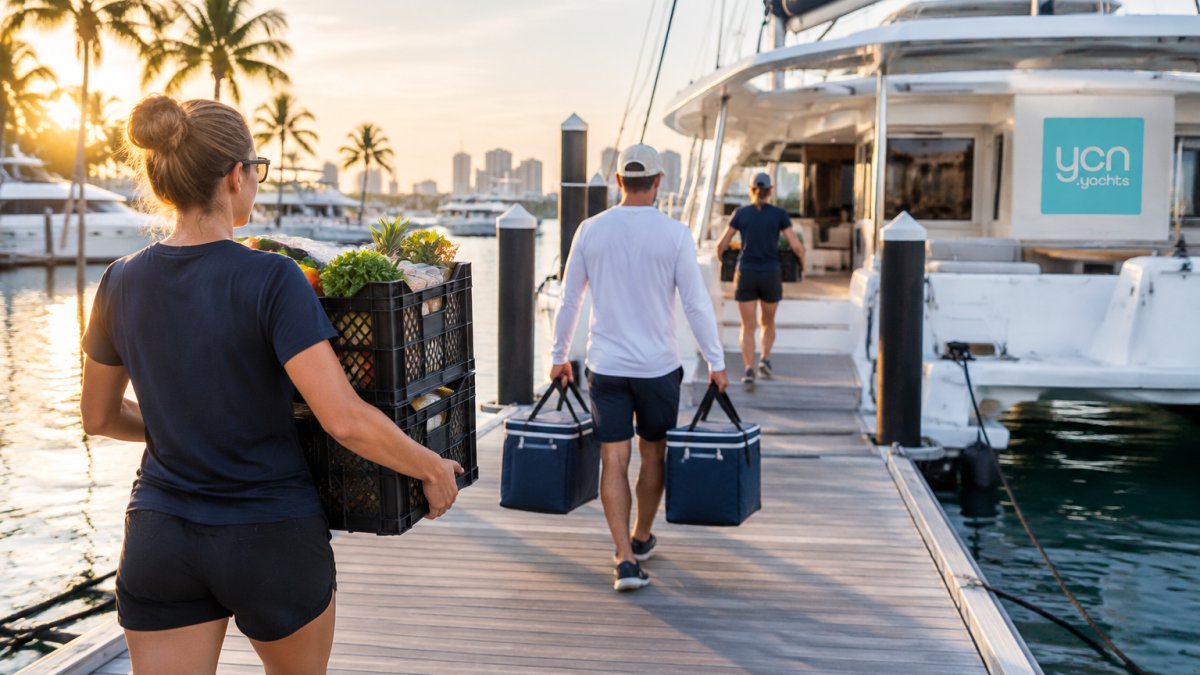
A Practical Miami Loading Timeline
A common pattern for a multi-day Bahamas charter looks like this:
- Two to three weeks out: finalize the provisioning list, confirm storage capacity with the captain, and place the Miami order
- Three to five days out: confirm delivery window, marina access, and who signs for the delivery
- One to two days out: non-perishables and beverages delivered and loaded; dry storage organized
Ordering and delivery options in Miami make this easier. Delivery and pickup arrangements should be confirmed with your charter team. Confirm with the marina whether a delivery vehicle can reach the dock and whether the crew or a dockhand will meet it.
What the Crew Needs From You at Handoff
At handoff, the crew needs three things in writing: the final inventory list, the meal grid with any dietary flags, and a note on what is intended for island top-up. Walk the storage zones with the chef or steward so nothing is stowed in the wrong place. If a guest has an allergy, confirm which labeled containers are safe and which shelf is dedicated to alternatives.
Watch out: a delivery that arrives after the crew's stow window forces everything into the first available locker, which is how fresh food gets crushed and freezer items thaw before the crossing.
Bahamas Customs and Restricted Provisions
On arrival you clear customs, and restricted provisions matter. Fresh produce, meat, dairy, and some packaged goods can face limits or documentation requirements, so check current rules before you load. The Bahamas Customs Department publishes entry requirements, and rules can change. A current, clearly sourced checklist is the safest approach:
- Confirm which fresh items are restricted or require permits before ordering
- Keep receipts for high-value provisions in case customs asks
- Declare firearms, ammunition, and restricted goods; do not carry them aboard without written approval
Because rules and enforcement vary, treat any list as a starting point and confirm the current requirements with the captain and the Bahamas Customs Department before departure.
Weather, Delays, and the Provisioning Buffer
Crossing weather can shift departure by hours or a day, and that changes what gets eaten first. Keep a shelf-stable backup meal for each day of the buffer, plus extra drinking water. If the crossing is delayed, the crew should rotate fresh items to the front of the meal plan and hold frozen items for later in the trip.
Before you finalize timing, run through our Bahamas crossing go or no-go checks and read how to sail from Miami to the Bahamas so weather and routing do not undo a good provisioning plan. When you are ready to lock the details, request a charter quote with your dates, guest count, and approximate budget, and we will confirm what applies to your trip.
Frequently Asked Questions
How far in advance should I arrange provisioning for a Bahamas yacht charter?
Send your brief as soon as your dates and guest count are confirmed, ideally several weeks before departure. A provisioning service needs time to source specialty items, confirm dietary requests with the chef, and schedule delivery to the marina. Last-minute orders are possible but narrow your choices, especially for fresh produce and specific brands. At YCN Yachts we build the provisioning plan alongside the itinerary so the loading schedule matches your departure.
What information should I send for a yacht provisioning order?
A yacht charter provisioning form should capture guest count, ages, trip duration, dietary requirements and allergies, beverage preferences including alcohol, and any children's or mobility-related needs. Confirm with your charter team whether crew-managed catering is available for your yacht. The more specific the form, the fewer surprises at the dock. Confirm the final list in writing before loading day.
Can I bring food and drinks from Miami on a Bahamas yacht charter?
You can generally load supplies in Miami before departure, but Bahamas customs rules on food, alcohol and restricted items apply on arrival. Rules can change, so confirm current requirements with your captain and check official Bahamas customs guidance before you shop. Keep receipts and declare what is required. Ask your captain who handles the clearance process and which items to leave off the list.
Should I provision extra days in case weather changes the itinerary?
Yes. Build a buffer of shelf-stable food, drinking water and paper products for at least one extra day. Weather can delay a crossing or extend time at anchor, and island availability is not guaranteed. The captain decides routing based on conditions, so flexible stores keep the trip comfortable. Discuss the buffer with your chef or provisioning contact when you set quantities.






















Laisser un commentaire
Ce site est protégé par hCaptcha, et la Politique de confidentialité et les Conditions de service de hCaptcha s’appliquent.