
Article: What to Look for in a Yacht Cabin Configuration
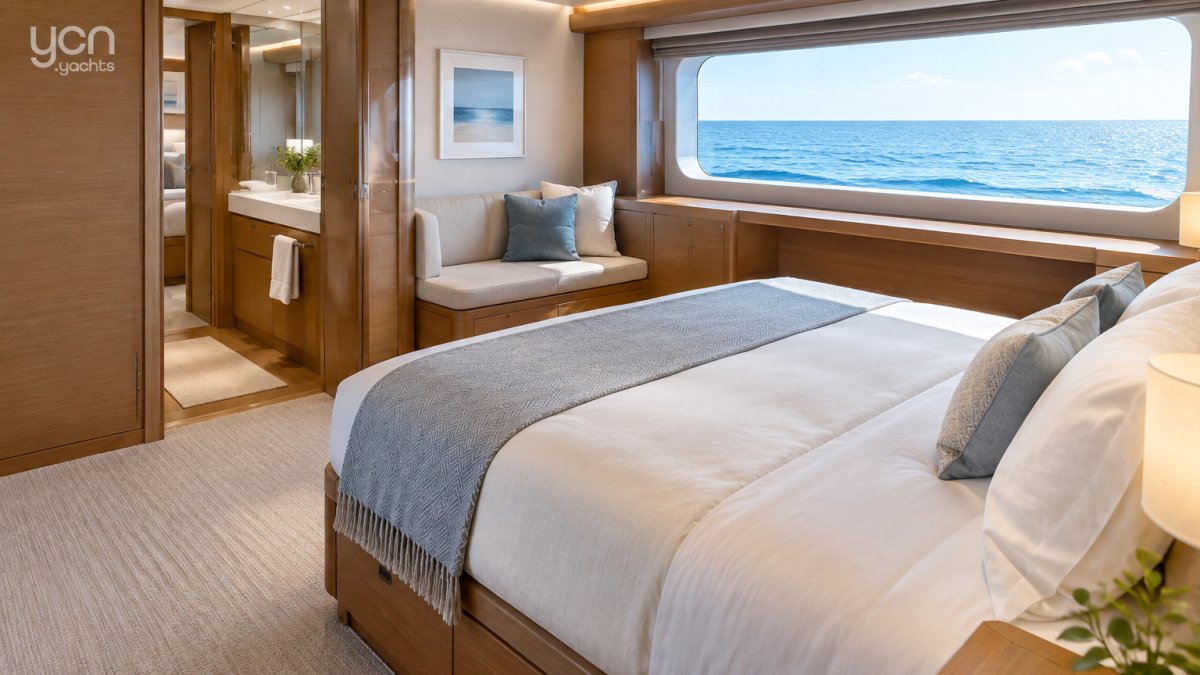
What to Look for in a Yacht Cabin Configuration
Last Updated: November 19, 2026
Quick Summary
A yacht cabin configuration is best chosen by first confirming how many guests sleep on board and how they want to share space. Check whether each berth is a true bed, its dimensions in inches, and whether twin berths can convert to a double. Treat the advertised guest count as a maximum, not a comfort rating.
- Count overnight guests separately from day guests, since berths are a distinct specification.
- Ask for bed dimensions in inches, not just the cabin type name.
- Confirm whether convertible twin berths are available on the exact vessel.
- Plan for one fewer guest per cabin if you want floor space and storage.
- Check the number of steps and handrails on the route to each cabin.
Table of Contents
- Start With Your Group and Its Sleeping Needs
- Yacht Cabins and Berths Explained
- Cabin Types Compared: Master, VIP, Twin and Pullman
- Yacht Cabin Layout for Families
- Mobility, Access and Sleep Quality on Board
- Cabin Inspection Checklist for Miami and Bahamas Charters
- Questions to Ask Before You Confirm Your Cabins
- Frequently Asked Questions
Start With Your Group and Its Sleeping Needs
Choosing a yacht cabin configuration starts with a simple question: who is sleeping on board, and how do they want to share the space? A useful charter brief starts with guest count, the mix of couples, children and adults, and whether anyone needs a private bathroom. A cabin plan that works for four friends can be unworkable for a family of five with a toddler.
Ask for the number of overnight guests separately from the total number of people on the trip. Day guests can usually join for a charter even when the yacht has no cabin for them, but overnight berths are a separate specification and must be confirmed for the exact vessel.
Yacht Cabins and Berths Explained
A cabin is a private room with a door, while a berth is an individual bed or bunk within it. Two guests sharing a twin cabin have two berths, and a king master suite may have one berth but more than one person's worth of floor space. Reading the specification sheet with that distinction in mind prevents confusion later.
Sleeping arrangements are often described with terms such as king, queen, double and twin. A king or queen bed generally suits two adults, while twin berths suit two people who prefer separate beds or children sharing a room. Ask whether twin berths can be joined, because that single change can matter for couples who want a larger bed without booking a larger cabin.
Cabin Types Compared: Master, VIP, Twin and Pullman
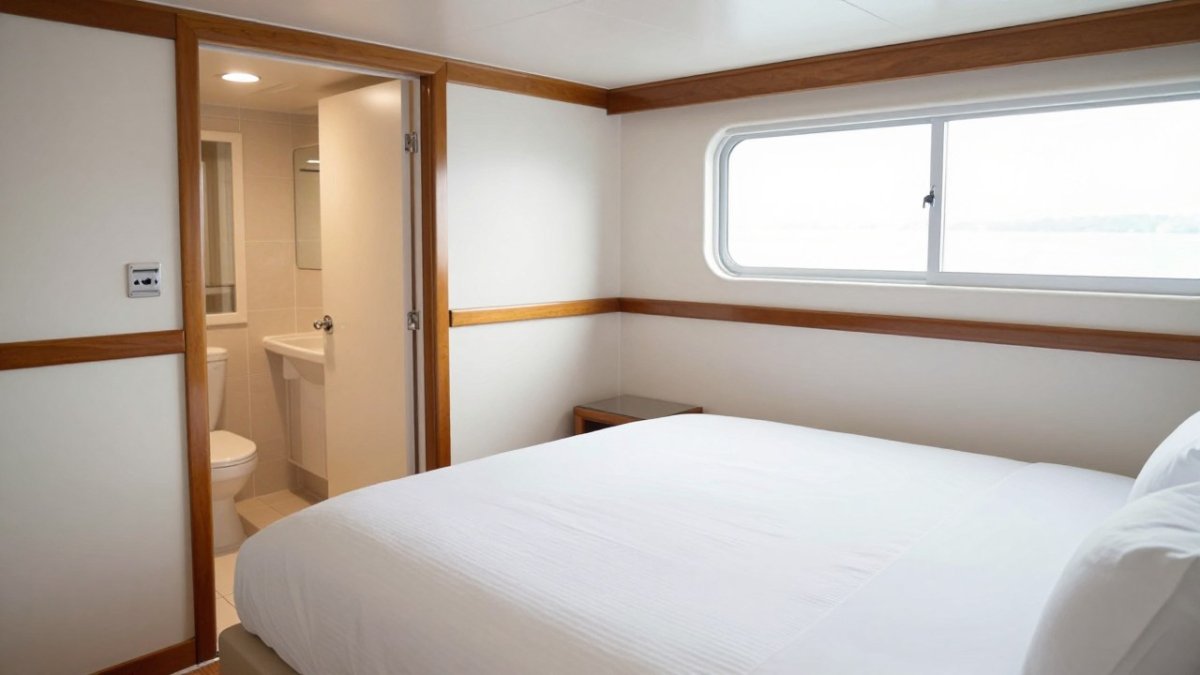
Most yacht cabin layouts use a combination of cabin types, and their names do not always mean the same thing from one builder to another. The table below is a general guide to how these cabins are usually described. Confirm the actual berth, bathroom and location details for the yacht you are considering.
| Cabin Type | Typical Bed | Usual Position | Best For |
|---|---|---|---|
| Master | King or queen | Aft or amidships, often the largest | Couples or a guest who wants the most space |
| VIP | King or queen | Forward, in the bow | Couples who want separation from the main cabins |
| Double | Queen or full | Mid or forward | Couples, or two guests willing to share a larger bed |
| Twin | Two single berths | Mid or forward | Friends, colleagues or children sharing |
| Convertible | Two singles that join into a double | Mid or forward | Groups whose couple count may change |
| Pullman | Two berths, one above the other | Varies, often in smaller cabins | Budget-conscious groups accepting tighter space |
Master cabins usually offer the most floor space and the best view. VIP cabins are often forward, where motion can feel stronger in choppy water. Pullman berths save space but are harder to climb into and offer less headroom, which matters for older guests.
Convertible Berths and Real Usable Capacity
A convertible cabin is the most misunderstood item on a specification sheet.
The advertised guest count is a maximum, not a comfort rating. A yacht listed for eight overnight guests in four cabins assumes two people per cabin, and that figure often does not account for luggage, crew cabins, or shared bathrooms.
Crew cabins are separate from guest cabins and should not be counted in your sleeping plan. On crewed charters, the captain and crew have their own quarters, and those spaces are not available to guests even if the yacht is not full.
Matching Cabin Types to Your Group
Couples usually want the master or a VIP, and a second couple is often happiest in a double or convertible cabin rather than a twin. Friends traveling together often prefer twin cabins so no one has to share a bed, while families with children frequently use a master for the parents and a twin for the children. Mixed groups should count couples, singles, and children separately before matching cabins, because a layout that works for four couples may not work for two couples and four singles.
Watch out: a cabin described as a double may have a bed that is smaller than a standard queen, and a twin cabin may have berths too narrow for a tall adult. Ask for the bed dimensions in inches rather than relying on the type name.
Yacht Cabin Layout for Families
Families have specific needs that change which configuration makes sense. Parents often want a cabin that is close to children's sleeping areas, while children may want their own space or a shared twin room. A master cabin for the parents, a twin for the children and an en-suite where possible is a common starting point, though the exact layout depends on the yacht.
Consider how the cabins connect to the rest of the boat. Check whether a child can reach the main deck safely at night, whether stairs are steep, and where any handrails or gates are fitted. For younger children, ask the charter team to confirm safety features before you rely on them.
Mobility, Access and Sleep Quality on Board
Yachts often involve steps, narrow passageways and raised thresholds, so access deserves careful review. Guests with limited mobility should ask about cabin level, the number of steps to reach it, the size of the bathroom and whether the bed height allows an easy transfer. A lower-deck cabin is not always easier to reach if the route involves several steps or a tight corridor.
Sleep quality depends on noise, motion, light and temperature as much as cabin size. Ask whether the cabin has blackout blinds, how the air conditioning is controlled, and whether nearby equipment or tender operations could disturb the room. These details rarely appear in a brochure but make a noticeable difference after a long day on the water.
Cabin Inspection Checklist for Miami and Bahamas Charters
Before you confirm a booking, use this checklist to compare cabins on the yacht you are considering. Ask for current photos and floor plans where available, and verify each item against the vessel itself. The list is written as a walkthrough so you can move through the yacht in a logical order rather than jumping between cabins.
Measure Before You Trust the Label
- Number of overnight cabins and confirmed berths, counted separately from day guests
- Bed dimensions in inches for each cabin, not just the type name
- Headroom at the foot of the bed and beside it, especially in Pullman and bunk cabins
- Door width and threshold height for each cabin
- Floor space between the bed and the bathroom door
- Storage: hanging locker depth, drawer count, and space for hard cases
A tape measure is the most useful tool you can bring to a viewing. Bed length matters for tall guests, and a cabin that looks generous in a wide-angle photo can have a narrow walkway beside the bed. Ask the charter team for the bed dimensions in inches and compare them with your own mattress at home.
Check Ventilation, Light and Temperature
- Air conditioning control inside the cabin, or only at a central panel
- Vent outlets and whether they can be adjusted or closed
- Blackout blinds or curtains, and whether they cover the full window
- Opening ports or hatches for fresh air
- Cabin lighting: overhead, reading lights, and whether they are dimmable
Ventilation and temperature control are the details most often left out of a brochure. A cabin with a single central air vent can be warm at night, and a cabin with no opening port depends entirely on the air conditioning. Ask how the air conditioning is zoned and whether guests can adjust it without calling the crew.
Walk the Access Route
- Number of steps from the main deck to the cabin
- Handrails on both sides of the stairs where possible
- Corridor width and any tight turns
- Thresholds and raised lips at cabin doors
- Bathroom door width and step into the shower
- Night lighting along the route
Walk the route at night or in low light if you can, because the path you take in daylight can feel different after dark. Guests with limited mobility should ask specifically about step-free or low-step routes, and whether any cabin is on the main deck rather than below.
Confirm Privacy, Noise and Bathroom Sharing
- En-suite or shared bathroom for each cabin
- Bathroom count against guest count, not just cabin count
- Cabin position relative to the engine room, generator, and tender area
- Distance from the main salon and galley
- Crew cabin locations and shared corridors
- Door locks and privacy fittings
For a Miami yacht charter day trip, the overnight checklist matters less, but cabin access and bathroom location still affect comfort if guests want to change or rest. For Bahamas multi-day yacht charters, these details become central because you will spend the night and possibly several nights on board.
Ask whether the images reflect the exact yacht you are chartering, and request a current floor plan if one is available.
Questions to Ask Before You Confirm Your Cabins
Asking the right questions before you commit saves disappointment later. Consider asking:
- How many overnight guests does this yacht sleep, and how many cabins are included?
- Which cabins are en-suite, and which share a bathroom?
- Can the twin berths be configured as a double, and is that confirmed for this yacht?
- Where are the crew cabins located relative to the guest cabins?
- Are there step-free or low-step routes to the cabins for guests with mobility needs?
- Is the cabin count the same for day charters and overnight charters?
Once you have these answers, our team can match a yacht to your group's sleeping needs and send a tailored quotation. Request a charter quote with your destination, dates, guest count and approximate budget, and we will confirm which cabin arrangements are available for your trip.
Frequently Asked Questions
How many guests can sleep overnight on a yacht?
Overnight capacity depends on the number of staterooms and the berths in each one, not on the number of guests who can board for a day charter. A yacht may take 13 guests on a day trip but sleep only eight overnight. For example, a 100ft flybridge motor yacht with four en-suite staterooms can sleep eight overnight. Always confirm the overnight capacity for the specific yacht you are considering, and check whether a stateroom converts from a twin to a double. Day guest numbers and overnight berths are separate specifications, and mixing them up is one of the most common planning errors.
What is the difference between a yacht cabin and a berth?
A cabin, also called a stateroom, is the private room. A berth is a single sleeping place within that cabin, such as a king, queen or twin bed. One cabin can hold one or two berths, so a cabin count does not tell you how many people can sleep on board. Ask how many berths each cabin has, whether twin beds can be joined or separated, and whether the cabin has its own bathroom. These details decide how well the layout suits couples, families or friends traveling together.
What should families look for in a yacht cabin layout?
Families should look for cabins that separate adults from children, en-suite bathrooms where possible, and a cabin position away from engine noise. Ask whether a twin cabin can accommodate children comfortably and whether there are safe, closed-off sleeping areas. Consider boarding access, handrails and stair design if young children or older relatives are traveling. Shared bathrooms can work for groups of friends but may be less convenient for families with young children.
Are yacht cabins private, or do some share bathrooms?
Both arrangements exist. Master and VIP cabins typically include an en-suite bathroom, while some twin or Pullman cabins may share a head with another cabin or with the corridor. Confirm the bathroom arrangement for each cabin before booking. Ask whether cabins with shared heads are used by different groups, and whether the layout gives each guest a reasonable degree of privacy during the night.


















Laisser un commentaire
Ce site est protégé par hCaptcha, et la Politique de confidentialité et les Conditions de service de hCaptcha s’appliquent.