
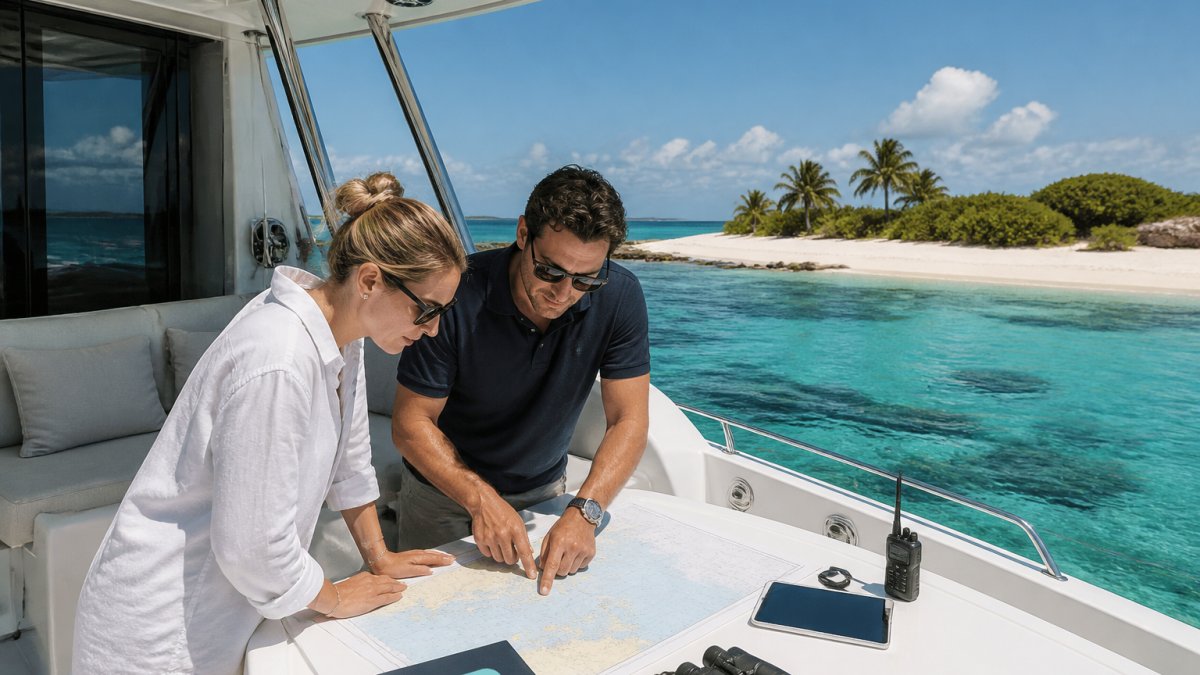
Buying a Yacht for Bahamas Crossings: What to Know
Last Updated: October 29, 2026
Quick Summary
Buying a yacht for Bahamas crossings is a passage-planning exercise before it is a shopping decision. The boat must handle roughly 50 nautical miles of open water from South Florida to Bimini, then keep working through shallow Bahamian banks where draft matters more than length. Prioritize range, fuel capacity and sea-keeping over interior finishes.
- Power catamarans offer stability and shallow draft for banks and sandbars; monohulls bring range and bluewater pedigree.
- Calculate usable range on your longest leg at loaded weight, leaving a reserve you never touch.
- Time your Gulf Stream crossing for a settled day with light wind and no approaching front.
- Carry a life raft and EPIRB rated for everyone aboard, plus offshore life jackets with lights and whistles.
- Charter a week in the Bahamas first to learn whether a catamaran or monohull suits you.
Table of Contents
- What Buying a Yacht for Bahamas crossings Really Requires
- The Best Boats for Bahamas Crossings: Catamaran or Monohull
- Yacht Range for Bahamas Crossing: How Much Fuel Range You Need
- Gulf Stream Crossing by Boat: Weather, Current and Timing
- Bahamas Boat Safety Equipment You Should Not Sail Without
- Yacht Types That Handle the Passage Well
- Costs and Ownership Realities of a Bahamas-Capable Yacht
- Chartering Before You Buy a Bahamas Cruiser
- Frequently Asked Questions
What Buying a Yacht for Bahamas crossings Really Requires
Buying a yacht for Bahamas crossings is a passage-planning exercise before it is a shopping decision. The boat must carry you from a South Florida inlet across the Gulf Stream to Bimini, roughly 50 nautical miles of open water, and then keep working through shallow Bahamian banks where draft matters more than length. Buyers often fixate on interior finishes while overlooking range, fuel capacity and sea-keeping, yet those three factors determine whether a boat is genuinely capable.
The distinction that matters: a coastal cruiser and a Bahamas-capable yacht are different products. One handles Biscayne Bay on a calm morning. The other handles a confused sea state, a two-knot current pushing sideways, and a fuel plan with a real reserve.
Below, we break down hull choice, range, weather windows, safety gear and ownership costs, so you can shop with a passage in mind rather than a brochure.
The Best Boats for Bahamas Crossings: Catamaran or Monohull
The best boats for Bahamas crossings split into two families, and neither wins outright. Power catamarans bring stability and shallow draft. Monohulls bring range and a long bluewater pedigree. Your answer depends on where you intend to spend your time: on the banks and sandbars, or on longer offshore runs.
Power Catamarans: Stability and Shallow Draft
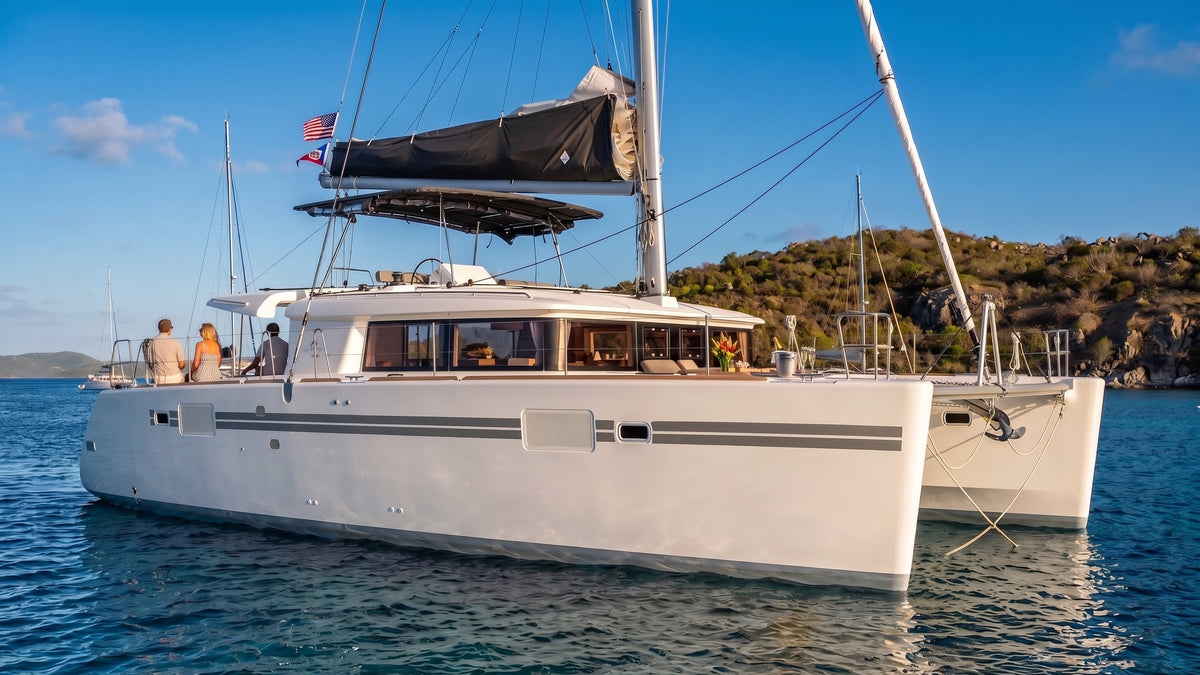
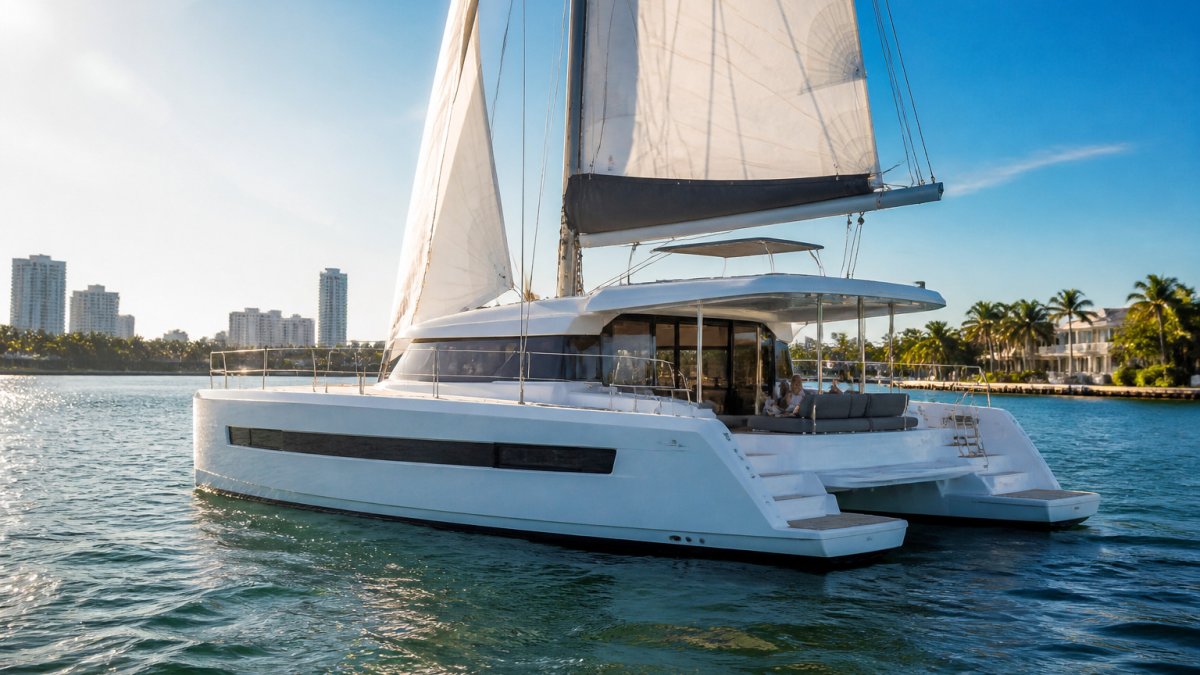
A power catamaran's advantage is behavioral, not cosmetic. Twin hulls reduce roll at anchor and underway, which matters on a crossing where the Gulf Stream stacks a short, steep chop. A wide beam also gives you deck space a monohull of the same length cannot match.
Draft is the second argument. A shallow-draft cat can tuck into Bahamian coves and sandbars that force a deeper monohull to anchor well offshore. If your plan is the Exumas and the Berry Islands, that access changes the trip.
The trade-off: cats can pound when pushed hard into a head sea, and they carry more windage. Slow down and they behave.
Monohulls: Range and Bluewater Heritage
Monohulls still own long-distance efficiency. A well-found displacement or semi-displacement hull tracks cleanly through confused seas and carries fuel for extended passages. For buyers eyeing the Abacos or Eleuthera with multi-day hops, that range matters.
The compromise is draft and roll. A deeper keel limits where you can anchor, and a monohull will roll more at rest. Stabilizers help, but they add cost and complexity.
Yacht Range for Bahamas Crossing: How Much Fuel Range You Need
Yacht range for a Bahamas crossing should be calculated on your worst realistic leg, not your best. The Miami to Bimini run is short, but Bimini to Nassau, or Nassau down to the Exumas, is where range planning earns its keep. Build a fuel plan that leaves a reserve you never touch, and treat any boat whose range only works in flat calm as unsuitable.
A practical framework:
- Calculate usable range, not tank capacity. Figure on a percentage of total capacity you are willing to burn.
- Plan the longest leg first, then confirm the boat can run it at a comfortable cruise speed with reserve intact.
- Account for generator and tender fuel, which quietly eats into your margin.
- Check range at loaded weight, with full water, gear and guests aboard.
Many buyers discover their range is adequate on paper and thin in practice once the boat is loaded for a week. Verify cruising consumption figures from the builder's documentation, not from a seller's recollection.
Gulf Stream Crossing by Boat: Weather, Current and Timing
A Gulf Stream crossing by boat is a timing problem more than a navigation problem. The Stream pushes north at a few knots, so a straight-line heading to Bimini will not track straight. You aim south of your destination and let the current carry you onto it.
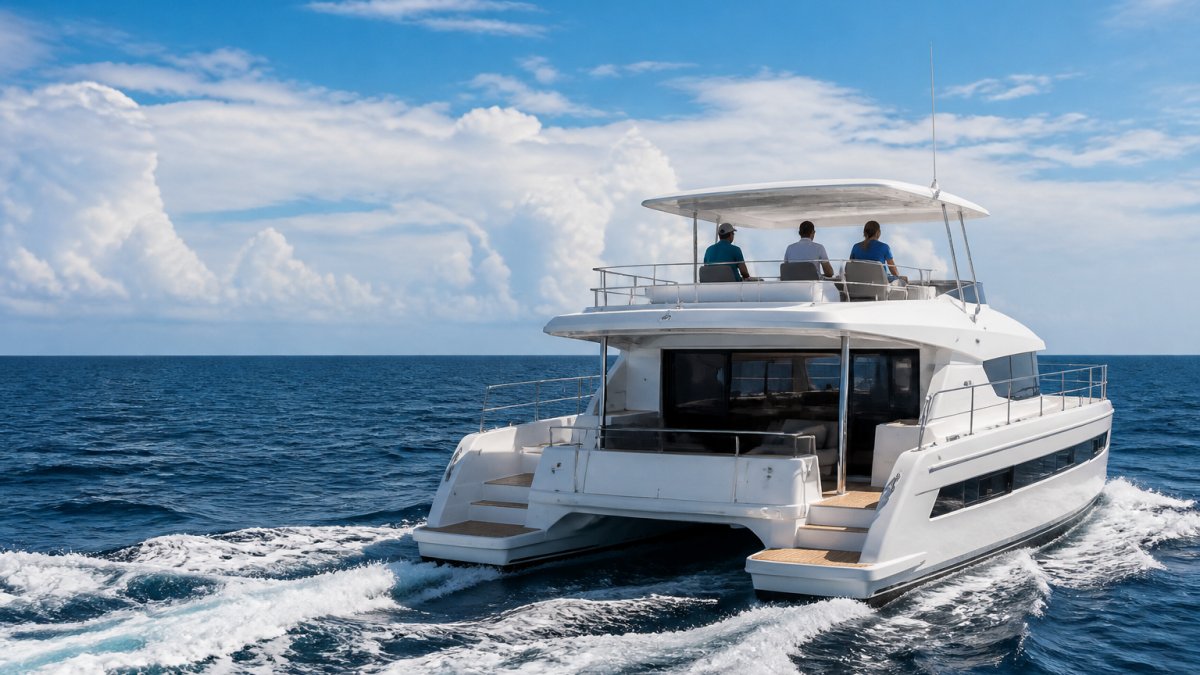
Weather windows decide everything. The Stream turns a moderate breeze into a steep, uncomfortable chop fast, and the window you want is a settled day with light wind and no approaching front. Crossing at first light gives you the calmest hours and daylight to spare.
Watch out: the most common mistake is treating a good forecast in Miami as a good forecast offshore. Check marine forecasts for the passage itself, and be willing to delay a day. Boaters who insist on a schedule are the ones who get caught out.
Bahamas Boat Safety Equipment You Should Not Sail Without
Bahamas boat safety equipment is not a checklist you satisfy once. It is the gear that lets you handle a problem without help, because assistance offshore can be hours away. The U.S. Coast Guard boating safety resources set the federal baseline, and a passage-capable boat should exceed it.
The essentials:
- Life raft and EPIRB rated for the number of people aboard
- Offshore life jackets with lights and whistles for every soul on board
- VHF radio with DSC plus a satellite communicator as backup
- Fire suppression in the engine room and handheld extinguishers throughout
- First aid kit and seasickness medication stocked before departure
- Tool kit, spare impeller, belts and filters for the engines
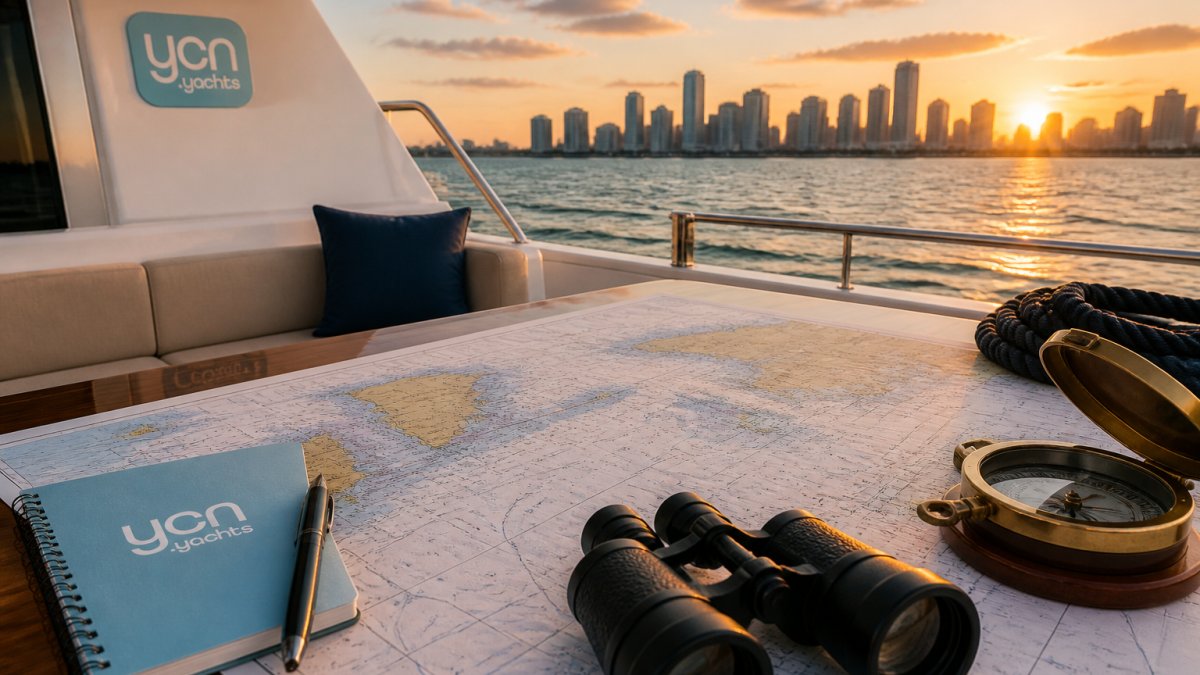
- Charts and a backup navigation source independent of the main plotter
A common mistake is buying a boat with a life raft past its service date. Certification and repacking records matter, and a raft that fails inspection is not safety gear.
Yacht Types That Handle the Passage Well
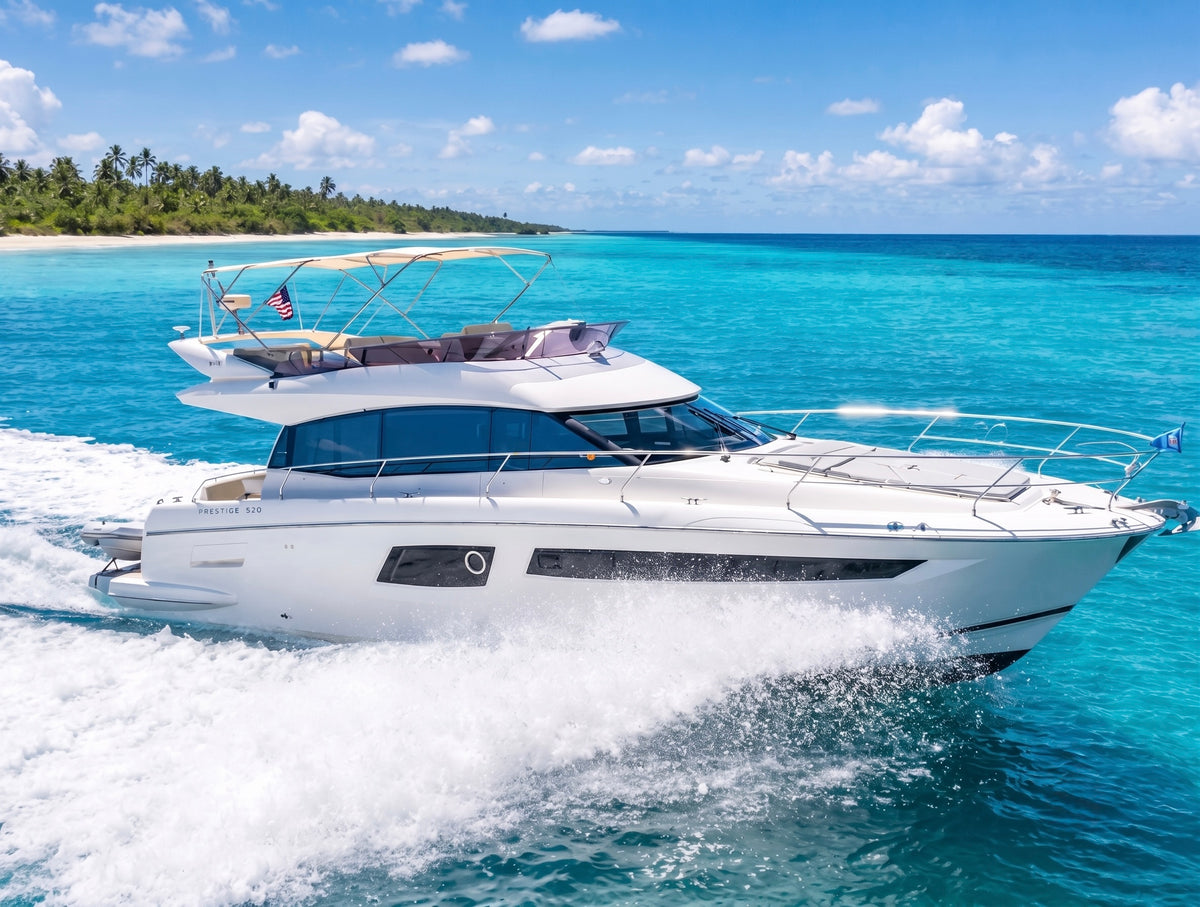
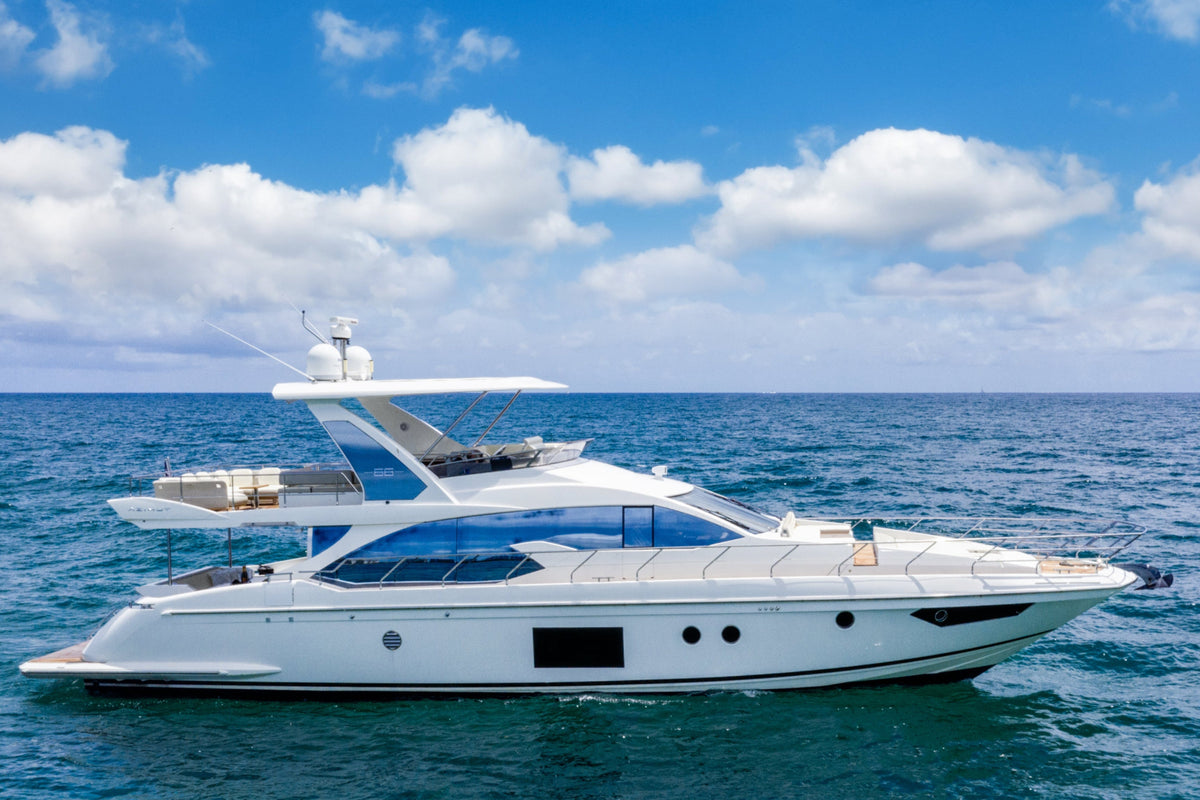
Certain yacht types handle the passage well, and the pattern is consistent: displacement or semi-displacement hulls, generous fuel capacity, and a layout built for time at sea. Express cruisers and light sport boats, however comfortable in Biscayne Bay, are the wrong tool for open water.
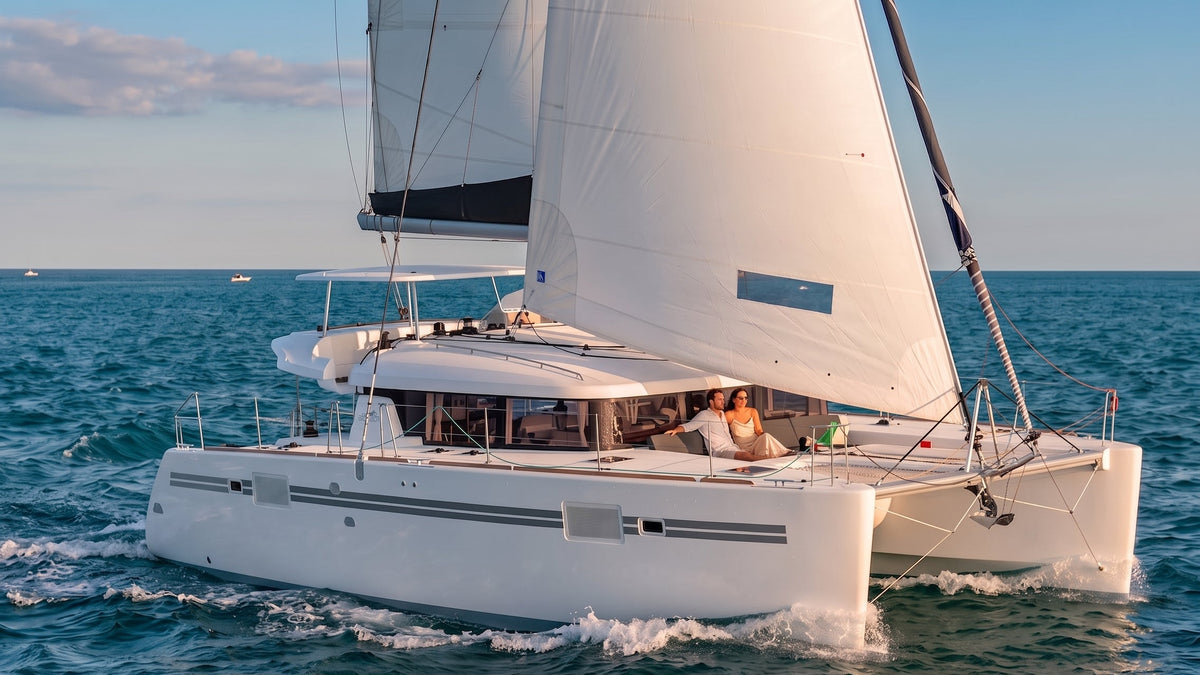
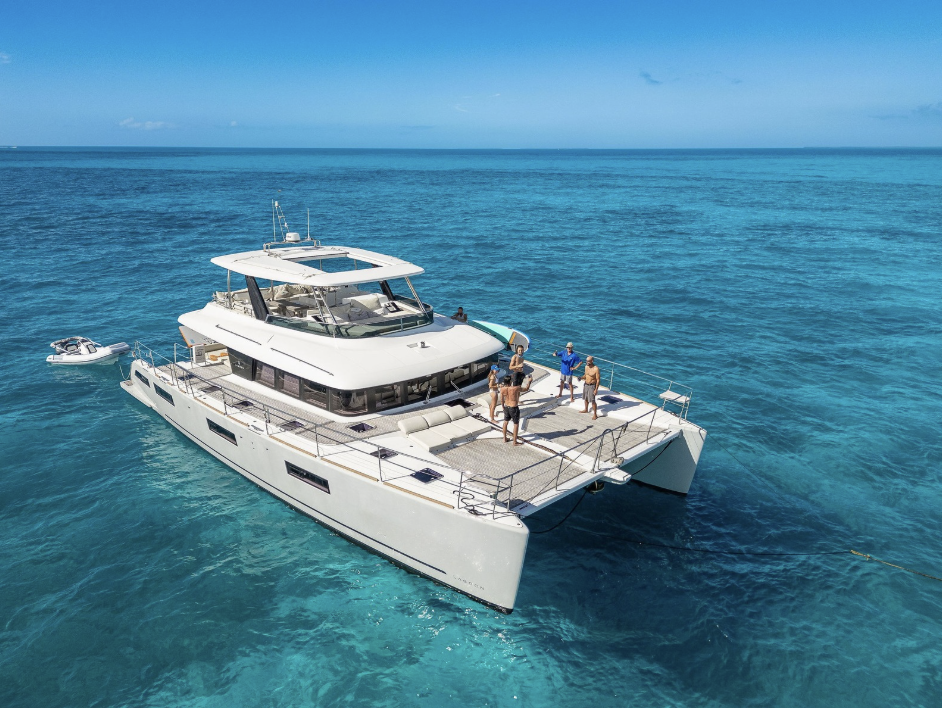
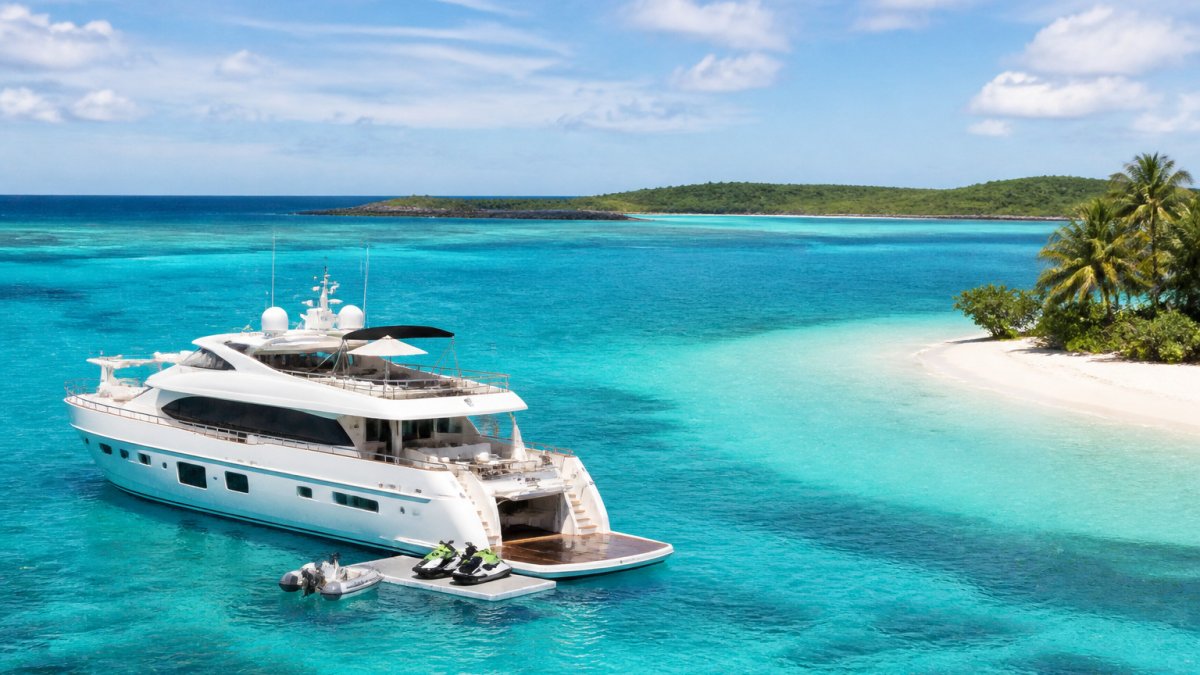
The catamaran segment is where most Bahamas-focused buyers land, and it is easy to see why. The 53ft Leopard Power Cat BruSea is a catamaran of this type, with a draft of just over three feet and a 25-foot beam on a 53-foot hull, carrying a tender, Seabob, paddleboards and snorkel gear.

If you want a structured way to weigh candidates side by side, our guide on how to compare luxury yachts for Bahamas crossings walks through the criteria in order.
Costs and Ownership Realities of a Bahamas-Capable Yacht
Ownership costs run well beyond the purchase price, and buyers routinely underestimate the recurring line items. Ownership carries recurring costs beyond the purchase price. Maintenance, haul-outs, bottom paint and engine service arrive on a schedule whether you use the boat or not.
Then there is the passage-specific spending: safety gear certification, life raft servicing, offshore electronics, and the fuel for a crossing at cruise speed. A boat capable of the passage is a boat with more systems to maintain.
Buyers should be honest with themselves about how often they will use the boat. That is not an argument against buying. It is an argument for knowing what you are signing up for before the survey, not after.
Chartering Before You Buy a Bahamas Cruiser
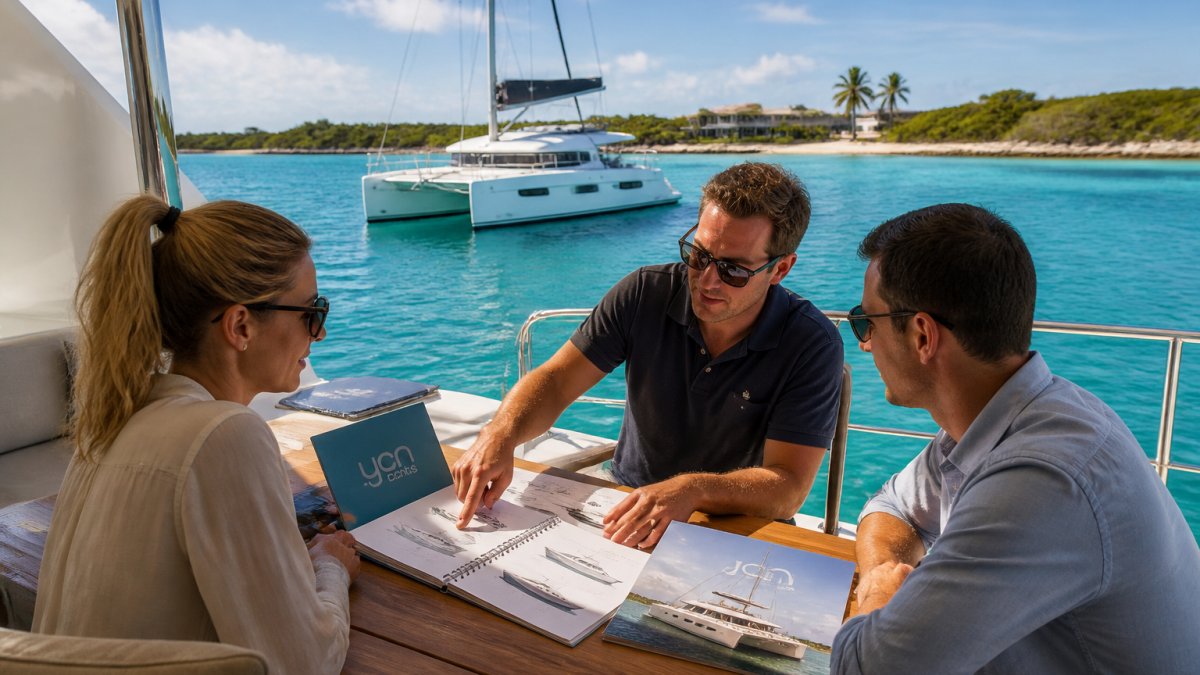
Chartering first is the smartest move in this entire process, and it is the step most buyers skip. A week aboard a crewed yacht in the Bahamas tells you more about your real preferences than a year of reading specs. You learn whether you actually enjoy the crossing, how your family handles time on the water, and whether a catamaran's deck space or a monohull's motion suits you.
YCN Yachts offers Bahamas yacht charters that can help you test cruising grounds before you commit to a hull type. For buyers weighing the two catamaran configurations directly, our power catamaran vs sailing catamaran comparison covers the trade-offs, and our guide on how to sail from Miami to the Bahamas covers the passage itself.
A quick reference for matching your priority to the right platform:
| Priority | Best Hull Type | Why It Fits |
|---|---|---|
| Sandbar and shallow-cove access | Power catamaran | Minimal draft, wide deck space |
| Long offshore legs and range | Monohull | Efficient hull, larger fuel capacity |
| Comfort at anchor for groups | Power catamaran | Reduced roll, stable platform |
| Bluewater passage pedigree | Monohull | Proven offshore sea-keeping |
| Family and guest volume | Power catamaran | Beam translates to living space |
The gap between a boat that can reach the Bahamas and one that handles the passage comfortably is wider than most listings suggest. Get the hull type, range and safety gear right, and the crossing becomes routine rather than an event.
YCN Yachts helps buyers and charter guests think through that decision with charter coordination in South Florida and the Bahamas. Our network provides access to approximately 1,700 yachts worldwide, and our team can help arrange a charter in the cruising grounds you are considering. Get a quote from YCN Yachts and test the passage before you buy the boat.
Frequently Asked Questions
What type of yacht is best for crossing from Miami to the Bahamas?
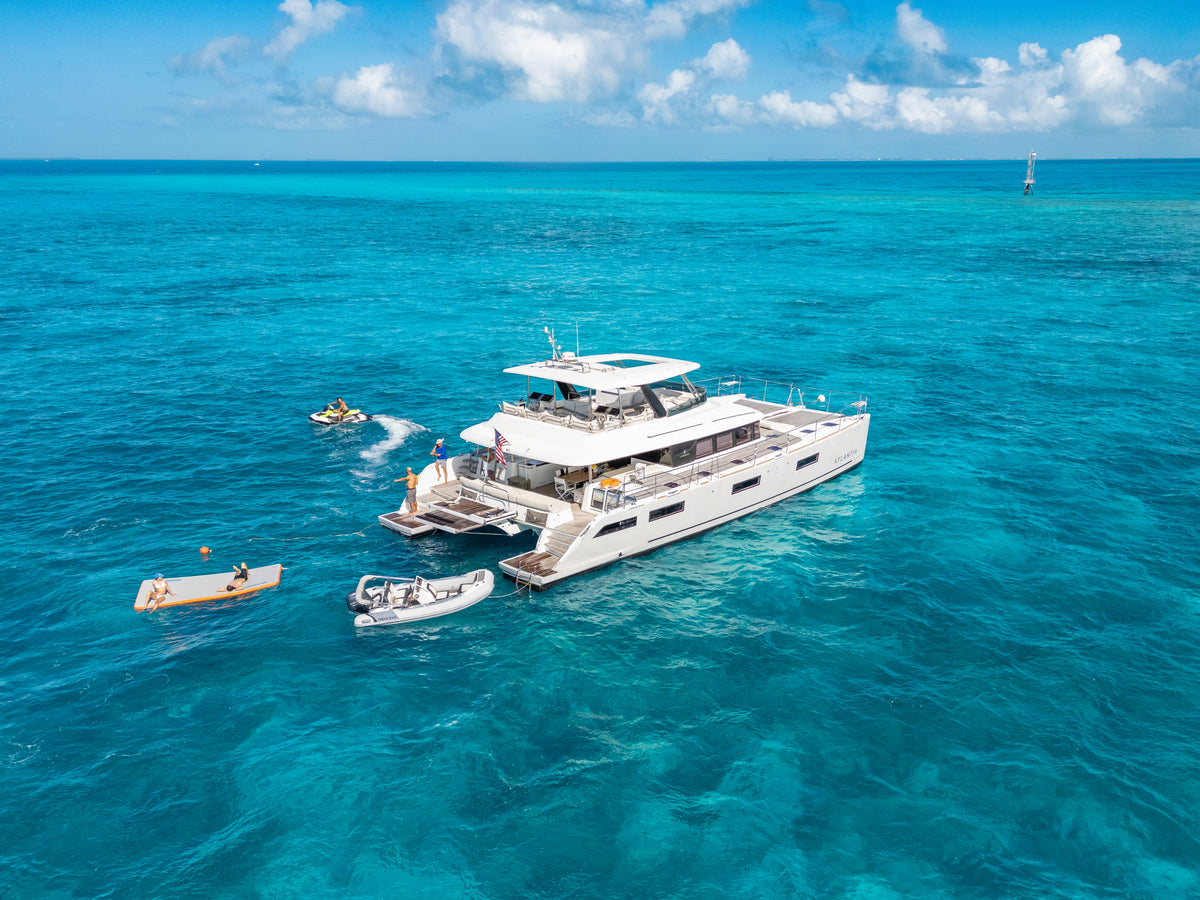
Power catamarans and well-found monohulls both make the passage, but they suit different owners. Catamarans such as the 65ft Lagoon Atlantia offer a stable, level ride for Bahamas cruising. Monohulls generally carry more fuel range for longer hops. Match the hull to your typical itinerary: day trips to Bimini favor a catamaran, while multi-day Exumas runs reward range and sea-keeping.
How much yacht range do you need for a Bahamas crossing?
Plan for a comfortable reserve beyond the straight-line distance. Bimini sits roughly 50 nautical miles east of Miami, while Nassau is closer to 180. A yacht range for Bahamas crossing planning should cover the passage plus a healthy margin for weather diversions, holding patterns and generator use at anchor. Many owners aim for at least double the one-way distance in usable range before committing to an offshore-capable vessel.
Can a yacht cross the Gulf Stream safely?
Yes, with the right boat and the right weather window. The Gulf Stream crossing by boat demands attention to current and sea state, since the stream can run several knots north and build steep chop when wind opposes it. Choose a vessel with solid sea-keeping, reliable twin engines and current safety gear, then wait for a settled forecast. Experienced captains often cross in the early morning when conditions are calmest.
What Bahamas boat safety equipment should be aboard?
At minimum, carry an EPIRB, a life raft rated for the crew, inflatable PFDs for everyone aboard, a VHF radio with DSC, a satellite communicator, flares, a first-aid kit and a ditch bag. Fire extinguishers, bilge pumps and a spare anchor matter too. Check that all gear is in date and serviced before you leave. A pre-crossing checklist reviewed with your captain keeps the passage safe and predictable.














Laisser un commentaire
Ce site est protégé par hCaptcha, et la Politique de confidentialité et les Conditions de service de hCaptcha s’appliquent.