Article: What Features Matter Most in a Power Catamaran?
What Features Matter Most in a Power Catamaran?
Last Updated: October 25, 2026
Quick Summary
The most important power catamaran features include deck layout with a well-designed flybridge and full aft deck, shallow draft for accessing remote anchorages, cabin and head count for guest comfort, water toys inventory, and galley quality for meal preparation. These power catamaran features directly determine whether your charter becomes a memorable experience or simply a day on the water.
- Catamarans draw three to five feet of water versus six to eight feet for monohulls, allowing access to sandbars and shallow anchorages other yachts cannot reach.
- A full-width aft deck on a catamaran provides real dining and lounging space, while the flybridge keeps the captain close to guests under shade.
- Guest capacity matters less than the crew-to-guest ratio, number of staterooms, and heads per guest, especially on multi-day charters.
- Water toys should include a tender, paddleboards, snorkel gear, and floating mat as standard; jet skis and Seabobs are typically add-ons.
- Galley equipment quality determines meal options, a full kitchen with proper stove and oven enables real meals, while basic galleys limit you to sandwiches.
Table of Contents
- Why Power Catamaran Features Define Your Charter Experience
- Power Catamaran vs Monohull: Structural Advantages That Matter
- Deck Space and Layout: Where the Day Actually Happens
- Power Catamaran Amenities That Transform a Day on the Water
- Understanding Power Catamaran Guest Capacity and Comfort
- Power Catamaran Charter Checklist: What to Verify Before Booking
- Finding Your Ideal Power Catamaran with YCN Yachts
- Frequently Asked Questions
Why Power Catamaran Features Define Your Charter Experience
Choosing the right power catamaran means understanding what separates a comfortable day on the water from an exceptional one, and power catamaran features are what make that difference. The features you prioritize depend on your group, your destination, and what you actually want to do once you're anchored. At YCN Yachts, we've coordinated over 1,750 yacht charters across our operating markets, and we've learned that the best charter starts with matching the right yacht to your needs.
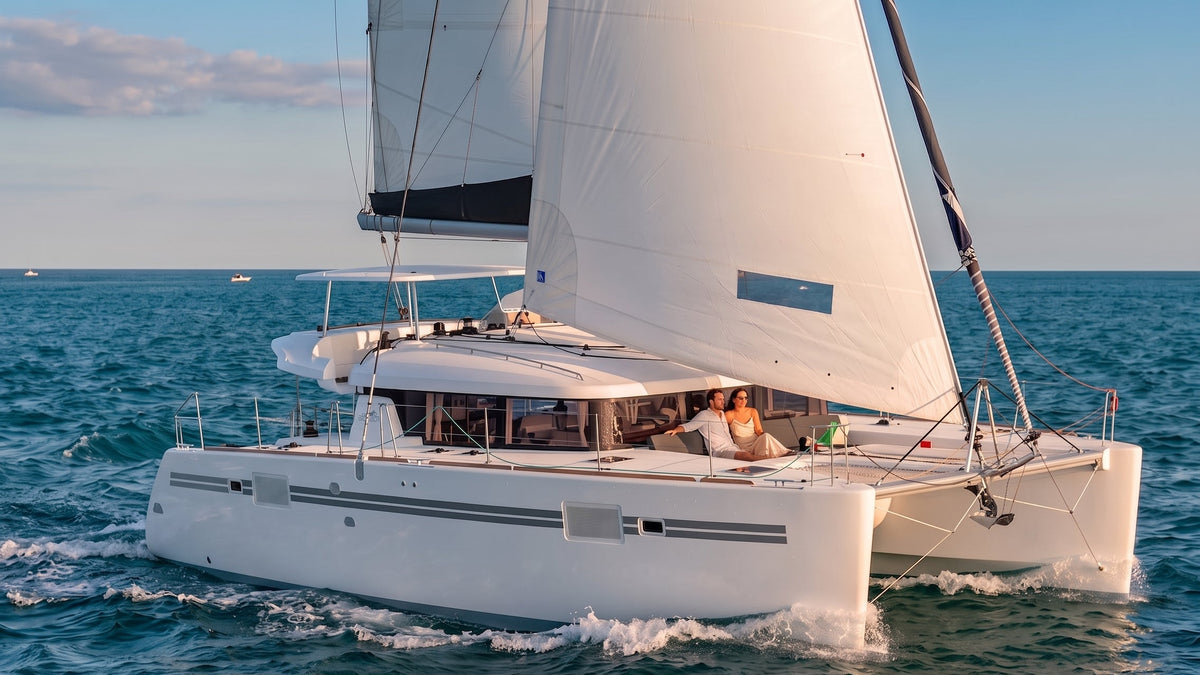
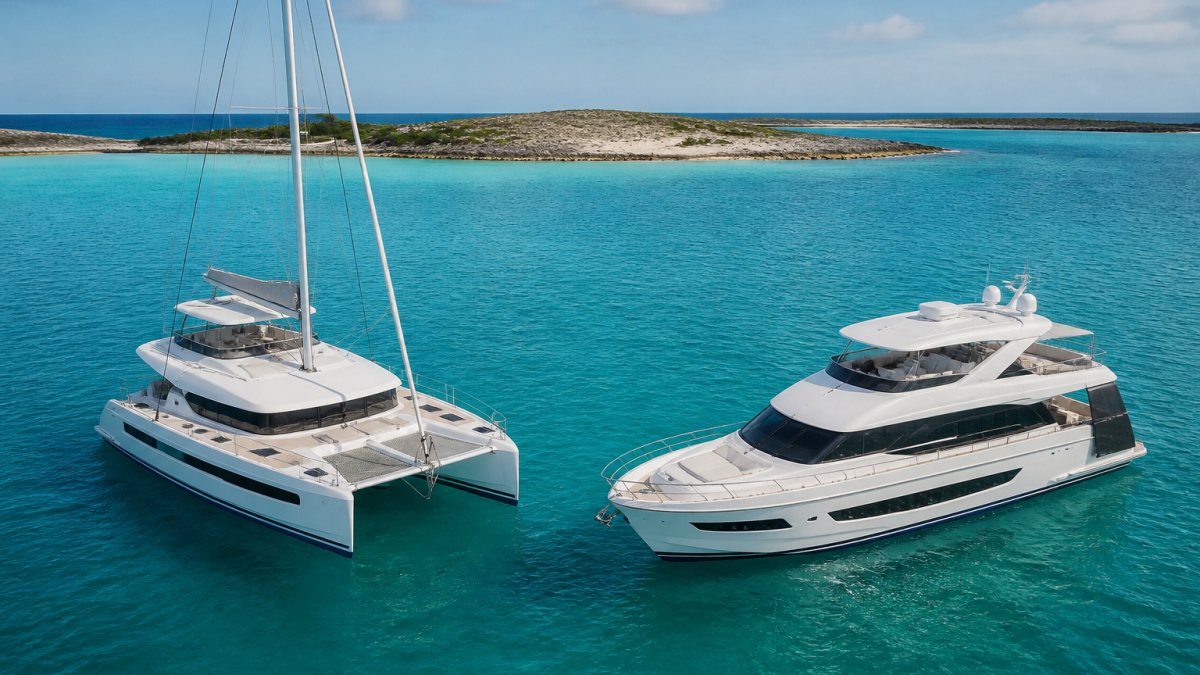
A power catamaran's dual-hull design already gives you advantages a monohull can't match: stability at anchor, flat decks, and shallow draft. Explore the direct comparison between catamaran and monohull designs to understand the structural trade-offs in detail. But within that category, the differences between one catamaran and another matter enormously. Some excel at day charters with groups. Others handle multi-day passages better. A few offer amenities that transform a standard outing into something memorable.
Below, we'll walk you through the features that actually change your experience, from deck layout to guest capacity to the equipment waiting for you when you arrive.
Power Catamaran vs Monohull: Structural Advantages That Matter
The catamaran hull is the foundation of everything else. Two hulls mean stability that a single-hulled yacht simply cannot match. When you're anchored in the Bahamas with ten people moving around on deck, a catamaran stays level. Drinks stay on the table. Anyone prone to seasickness has a dramatically better day.
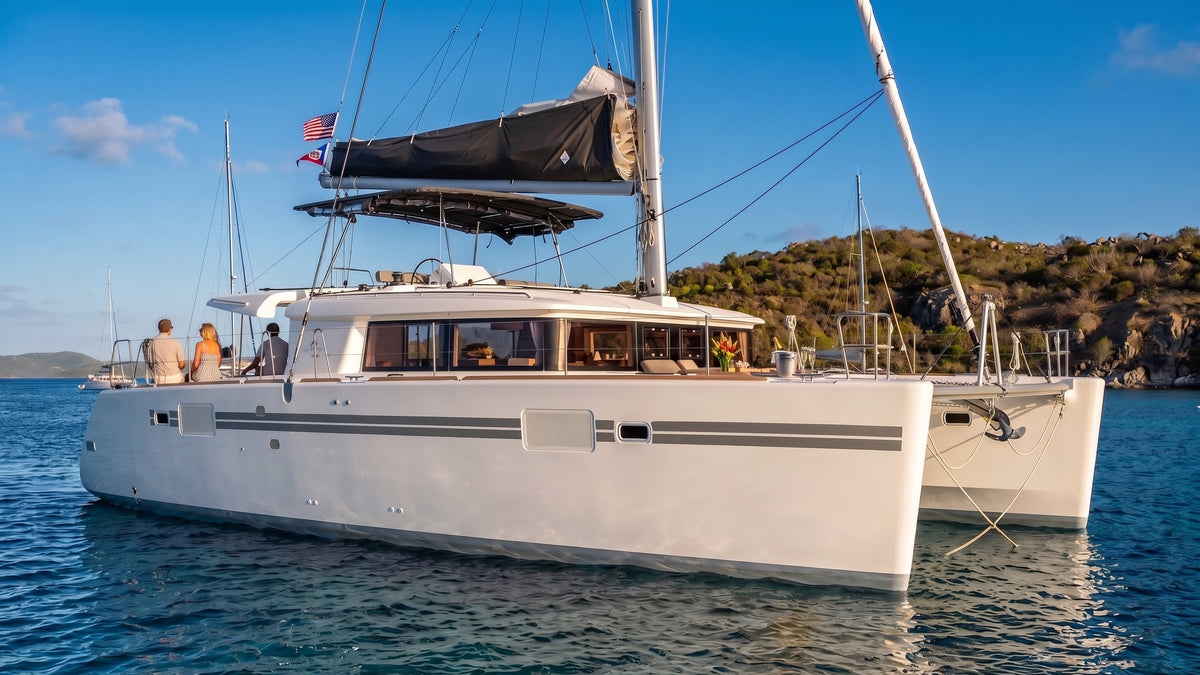
The beam, the width of the boat, tells the real story. A 53-foot catamaran can have a 25-foot beam, while a 53-foot monohull typically runs 14 to 16 feet wide. That extra width translates directly into usable deck space. You get a full aft deck for dining and lounging instead of a narrow walkaround.
Draft matters more than many charter guests realize. Catamarans typically draw three to five feet of water. Monohulls in the same size range draw six to eight feet. In the Bahamas, that difference is the difference between anchoring at a sandbar and anchoring a half mile away from it. A shallow draft lets you reach coves, flats, and anchorages that deeper yachts have to admire from a distance.
Comfort at sea differs too. Catamarans don't roll the way monohulls do. They move through chop more smoothly and maintain a more level platform underway. For guests who are sensitive to motion or who simply want to enjoy a meal without bracing themselves, the catamaran wins.
American Boat and Yacht Council standards for catamaran design
Deck Space and Layout: Where the Day Actually Happens
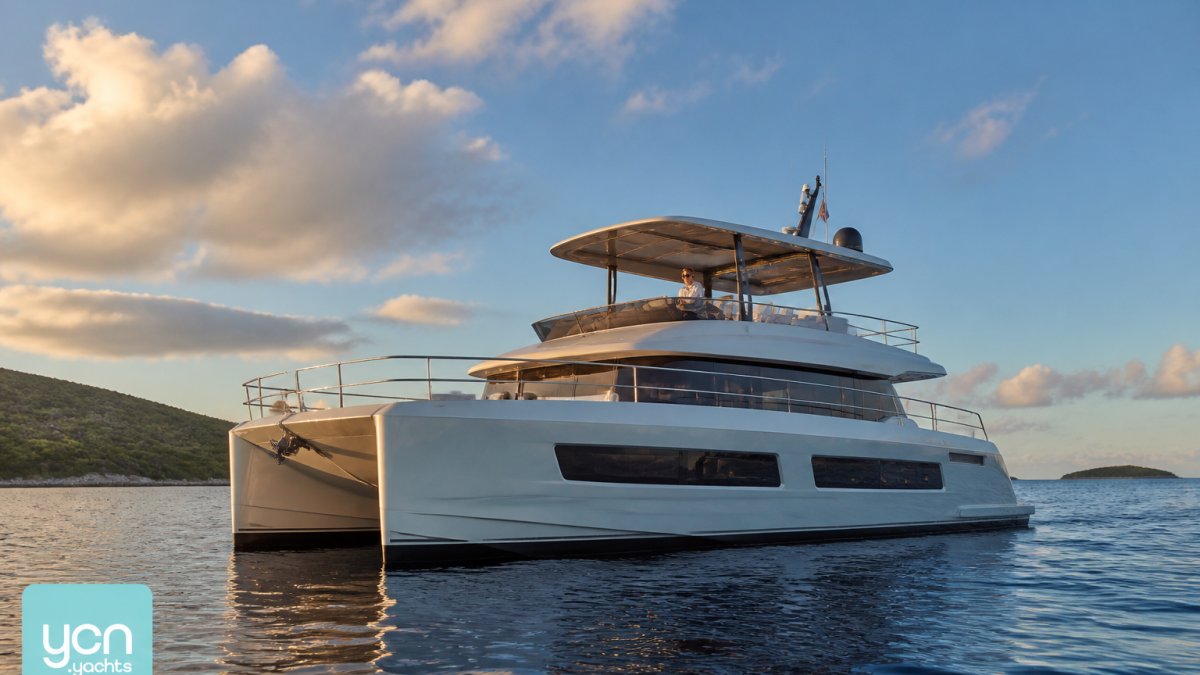
The flybridge is where most of the day unfolds. This is where your captain stays close to the group while everyone else enjoys open air and views. A well-designed flybridge has the helm positioned so the captain can see the water and the guests at the same time.
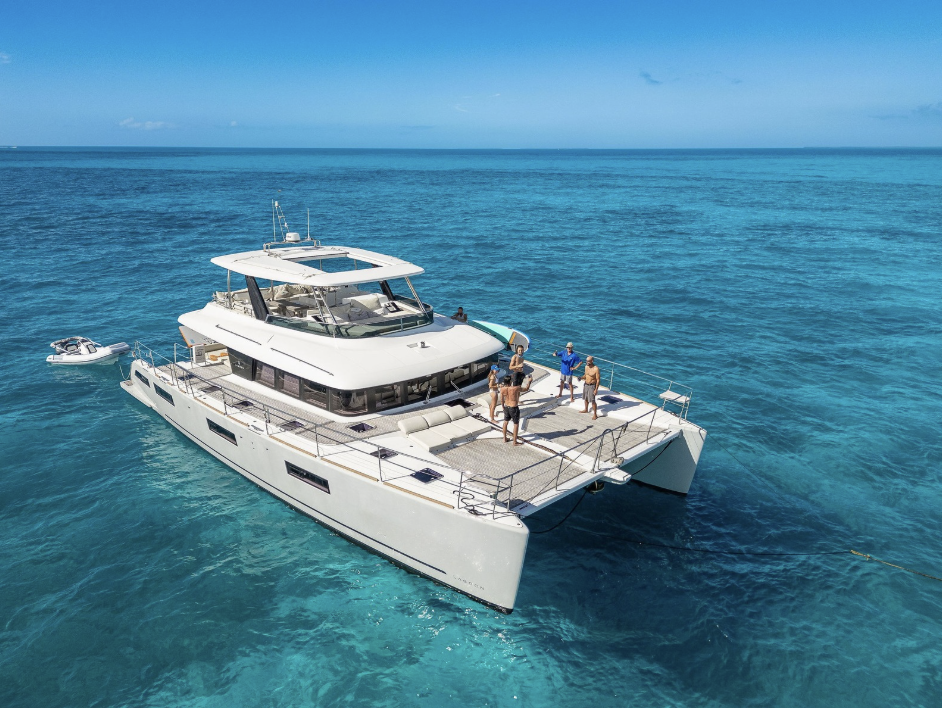
The aft deck matters equally. This is your dining and lounging area. A full-width aft deck on a catamaran gives you real space to set up a table, arrange lounge chairs, and move around without bumping into people. On a monohull, you get a narrow walkway. On a catamaran, you get a terrace.
The bow is the second social zone on a catamaran. While the aft deck is for dining and conversation, the bow is for sun and quiet. Some catamarans have a large sun pad here. Others have a jacuzzi.
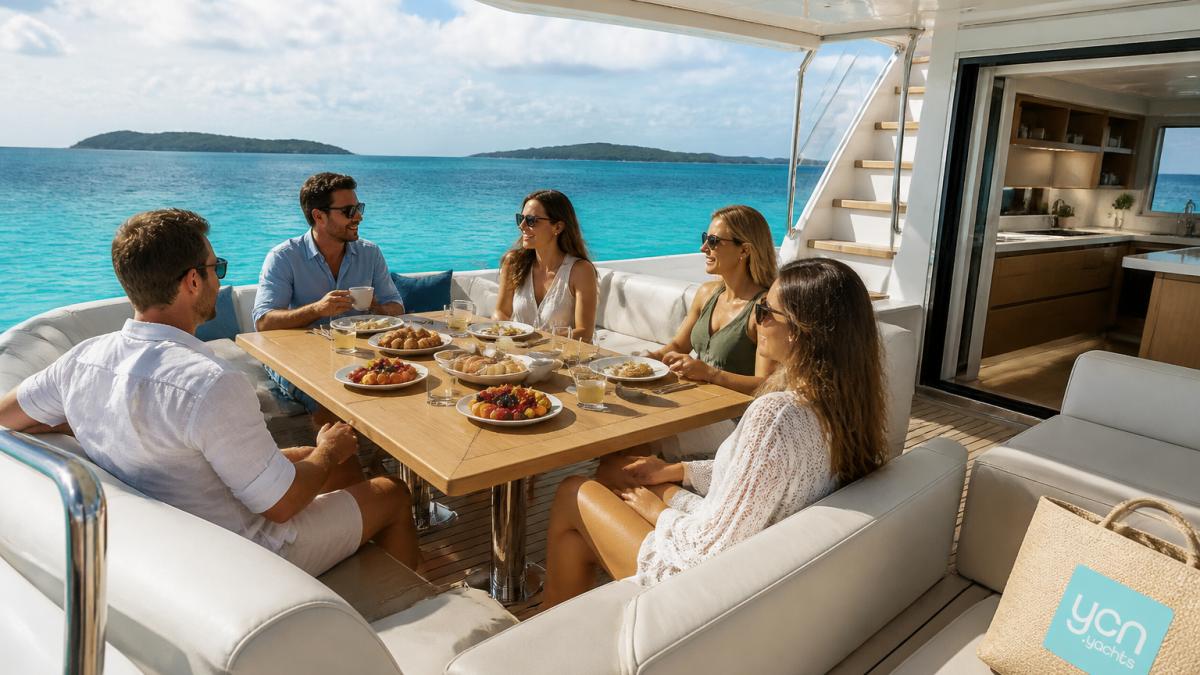
Inside, the main salon should flow seamlessly to the aft deck. Large windows bring in light and views. The galley should be positioned so the crew can prepare food and drinks without feeling isolated from the group. A bright, open layout makes the boat feel larger than its dimensions.
Power Catamaran Amenities That Transform a Day on the Water
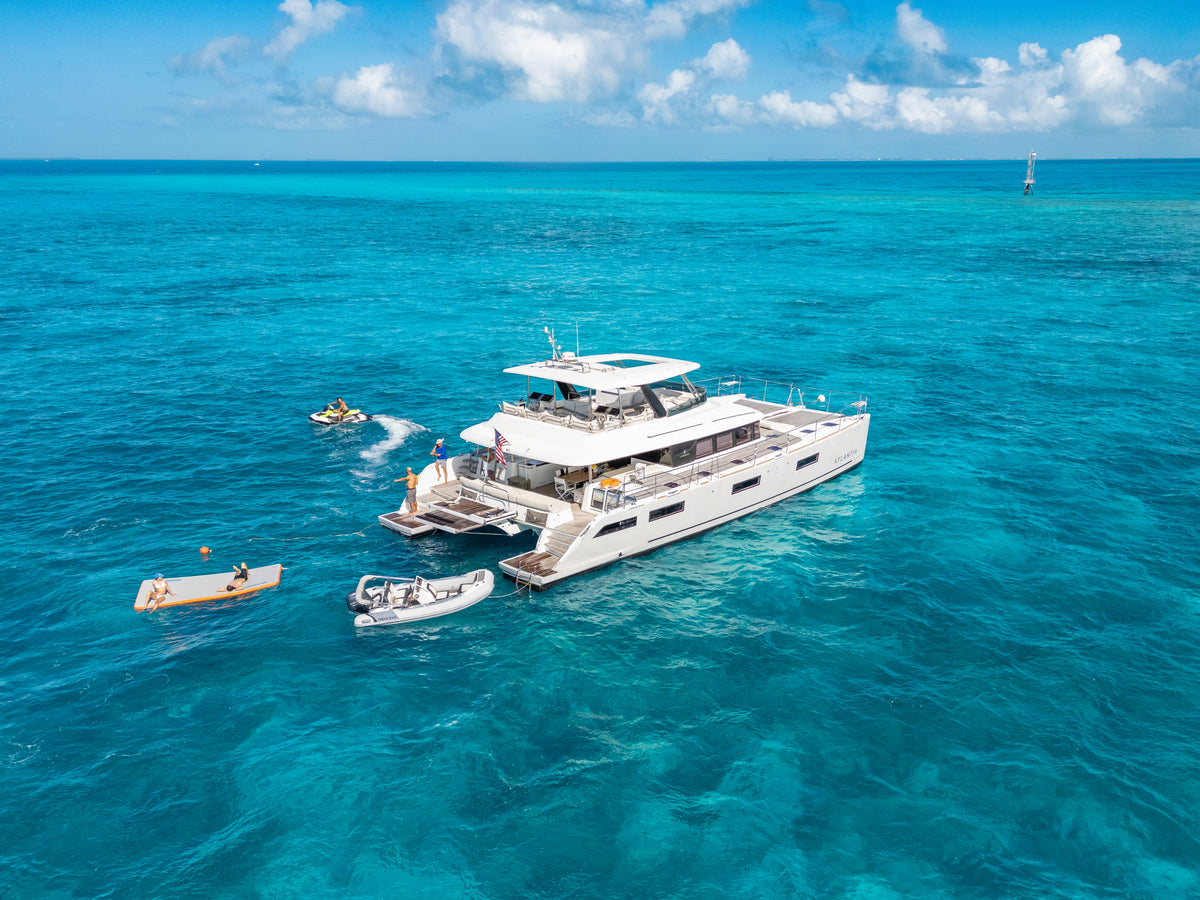
The water toys are what fill the day. A complete kit includes a tender for getting to shore, paddleboards for exploring shallow water, snorkel gear for reefs, and tubes for guests who just want to float and laugh. A Seabob, an electric underwater scooter, turns a swim stop into an adventure.
Fishing gear matters if your group wants to fish. A jet ski on request adds speed and energy for groups who want active days rather than static anchoring. Some catamarans carry a wakeboard or pull tubes for guests who want to be towed behind the boat.
The galley equipment determines what the crew can prepare. A full galley with a proper stove, oven, and refrigeration means real meals. A basic galley limits you to sandwiches and simple fare. For multi-day charters, the galley quality directly affects the experience.
Air conditioning and heating matter more than many guests expect. A catamaran with good climate control below deck gives you a refuge if the weather turns or if someone wants to nap. In the Bahamas, air conditioning is essential comfort, not a luxury.
Entertainment systems, sound systems, flat-screen TVs, streaming capability, matter for some groups and not at all for others. Know what your group values before you book.
Understanding Power Catamaran Guest Capacity and Comfort
Guest capacity on a catamaran is not just about how many people fit. It's about how many people can be comfortable. A 65-foot catamaran might carry 12 guests and a crew of two. A 70-foot catamaran might carry 13 guests and a crew of three. The difference is not just space, it's the crew-to-guest ratio and the number of cabins and heads below deck.
Cabin layout affects comfort significantly. A catamaran with six staterooms gives each guest privacy and personal space. A catamaran with three staterooms means some guests are sharing. For families or groups of friends, more cabins mean better sleep and fewer conflicts.
The number of heads, bathrooms, matters on multi-day charters. If you have 12 guests and two heads, mornings are tight. Three or four heads dramatically improve the experience. Each guest should have reasonable access without waiting.
Sleeping comfort depends on mattress quality and cabin size. A cabin with a double bed, soft bedding, and hull windows that bring in daylight and a view of the water feels like a retreat. A cabin that's cramped and dark feels like a berth.
Power Catamaran Charter Checklist: What to Verify Before Booking
Before you commit to a charter, verify the specifics. Understand what amenities, services, and costs are typically included in a charter agreement to ensure you're comparing apples to apples. Ask for the exact catamaran you'll be getting. Different boats in the same model line can have different equipment or condition.
Check the water toys inventory. Ask what's included and what costs extra. A complete kit, tender, paddleboards, snorkel gear, floating mat, should be standard. A jet ski or Seabob might be an add-on.
Confirm the crew. For a crewed charter, you want a professional captain and stew who know the destination and can handle requests.
Verify the galley capabilities. If your group has dietary preferences or restrictions, you need to know what the crew can prepare. A full galley with a chef is different from a basic galley with a deckhand who can make sandwiches.
Ask about fuel. On some charters, fuel is included. On others, it's an additional cost (called APA, or Advance Provisioning Allowance). Clarify what's included in your quote.
Confirm the itinerary. If you're chartering in the Bahamas, where can you go in the time you have? What are the realistic travel times between anchorages? What activities are available at each stop?
| Feature Category | What to Check | Why It Matters |
|---|---|---|
| Deck Layout | Flybridge shade, aft deck width, bow configuration | Determines where and how your group spends the day |
| Water Toys | Tender, paddleboards, snorkel gear, Seabob | Affects what activities are possible during stops |
| Cabins & Heads | Number of staterooms, heads per guest, mattress quality | Impacts comfort on multi-day charters |
| Galley | Full kitchen vs. basic, crew experience | Determines meal quality and dietary flexibility |
| Crew | Captain experience, stew background, staff ratio | Affects service quality and safety |
| Shallow Draft | Typical draft depth | Determines which anchorages and sandbars you can reach |
Finding Your Ideal Power Catamaran with YCN Yachts
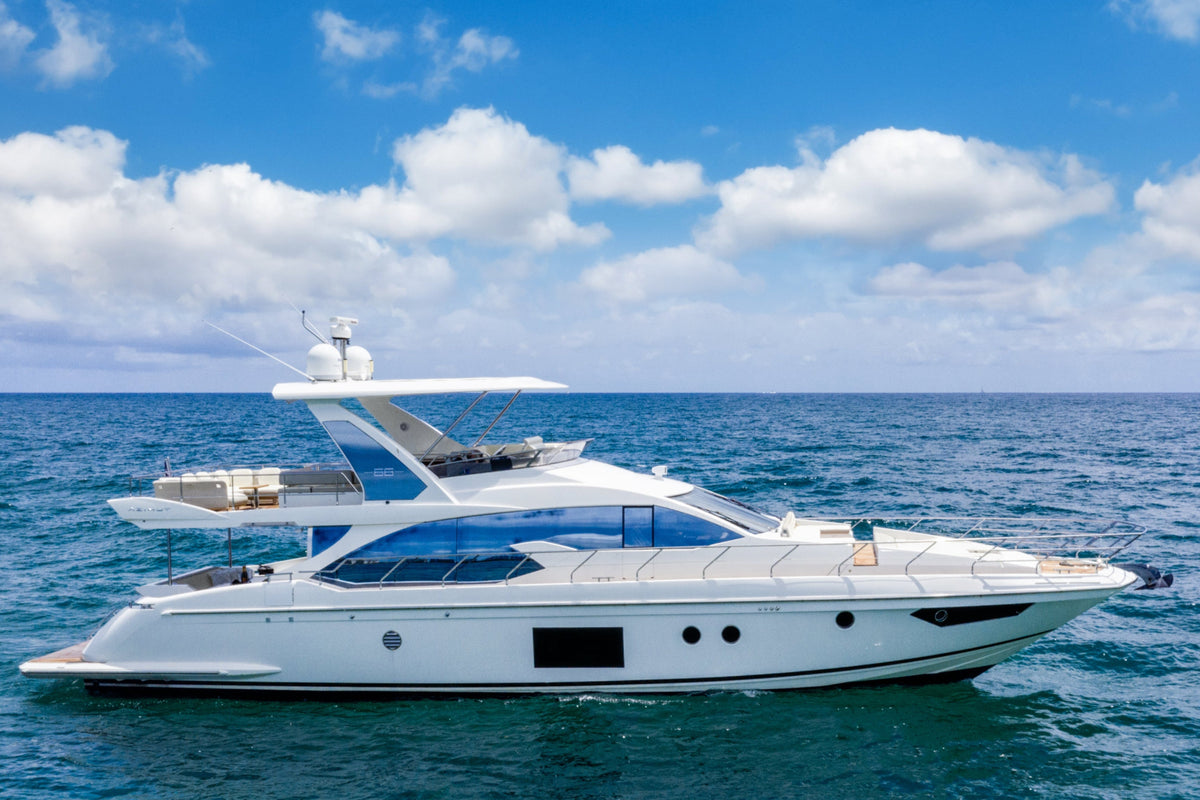
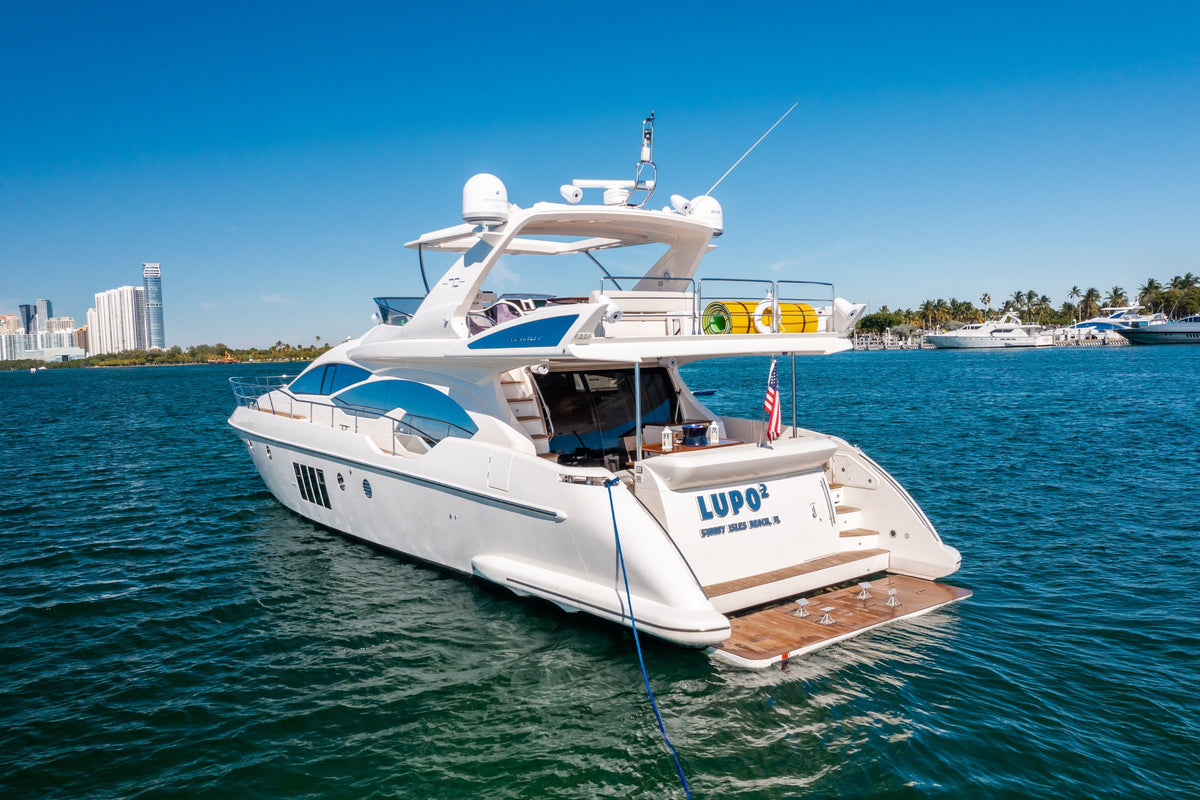
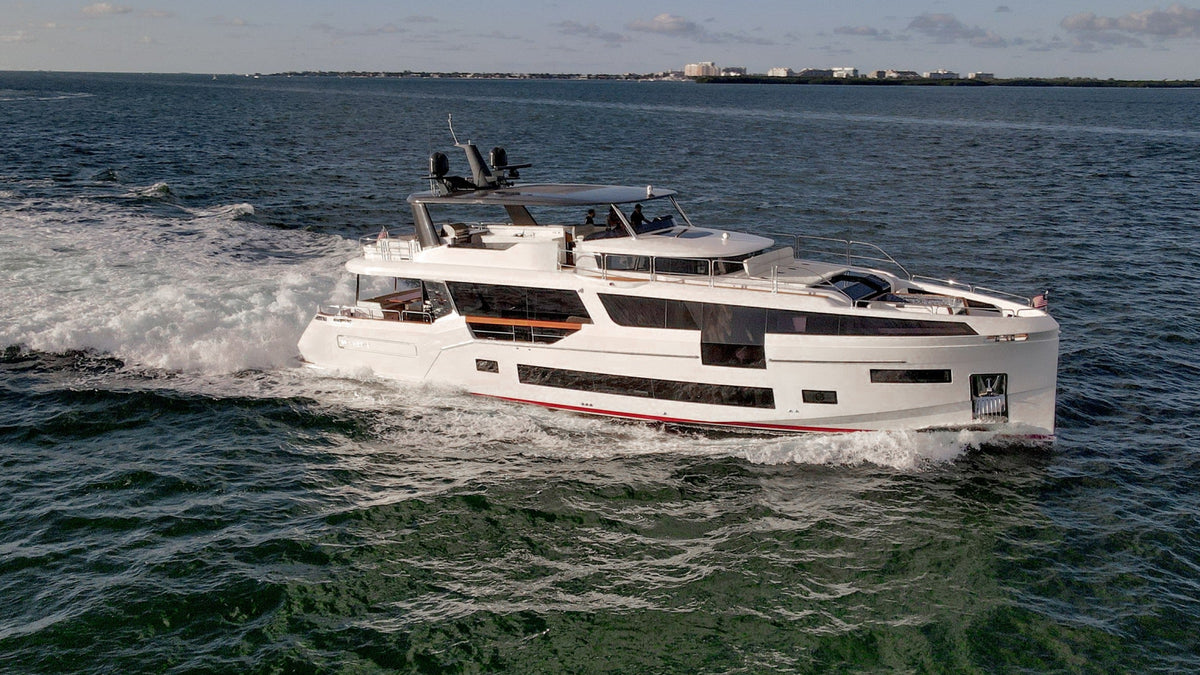
The power catamarans in the YCN Yachts fleet are selected for specific use cases and destinations. The 44ft Aquila Let it be 3 is built for Nassau day charters and sandbar stops, stable, easy to move around on, with a flybridge and open deck space that works for small groups and families. The 53ft Leopard BruSea reaches the shallow water most Bahamas yachts can't access, with a three-foot draft and a complete water-toys kit included. The 65ft Lagoon Atlantia handles multi-day Exumas charters with six staterooms and the range to explore hidden coves and snorkeling reefs. The 70ft Sunreef Orca is the widest and most stable platform in the fleet, built for large groups, birthdays, and anyone who wants maximum deck space and comfort at anchor.


Each yacht is crewed by professional captains and stewards who know the destinations. Each carries the equipment that turns a boat into an experience. The difference between choosing the right catamaran and the wrong one is the difference between a good day and a day your group talks about for years.
International Maritime Organization standards for yacht safety and equipment
Bahamas Ministry of Tourism guidance on popular anchorages and cruising routes
When you're ready to discuss your specific needs, your group size, your destination, your budget, and what matters most to you, request a personalized charter quote through Private Yacht Charter Quotes. YCN Yachts has coordinated charters for families, corporate groups, celebrations, and travelers from around the world. Whether you're planning a day on the water in Miami Yacht Charters, exploring the islands with Bahamas Yacht Charters, or considering Worldwide Luxury Yacht Charters to distant destinations, we match you with the right yacht, the right crew, and the right itinerary for what you want to experience.
Frequently Asked Questions
What makes power catamaran features superior to a traditional monohull?
Power catamarans deliver stability that monohulls cannot match. The twin-hull design eliminates rolling at anchor, keeps food on tables, and provides a significantly smoother ride for guests prone to seasickness. The wide beam also creates substantially more usable deck space without requiring a longer overall length. For charter guests, this means comfort and accessibility throughout the day.
How many guests can a typical power catamaran accommodate?
Most power catamarans in active charter service carry 8 to 13 guests comfortably, depending on the vessel's size and configuration. A 44-foot catamaran typically accommodates 6 to 8 guests, while larger models like a 65-foot or 70-foot catamaran can host 12 to 13. Guest capacity directly affects onboard space, cabin availability, and the overall experience, so matching group size to the right vessel is critical.
What power catamaran amenities should I prioritize for a multi-day charter?
For extended charters, prioritize a full galley with professional-grade equipment, multiple en-suite cabins with private heads, and a spacious salon that serves as a gathering space. Water toys, Seabobs, paddleboards, snorkel gear, and tenders, transform downtime at anchor. A functional flybridge with shade and seating keeps the group connected while protecting from sun. These amenities directly affect comfort and guest satisfaction over multiple days.
What should I check on a power catamaran charter checklist before committing?
Confirm all advertised amenities are actually aboard and functional. Check the crew's qualifications and experience with your group size. Understand what's included in the charter price versus what incurs additional fees. Confirm departure location, fuel policy, and cancellation terms. These steps prevent surprises and ensure the vessel matches your expectations.













Leave a comment
This site is protected by hCaptcha and the hCaptcha Privacy Policy and Terms of Service apply.