
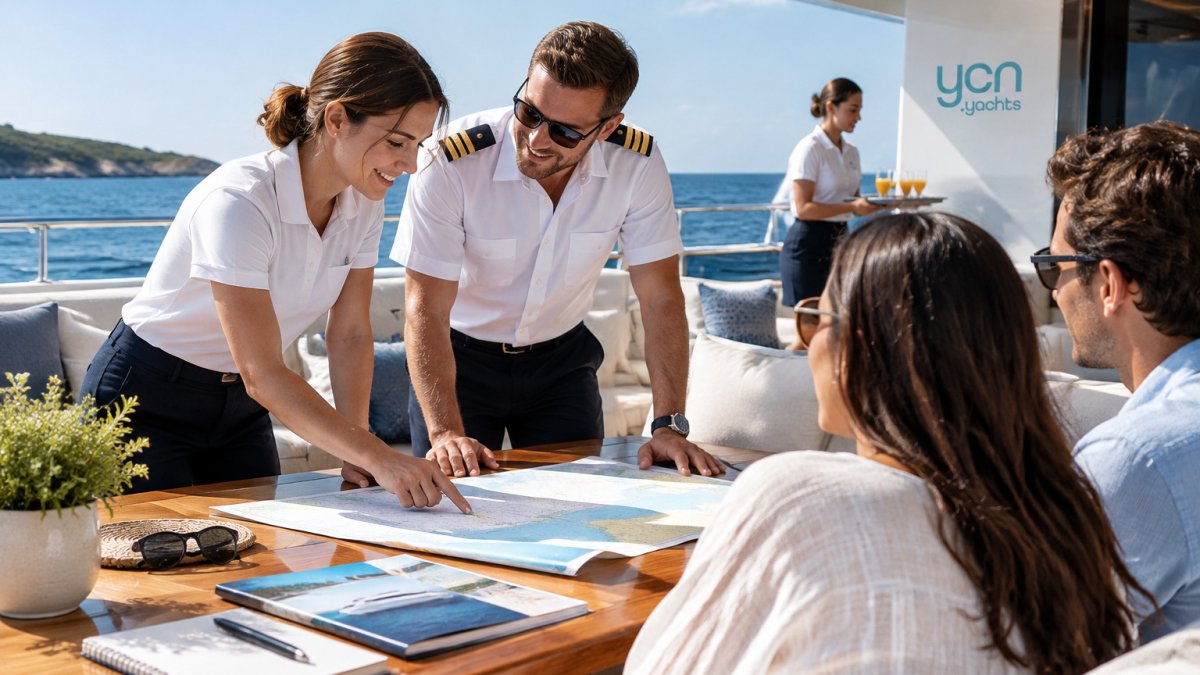
How to Plan What to Expect on a Crewed Yacht Charter
Last Updated: November 21, 2026
Quick Summary
A crewed yacht charter is a private trip on a yacht with a professional captain and crew who run the boat and look after guests. Plan it by settling guest count, trip length, departure point, and priorities first, then confirm inclusions, meals, and costs in writing before you board.
- Decide guest count, trip length, and departure point first, since these shape every other choice.
- The captain and crew handle navigation, safety, and guest service, so you do not operate the yacht.
- Confirm in writing what the base rate covers, including fuel, provisioning, taxes, and gratuity.
- Build flexibility into your itinerary, because weather and sea state can change plans on the day.
- Share dietary needs, mobility concerns, and swimming ability with the crew before your trip.
Table of Contents
- Start With the Trip You Are Planning
- What Is Included in a Crewed Yacht Charter
- How a Typical Day on a Crewed Yacht Charter Works
- Building a Crewed Yacht Charter Itinerary Around Weather and Time Underway
- Overnight Yacht Charter Versus Day Charter Expectations
- What to Pack for a Yacht Charter
- Confirming Your Crewed Charter Details Before You Sail
- Frequently Asked Questions
Start With the Trip You Are Planning
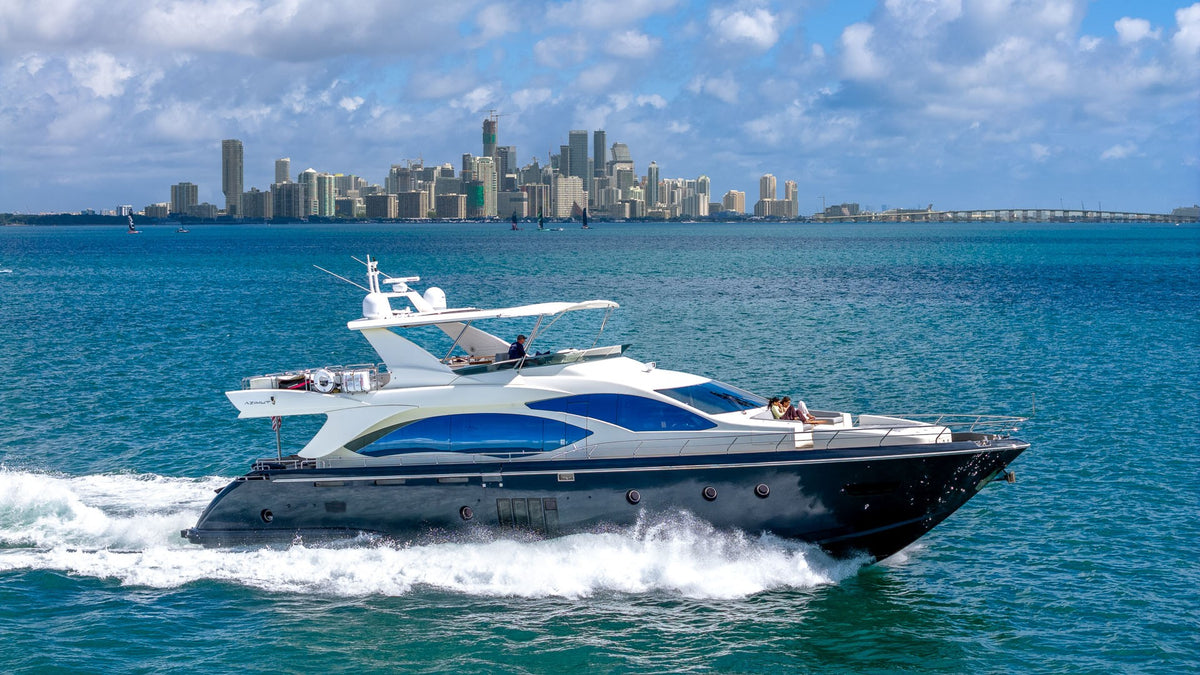
A crewed yacht charter is a private trip on a yacht that comes with a professional captain and crew. Before you pick a yacht, decide what kind of trip you want.
Begin with guest count, overnight berths versus a day trip, ages and mobility needs, departure point, and time on the water. Your answers shape almost every other decision.
- Who is coming? Total guest count, ages, and mobility needs.
- How long? Day, overnight, and multi-day trips each need different yachts and planning.
- Where? Miami and South Florida day trips, Bimini crossings, and Bahamas cruising have different logistics.
Share this brief early so the charter team can suggest yachts that fit, not just yachts that photograph well. If your trip is close to Miami, our Miami Yacht Charters team can help you match a day plan to your group.
What Is Included in a Crewed Yacht Charter
A crewed charter means the yacht comes with a captain and crew who run the boat, handle navigation, and look after guests.
Inclusions vary by yacht and charter, so confirm the details for the specific vessel: captain and crew, fuel, time on the water, cleaning, and onboard amenities such as water toys and audio systems.
Captain and Crew Roles
The captain is responsible for the safety of the vessel and everyone aboard, planning the route, watching the weather, and deciding where to anchor.
Crew handle the practical work that keeps the day running: a deckhand may manage the tender, water toys, and docking, while a stewardess or chef looks after guest comfort and meals.
Meals, Provisioning, and Dietary Preferences
Plan food early. Tell the team about dietary needs, allergies, and favorite foods. Many charters offer provisioning, where the crew shops before your trip; confirm in writing whether it is included, what it covers, and how it is billed.
Provisioning costs are usually separate from the base charter rate. Some charters use an advance provisioning allowance (APA), a sum paid upfront to cover food, drink, and fuel-related expenses.
How a Typical Day on a Crewed Yacht Charter Works
A crewed charter day has a rhythm, but the schedule is built around your group rather than a fixed tour. The crew handles docking, anchoring, tender runs, and meal service, so your time goes to the water instead of logistics. Here is a realistic pattern for a Miami or South Florida day charter, with notes on how it shifts for overnight or Bahamas trips.
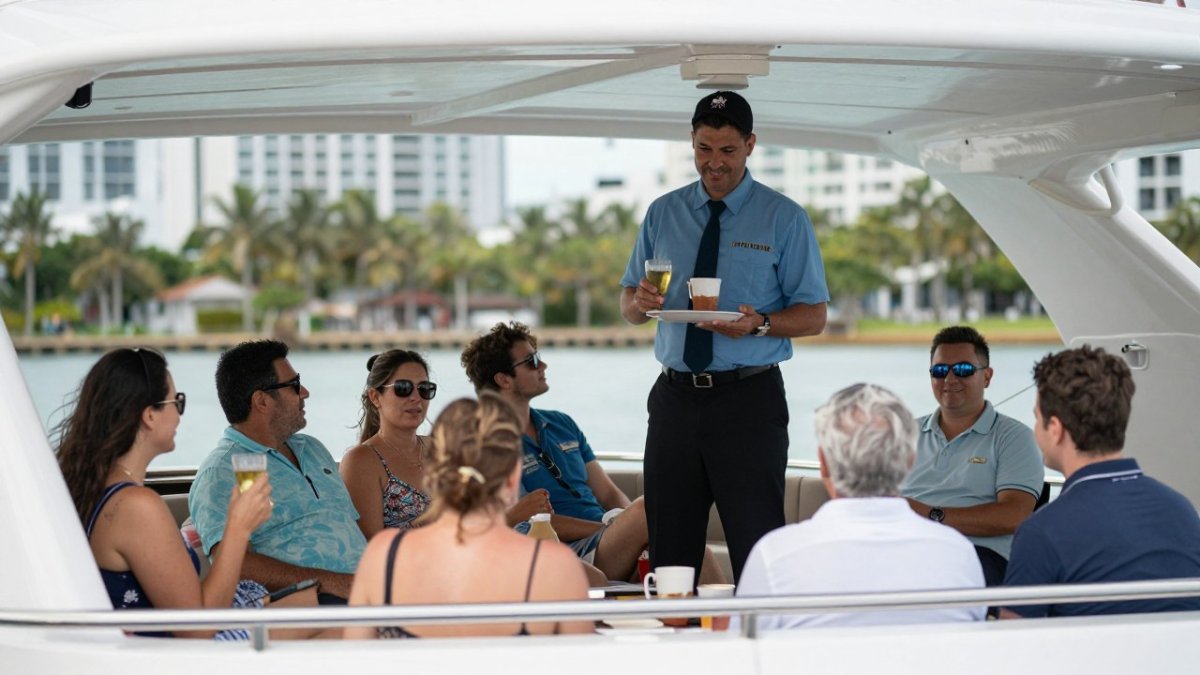
Before You Board
Most day charters board at a South Florida marina, and the specific marina depends on the yacht and route.
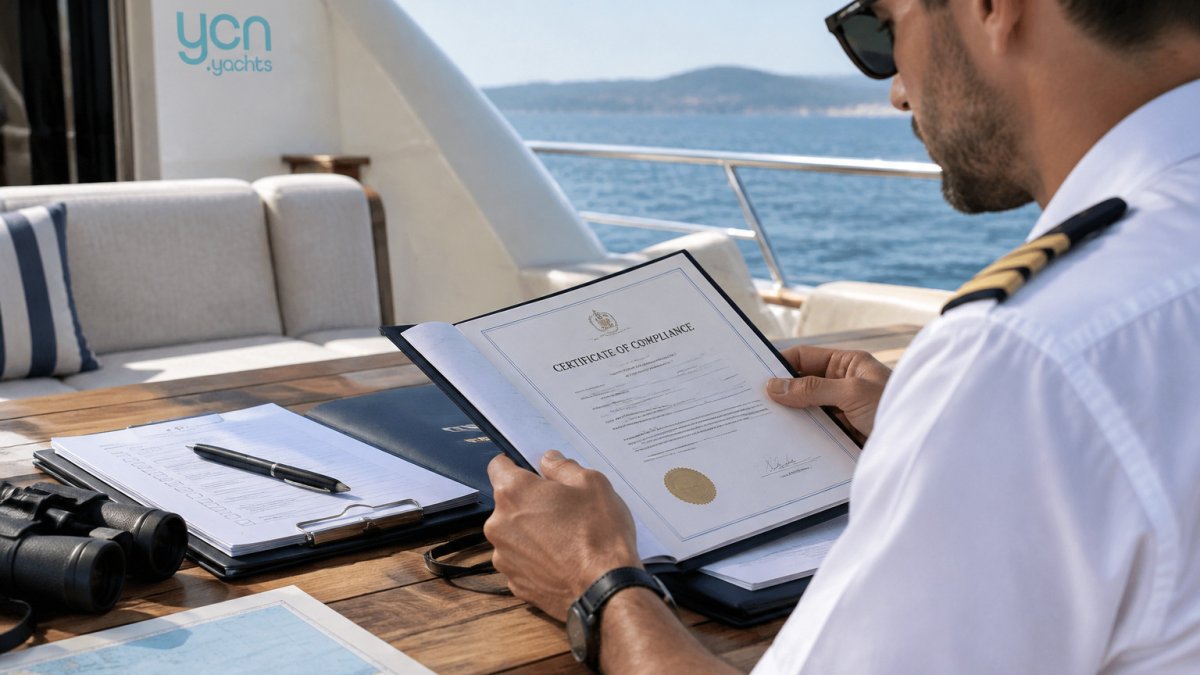
Bring a photo ID for the person named on the charter agreement; the captain will review the guest list before departure. If you are bringing children, share their ages in advance so life jackets and safety gear are ready.
Boarding and the Safety Briefing
The first 10 to 15 minutes aboard are for orientation: life jacket locations, fire equipment, the head (onboard restroom), and rules for moving around the deck while underway.
Watch out: guests sometimes treat the briefing as a formality and then move around the deck while the yacht is maneuvering. Stay seated where the crew asks until they say it is safe.
Departure and Time Underway
Once lines are cast off, the captain clears the marina and sets course. Time underway depends on your route and vessel: a Biscayne Bay anchorage may be a short run, while a distant swimming spot or Bimini crossing takes considerably longer.
On a motor yacht, the ride to the first stop is often the most social part of the morning.
Morning on the Water and Water Toys
Mornings are usually the best window for water activities, since wind and sea state tend to build later. The crew sets up the swim platform, inflates toys, and briefs guests on the tender and equipment.
If you have never snorkeled or paddleboarded, say so. A good crew will give a short lesson and stay close until you are comfortable.
Lunch and Meal Service
Meals are typically served at anchor rather than underway, which keeps the galley safe and lets guests eat without balancing plates. A stewardess or chef handles setup, service, and cleanup. Menus are usually set in advance through a preference form, and the crew provisions before your trip. If you booked a charter with a chef, confirm whether the menu is fixed, whether you can request changes, and how dietary needs and allergies are handled.
Afternoon, Weather Decisions, and the Return
After lunch, the day usually shifts to swimming, relaxing in the shade, or a short run to a second anchorage.
Watch out: if the captain recommends returning early or skipping a stop, that is a safety call, not a service failure. Ask in advance how weather-related changes are handled in your charter agreement.
A Realistic Day-Charter Timeline
- Arrival: 15 to 30 minutes before boarding for check-in and parking.
- Boarding and briefing: 10 to 15 minutes for orientation and safety.
- Return: The crew docks and helps guests disembark, with time for final photos and gratuity.
Half-day charters compress this into a shorter window, usually with one anchorage and a simpler meal plan. Multi-day charters repeat the rhythm across days, with overnights at anchor or in a marina and a fresh itinerary each morning based on conditions.
How the Day Changes on an Overnight or Bahamas Charter
On an overnight charter, the evening becomes part of the experience: dinner at anchor, sunset on deck, and a quiet morning swim before the next leg. On a Bahamas multi-day yacht charter, the captain plans around crossing windows and weather, and some days are mostly underway.
The day follows a clear rhythm, with the crew handling logistics so guests can spend their time on the water.
| Stage | What happens | Timing |
|---|---|---|
| Arrival | Check in and park or arrange drop-off | 15 to 30 minutes before boarding |
| Boarding and briefing | Orientation, life jackets, fire equipment, head | 10 to 15 minutes |
| Morning on the water | Run to first anchorage, water activities | Morning, before wind and sea build |
| Lunch | Meal served at anchor by stewardess or chef | Usually around midday |
| Afternoon | Swimming, relaxing, or a second stop | Weather permitting |
| Return | Crew docks, guests disembark, final photos | End of charter window |
Building a Crewed Yacht Charter Itinerary Around Weather and Time Underway
A good itinerary balances time cruising with time at anchor.
Start with the departure area and total trip length, since a Miami day charter has very different options than a multi-day Bahamas trip.
Weather can change plans at short notice. Build in flexible alternatives, such as a second anchorage or a sheltered bay, so the captain can adjust if conditions are rough.
- Time underway: Estimate how many hours you will spend cruising versus stopped.
- Stops: Pick a small number of places you most want to visit.
- Backup options: Choose a sheltered alternative in case of wind or rough seas.
Overnight Yacht Charter Versus Day Charter Expectations
Day charters and overnight charters are different products. A day charter gives you several hours on the water and returns to port the same day.
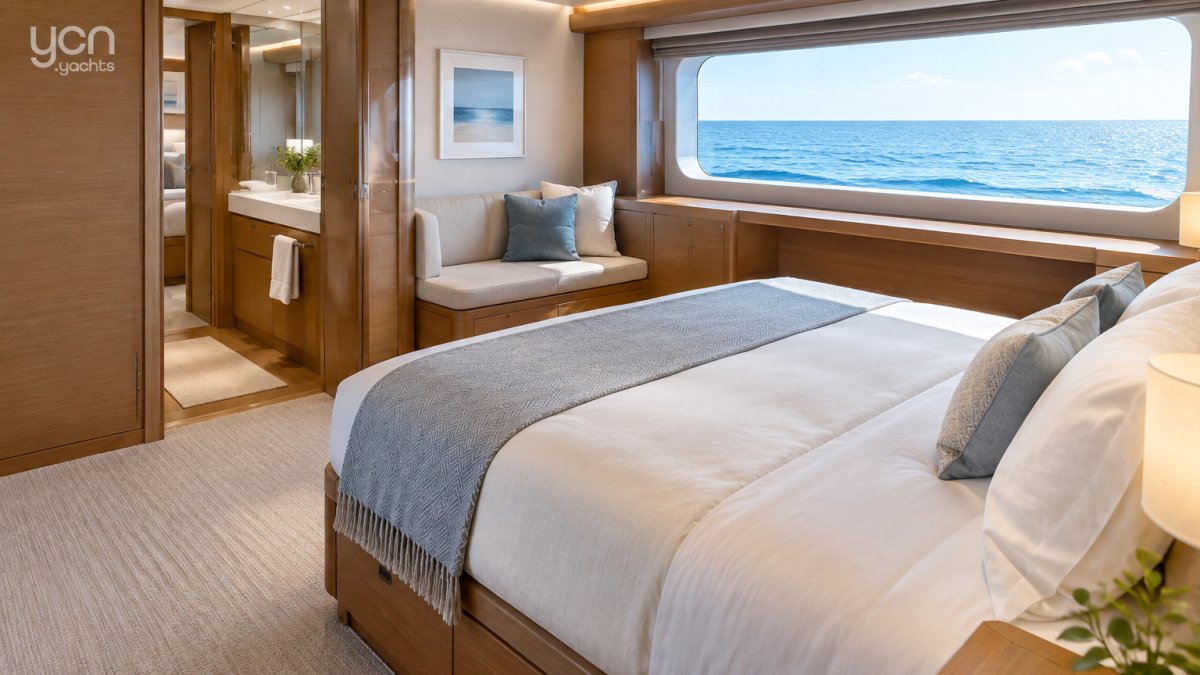
Check whether the yacht is permitted to carry overnight guests and how many berths it has. Overall length does not tell you how many people can sleep aboard, so confirm the exact cabin arrangement for the specific yacht.
Overnight charters also cost more and require more planning time, factoring in meals, provisioning, cabin setup, and the daily schedule.
What to Pack for a Yacht Charter
Pack light, since space on a yacht is limited, and ask the charter team about storage before you pack. Plan for sun, water, and changes in the weather.
- Sun protection, such as sunscreen, a hat, and sunglasses
- Swimwear and a cover-up
- Light, quick-drying clothing and a warm layer for evenings
Ask the team which items the yacht already provides, such as towels, water, or snorkel gear, so you avoid packing duplicates.
Confirming Your Crewed Charter Details Before You Sail
The weeks between booking and boarding are when a good charter becomes a great one. Confirm the yacht, crew, food, route, and logistics in writing so you avoid a last-minute scramble that eats into your first morning aboard.
A First-Timer Timeline
When you book: Confirm the yacht by name and current listing, the charter dates and hours, the departure marina, and whether the charter is crewed.
Four to six weeks out (or as soon as you book for a last-minute trip): Complete the preference form, which the crew uses to plan meals, activities, and cabin setup. Include guest names and ages, dietary needs and allergies, mobility concerns, swimming ability, celebration plans, and must-have amenities. For a large group, assign one person to collect everyone's details so the crew gets one clear version.
Two to three weeks out: Review the proposed itinerary and menu with the charter team. Confirm what the base rate includes and what is billed separately, including fuel, crew, provisioning or catering, taxes, dockage, repositioning, and gratuity. If an advance provisioning allowance (APA) applies, ask how it is funded, what it covers, and how unused funds are handled. Confirm the marina address, parking or drop-off plan, and arrival time.
The week before: Reconfirm the guest count and any changes.
The day before: Confirm the boarding time and marina gate access. Charge phones and cameras, pack light, and set out medications and motion-sickness remedies.
What to Get in Writing
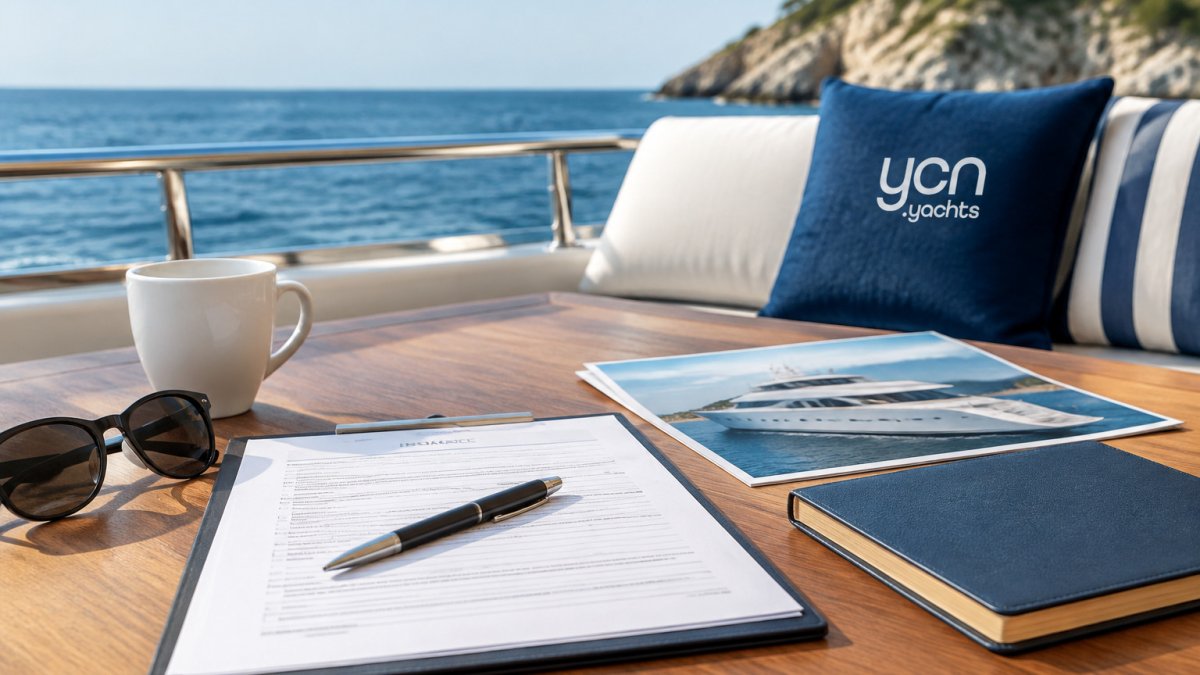
A written quotation should separate the base charter rate from fuel, crew, provisioning or catering, taxes, dockage, delivery or repositioning, and gratuity.
Watch out: a verbal promise about a specific toy, amenity, or stop is not the same as a written inclusion. If it matters to your group, get it in the agreement.
Miami and South Florida Logistics to Confirm
Departure logistics vary by marina. Confirm the exact address, slip or dock, and where guests should wait.
For a Bimini crossing or Bahamas trip, confirm passport and entry requirements with the charter team before you travel. Do not assume a day charter and a multi-day crossing have the same documentation needs.
Accessibility, Children, and Mixed-Experience Groups
Tell the crew about mobility needs in advance, since boarding access differs between yachts; some have a swim platform or passerelle that eases boarding, while others require stepping across a gap. For children, confirm life jacket sizes, age limits for water toys, and whether the crew supervises swim stops. For guests who cannot swim, ask about flotation aids and how the crew manages swim time.
Weather, Cancellations, and Who Decides
The captain makes the safety call on weather. Ask in advance how the charter handles a forecast that turns poor: whether the route changes, whether the trip can be rescheduled, and what the cancellation terms say. Get the answer in writing. Build a backup plan for the day, such as a sheltered anchorage or an indoor alternative ashore.
Final Confirmation Before You Board
Use the trip brief you prepared earlier to share your details one last time: guest count, ages, mobility needs, dietary preferences, and must-have amenities. You can read how to complete a yacht charter preference sheet before you send yours.
When you are ready to see yachts that match your brief, you can explore charter yacht specifications, photos and amenities and check availability for your dates. For longer itineraries beyond the Caribbean, our Worldwide Luxury Yacht Charters team can also help plan your route.
Final availability, pricing, and charter terms require confirmation before you commit. Once you have a written quote and a clear itinerary, you can request a charter quote with your destination, dates, duration, guest count, and approximate total budget.
Frequently Asked Questions
What is included in a crewed yacht charter?
A crewed charter typically includes the captain and crew and the use of the yacht's listed amenities. Other costs are often separate and should be confirmed in writing, including provisioning or catering, taxes, dockage, gratuity, and any advance provisioning allowance (APA). Ask YCN Yachts to itemize the base rate and every additional cost before you commit, since inclusions differ by yacht and trip length.
How much should you tip the crew on a yacht charter?
Confirm with your charter team how gratuity is handled on your booking. Confirm with your charter team how gratuity is handled on your booking so you can plan accordingly and avoid surprises at the end of the trip.
What should you pack for a yacht charter?
Pack lightweight clothing, a swimsuit for each day, reef-safe sunscreen, a hat, sunglasses, and non-marking deck shoes. Bring a light layer for evenings on the water, along with any medication and personal toiletries. Check your group's specific needs, such as children's items or dietary supplies, and share them with the charter team in advance so they can be prepared aboard.
Can a crewed yacht charter accommodate dietary preferences?
Yes, dietary preferences are normally shared with the charter team before departure so provisioning can be arranged. Tell the team about allergies, restrictions, and preferences early, because provisioning requires lead time. Confirm which meals are included and whether a chef is part of your crew, since this varies by yacht and itinerary.



















Leave a comment
This site is protected by hCaptcha and the hCaptcha Privacy Policy and Terms of Service apply.