

How to Choose the Best Time for a Mediterranean Yacht Charter
Last Updated: November 6, 2026
Quick Summary
Late spring through early autumn is generally the most practical window for a Mediterranean yacht charter, with June and September often offering a good balance of warm weather, calm seas, and manageable crowds. The sea lags behind the air by roughly six weeks, so swimming warms up later than sunbathing.
- Families with school schedules should consider late June or early July, before peak crowds and heat.
- The meltemi wind builds through July and August in the Aegean, making exposed crossings choppy.
- Groups wanting warm sea and steady conditions should look at the Greek islands in late September or early October.
- Some smaller restaurants and beach clubs on the Amalfi Coast wind down in October, so confirm what will be open.
- For a three-day trip, keep the route tight with a short hop, one longer passage, and a gentle return leg.
Table of Contents
- Why Timing Decides Your Mediterranean Yacht Charter
- Mediterranean Yacht Charter Weather: What to Expect Month by Month
- The Best Month to Sail the Mediterranean by Traveler Priority
- High, Shoulder, and Low Season: Comparing Crowds, Rates, and Availability
- Regional Differences: Riviera, Amalfi Coast, Greek Islands, and the Adriatic
- Planning a 3 Day Yacht Charter Mediterranean Trip or a Crewed Yacht Charter Mediterranean Voyage
- Frequently Asked Questions
Why Timing Decides Your Mediterranean Yacht Charter
Late spring through early autumn is generally the most practical window for a Mediterranean yacht charter, with June and September often offering a good balance of warm weather, calm seas, and manageable crowds.
Your dates shape which coastlines you can reach, how calm the water feels, and how far ahead you should book.
Below, we break down the weather month by month, match seasons to traveler priorities, and explain how each region behaves differently. First, a warning most guides skip: the Mediterranean is not one climate.
Mediterranean Yacht Charter Weather: What to Expect Month by Month
Mediterranean yacht charter weather follows a steady arc: mild and green in spring, hot and dry in summer, golden and quiet in fall. The sea lags behind the air by roughly six weeks, so swimming warms up later than sunbathing.
Here is how the seasons typically unfold:
- April to May: Air in the low 70s°F, sea still cool, occasional showers, light crowds.
- June: Warm air, calmer water, long daylight, moderate harbor traffic.
- July to August: Peak heat, very warm sea, busy marinas, afternoon wind.
Air and Sea Temperatures Through the Season
Air temperatures climb from pleasant spring warmth to hot summer highs, then ease back through fall. Sea temperatures trail behind, which matters if swimming and snorkeling are central to your trip.
Late summer holds the warmest water. Early summer offers comfortable air with a cooler sea. For official climate records by country, the National Oceanic and Atmospheric Administration climate data is a useful reference point.
Wind, Sea State, and Sailing Conditions
Summer brings steady, predictable breezes, especially in the Aegean, where the meltemi wind builds through July and August. These winds keep sailing lively but can make exposed crossings choppy.
Mornings are usually the glassiest, with afternoon breezes picking up and fading by evening. Swim stops are often easiest early in the day, and longer passages are best reserved for the calmer hours.
The Best Month to Sail the Mediterranean by Traveler Priority
The best month to sail the Mediterranean depends on what you value most. There is no universal winner, only the right match for your group.
Here is how priorities map to timing:
- Families with school schedules: late June or early July, before peak crowds and heat.
- Swimming and water sports: August into September, when the sea is warmest.
- Couples seeking quiet: May or late September, with softer light and thinner crowds.
A common mistake is booking peak summer for a group that actually wants calm. If your travelers prize empty anchorages over buzz, shoulder season wins every time.
High, Shoulder, and Low Season: Comparing Crowds, Rates, and Availability
Season labels are useful shorthand, but they can hide the details that decide a charter date. The table below separates the Mediterranean into four practical bands rather than three, because late October behaves nothing like early April even though both sit outside peak summer.
| Season band | Typical months | Crowds | Relative rates | Availability | Best for |
|---|---|---|---|---|---|
| Low | November-March | Very low | Lowest of the year | Plenty, though many yachts are in winter refit or repositioned | Quiet marinas, off-season city stays; not reliable for swimming or island-hopping |
| Early shoulder | April-mid-May | Light | Below peak | Good on smaller and mid-size yachts | Hiking, photography, culture, green coastlines, lower heat |
| Late shoulder | Mid-September-October | Moderate to light | Below peak, easing after mid-September | Tightens for the most requested crewed yachts | Warm sea, softer light, fewer harbor queues |
| High | June-August | Heavy | Highest of the year | Tightest; the most requested crewed yachts go first | Reliable weather, nightlife, family school-holiday travel |
How Seasonal Pricing Actually Works
Mediterranean charter rates are generally quoted in two structures, and the season can affect both. Pricing depends on yacht, destination, dates, and itinerary, so please request a quote from YCN Yachts for current figures.
Because rates vary by yacht, destination, and date, no single figure applies across the region.
Booking Lead Times by Season
Peak-summer crewed yachts are typically in high demand, so starting the conversation well in advance is generally wise. Availability varies by yacht and date, and a broker can confirm current options.
Confirm a yacht's status directly rather than assuming a listing is open.
Availability Is the Hidden Variable
Two groups can book the same week and have different options depending on how early they move. Popular yachts with specific cabin layouts or crews can book up first, particularly for peak summer.
If you are weighing a Mediterranean window against a closer-to-home option, it helps to compare like with like: a private yacht charter in Miami runs on a different seasonal calendar than the Riviera.
Regional Differences: Riviera, Amalfi Coast, Greek Islands, and the Adriatic
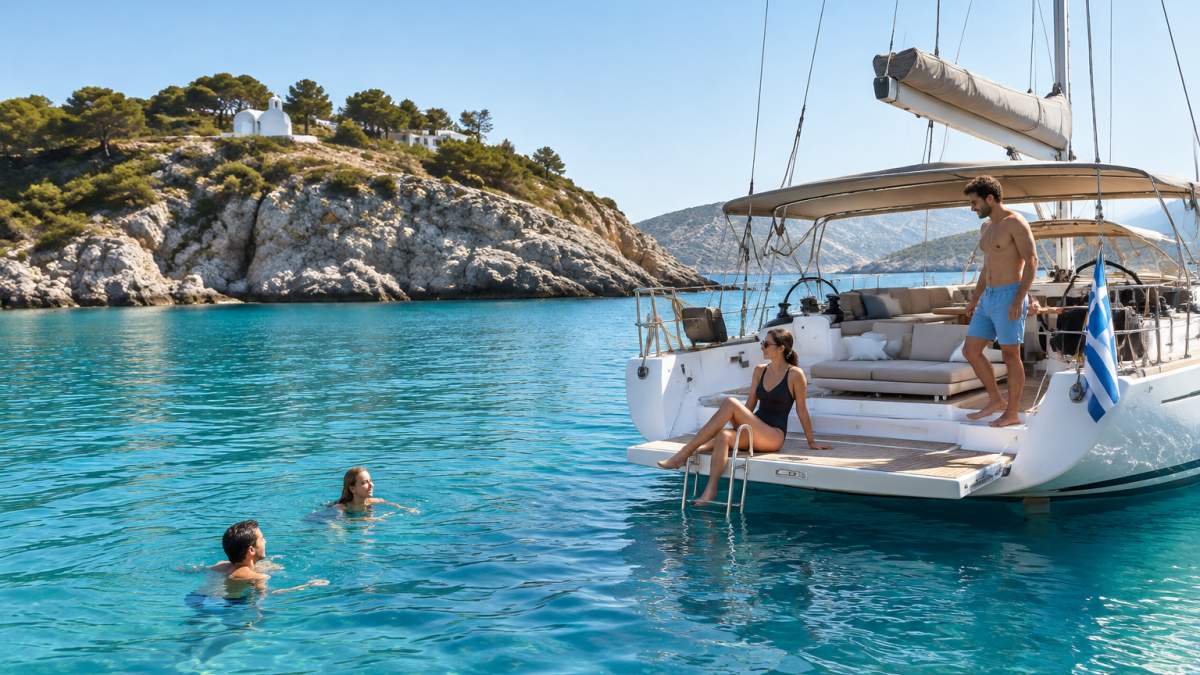
Most guides describe the Mediterranean as one climate with one season. In practice, the same week in July can be calm and mild on the Riviera, hot and wind-whipped in the Cyclades, and storm-prone in the northern Adriatic. Timing a charter well means timing it to a region, not just to a month.
| Region | Best window | Peak-season character | Shoulder-season character | Watch-outs |
|---|---|---|---|---|
| French Riviera (Cannes, Monaco, Antibes, Saint-Tropez) | Late May-June and September | Event-heavy, marina-demanding, highest rates | Calmer harbors, softer light, easier berthing | Major events compress marina space; book berths early |
| Amalfi Coast and Capri | Late spring and early fall | Hot, crowded ferries, busy anchorages | Cooler, thinner ferry traffic, easier tender runs | Summer heat and ferry wakes; some smaller establishments close off-season |
| Greek islands (Cyclades, Ionian, Dodecanese) | May-June and September-early October | Meltemi wind builds through July-August | Steadier conditions, warm sea, quieter anchorages | Meltemi can make exposed crossings choppy; build in flexibility |
| Adriatic (Croatia, Montenegro, Slovenia) | June and September | Busy but sheltered; long season | Growing popularity in early fall, quieter marinas | Bora wind can arrive abruptly in shoulder months |
Why the Regions Behave Differently
The French Riviera sits in a sheltered western Mediterranean pocket where summer afternoons bring a reliable sea breeze but rarely the sustained wind of the Aegean. The Amalfi Coast and Capri share that western pattern but add steep coastlines and heavy ferry traffic, which shapes where you can anchor and when you can move. The Greek islands, especially the Cyclades, are dominated in high summer by the meltemi, a northerly wind that builds through July and August and can turn an ambitious island-hopping plan into a rough ride.
Matching a Region to a Month
A few practical pairings hold up year after year. Groups who want warm sea and steady conditions should look at the Greek islands in late September or early October, when the meltemi has eased and the water is at its warmest.
Watch out: shoulder-season closures are real. Some smaller coastal restaurants, beach clubs, and tender services in the Amalfi Coast and parts of the Greek islands wind down in October, so confirm what will be open before committing to a late-fall date.
Planning From Miami
For travelers departing from Miami, the region choice also shapes the travel day. Travel routing to Mediterranean embarkation ports varies by origin and destination, so plan connections carefully and allow a buffer day at the embarkation port before boarding.
If the Riviera, Corsica, and Sardinia appeal, you can explore yacht charters across the French Riviera, Corsica and Sardinia and search regional yachts for Cannes, Monaco, and island itineraries. For a deeper look at the Adriatic, see our guide to a Croatian summer at sea with island and harbor experiences. Leaning toward southern Italy? Browse Amalfi Coast yacht charter options and request a tailored plan for your dates.
Planning a 3 Day Yacht Charter Mediterranean Trip or a Crewed Yacht Charter Mediterranean Voyage
A short charter and a full crewed voyage need very different planning. A short Mediterranean trip often suits shoulder season, when marinas tend to be less crowded.
For a three-day trip, keep the route tight:
- Day 1: Board near your arrival port and cruise a short hop to a calm anchorage.
- Day 2: One longer passage to a standout island or cove, with a swim stop.
- Day 3: A gentle return leg with a lunch stop before disembarking.
A crewed yacht charter Mediterranean voyage across a week or more generally benefits from early planning. Our 7-day Balearic Islands yacht charter itinerary around Ibiza, Formentera, and Mallorca shows how a flexible week comes together.
If you are still choosing region, dates, and guests in the right order, our guide to planning a luxury Mediterranean yacht vacation walks through that sequence before you commit.
The Mediterranean rewards travelers who plan around season, not against it.
Frequently Asked Questions
What is the best month for a Mediterranean yacht charter?
September is the strongest all-around month for most travelers. Air temperatures remain warm, the sea stays comfortable for swimming after months of summer sun, and crowds on the Riviera, Amalfi Coast, and Greek islands thin out noticeably once school holidays end. June is the best alternative for travelers who want long daylight hours and lively harbor towns before peak season pricing and demand set in. July and August suit anyone who prioritizes guaranteed heat and a social scene over quieter anchorages.
Is the Mediterranean warm enough for a yacht charter in May?
May works well in the eastern and central Mediterranean, where the Greek islands and the Adriatic typically warm up faster than the western Riviera. Air temperatures are mild rather than hot, and the sea is cool but swimmable for many guests. Expect lower rates, easier availability, and quieter marinas. Pack a light layer for evenings and choose an itinerary weighted toward southern latitudes if swimming is a priority.
How long should a Mediterranean yacht charter be?
A 3 day yacht charter Mediterranean itinerary covers a compact area well, such as the Amalfi Coast and Capri or a single Greek island group, and suits travelers adding a short yachting segment to a longer trip. Seven days is the standard for a proper crewed yacht charter Mediterranean voyage, allowing time to move between regions without rushing. Ten days to two weeks opens up longer crossings, such as the Riviera to Corsica and Sardinia.
Which Mediterranean region is best for a shoulder-season charter?
The Greek islands and the Adriatic hold up best in the shoulder months. Their sheltered sailing grounds and island-hopping geography mean you can adjust an itinerary quickly when weather shifts, and many anchorages stay open into October. The Amalfi Coast and the French Riviera are more dependent on settled summer weather, so late spring and early autumn there reward travelers who prioritize harbor towns and dining over long swimming days.


















Leave a comment
This site is protected by hCaptcha and the hCaptcha Privacy Policy and Terms of Service apply.