
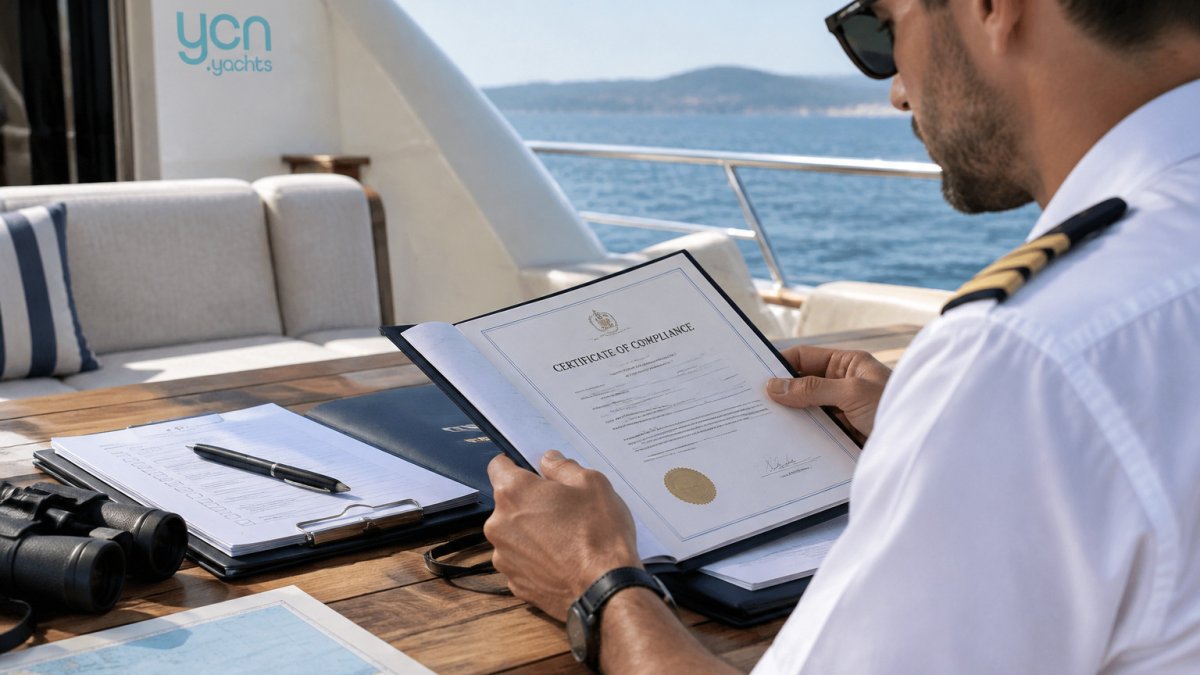
Yacht Certification for Charter Guests: What to Verify
Last Updated: November 18, 2026
Quick Summary
Yacht certification is the set of documents and inspections showing a vessel is legally allowed to carry paying guests and meets the safety standards for that operation. For charter guests, it means confirming the boat and its crew are approved to take you out on the water for hire before you pay a deposit.
- Ask for vessel registration and confirm the name matches the yacht you are booking.
- Confirm the vessel is authorized for paid guest charters, not private use only.
- Get the approved day-guest number and overnight berth count in writing.
- Request a certificate of passenger liability insurance covering your dates and route.
- Verify the captain's license covers this specific vessel and route.
Table of Contents
- What Yacht Certification Means for Charter Guests
- Commercial and Private Vessel Standards: Why the Difference Matters
- Yacht Passenger Capacity Rules and How Certification Relates to Them
- Documents to Check Before Booking a Yacht Charter
- Crew Credentials and the Bareboat Charter Sailing Resume Requirements
- Yacht Charter Safety Checklist for Guests
- Requesting a Tailored Charter Quote With Verified Credentials
- Frequently Asked Questions
What Yacht Certification Means for Charter Guests
Yacht certification is the set of documents and inspections that show a vessel is legally allowed to carry paying guests and meets the safety standards that apply to that kind of operation. For a charter guest, the practical question is simple: is this boat, and the crew running it, approved to take you out on the water for hire?
At YCN Yachts, we tell guests to separate three things that often get blended together: the vessel's paperwork, the crew's credentials, and the charter arrangement itself. A yacht can be well maintained and still lack the documents needed for paid guest charters. A captain can be highly experienced and still be working under the wrong type of agreement. Knowing which question you are asking makes it much easier to get a clear answer.
Certification does not guarantee every part of your trip. It does not cover the weather, the menu, or whether the crew suits your group. It is one important layer of due diligence, and you should confirm it before you pay any deposit. If you are planning a trip in South Florida or the Bahamas, our team can walk you through what to confirm for a specific vessel, starting with the Miami Yacht Charters page.
Commercial and Private Vessel Standards: Why the Difference Matters
A private yacht owned by a family and used only by its owner follows a different regulatory path than a vessel offered for hire. Once guests pay to come aboard, the operator takes on additional responsibilities. That is why a boat that is perfectly safe for its owner may not be set up for paid charter use.
For guests, the difference shows up in a few places:
- Guest capacity: Passenger numbers should not exceed what the vessel is approved to carry.
- Crew requirements: Paid charters are typically run by a qualified captain and crew, not just a friend who knows the boat.
- Insurance: Passenger liability coverage is often tied to the commercial operation.
- Inspections and records: Commercial vessels are expected to keep current documentation available on request.
When an operator describes a boat as "fully equipped" or "ready to go," ask whether it is authorized for guest charters specifically. A private-use vessel offered informally can leave you without the protections you expect.
Requirements differ depending on the vessel, the route, and whether the trip is a day charter, an overnight cruise, or a bareboat arrangement. Confirm the specifics for your trip with the operator and the relevant authorities rather than relying on a general rule.
Yacht Passenger Capacity Rules and How Certification Relates to Them
Passenger capacity is one of the most important numbers on a charter, and it is easy to misunderstand. Overall length does not tell you how many guests a yacht may legally carry. The limit depends on the vessel's approved configuration, its safety equipment, and the type of operation.
Keep two figures separate when you review a yacht:
- Day guest capacity: How many people may come aboard for a day trip.
- Overnight accommodation: How many people can sleep aboard, based on the cabins and berths.
These are different specifications. A boat may accept a larger group for a sunset cruise than it can host overnight. Documentation should establish the approved limit, so ask the operator to confirm the number that applies to your specific yacht and trip type. Do not rely on a figure from a listing photo or a general description.
If your group includes children, infants, or guests with mobility needs, confirm that the approved capacity and the boat's layout still suit those guests. Approval on paper is only useful if the deck, boarding area, and seating match your group.
Documents to Check Before Booking a Yacht Charter
This is where the abstract idea of certification becomes a practical conversation. A reputable operator should be able to produce a short, specific set of documents without delay. If they cannot, that is useful information before you pay a deposit.
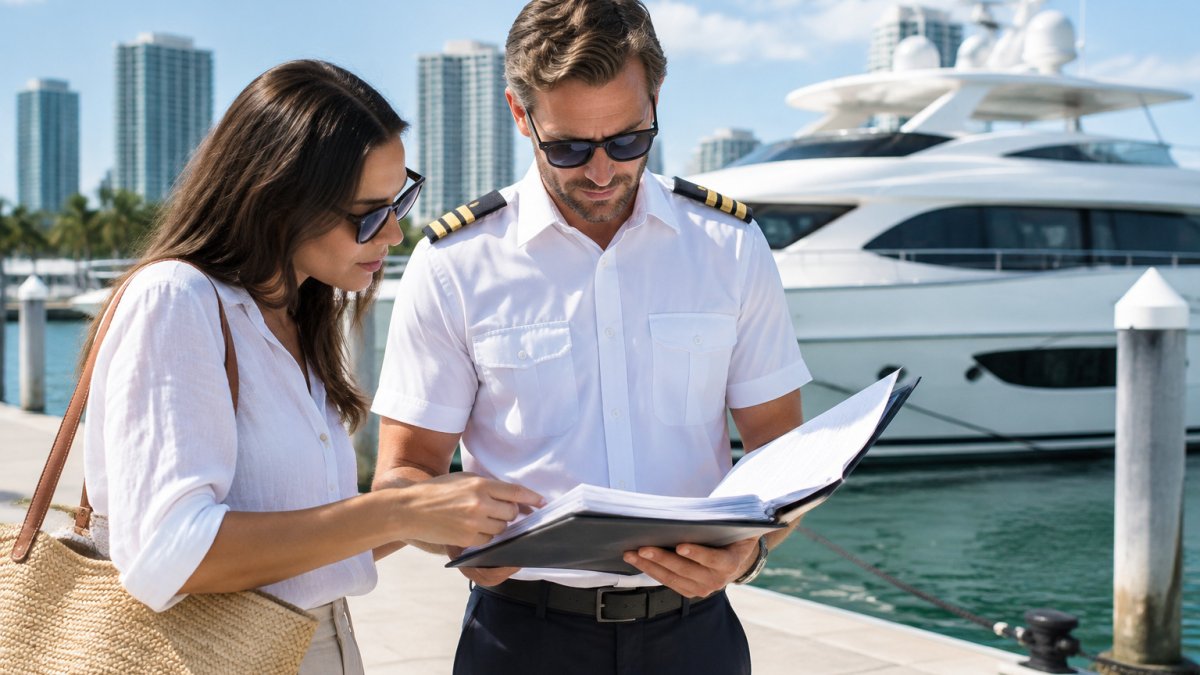
The paperwork you are asking about usually falls into a few recognizable categories. You do not need to interpret every form yourself, you need to confirm that the right documents exist, that they match the vessel and crew you are booking, and that the operator is willing to share them.
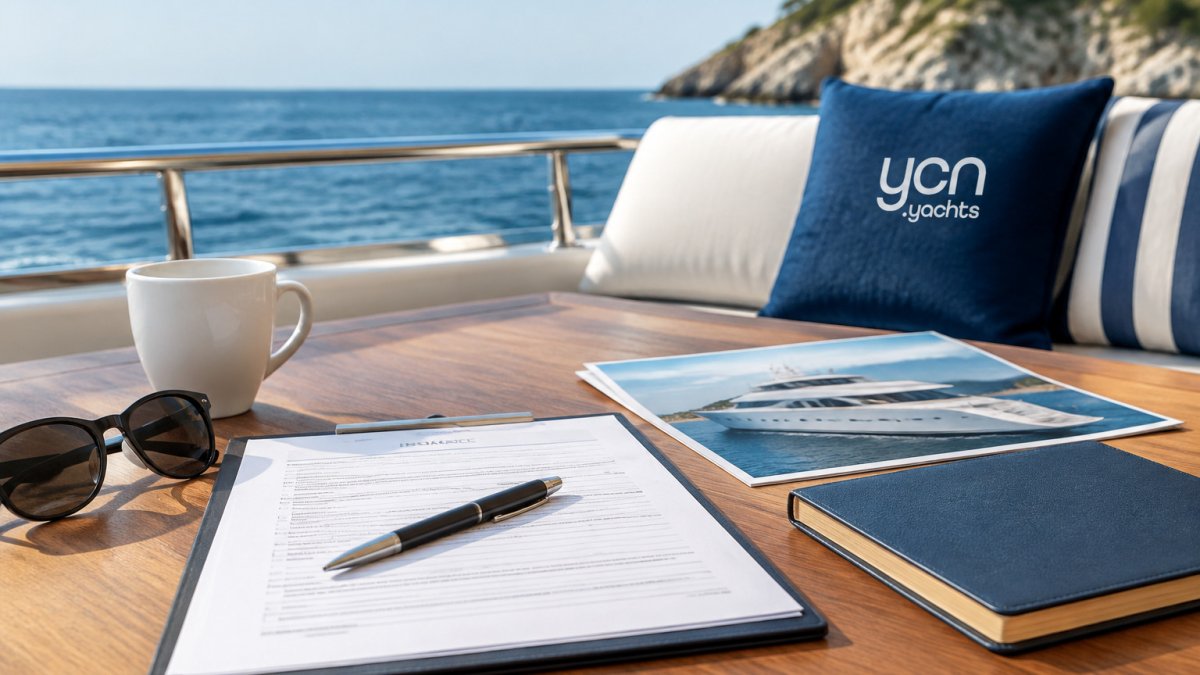
Vessel documentation and registration. Ask for the vessel's registration or documentation paperwork and check that the vessel name and identifying details match the yacht you are booking. A mismatch is a red flag worth pausing on.
Commercial authorization for paid guest charters. A vessel carrying paying passengers is generally expected to operate under the appropriate commercial framework. Ask the operator to explain which framework applies to the yacht and to show the corresponding document.
Passenger capacity in writing. Get the approved day-guest number and the overnight berth count in the quote or a follow-up email. These are different figures and both matter for your trip.
Insurance confirmation. Ask for confirmation that passenger liability coverage is in place for the dates and route you are booking. You do not need the full policy, but a certificate of insurance naming the coverage type is a reasonable request.
Captain and crew credentials. Request the captain's license type and the names of the crew assigned to your trip. For crewed charters, ask whether the crew holds current first aid and CPR training.
Safety equipment summary. Ask for a short written summary of life jackets (including child sizes), fire extinguishers, and emergency equipment on board. You can also ask the captain to walk you through it at boarding.
Written quotation and terms. Get inclusions, exclusions, cancellation policy, and payment schedule in one document so nothing is agreed verbally.
Watch out: A polished website and a friendly sales call are not proof of documentation. If an operator deflects document requests, offers only verbal assurances, or sends paperwork for a different vessel than the one you are booking, pause the payment and ask for clarification in writing before proceeding.
If a document cannot be produced, ask the operator to explain why and what alternative evidence they can provide. If the answer is vague, that is your signal to consider another yacht. YCN Yachts can help you work through which of these checks apply to the specific vessel and trip type you are considering, so you know what has been confirmed before you commit. For multi-day trips, our Bahamas Multi-Day Yacht Charters collection is a good place to start comparing vessels.
The paperwork guests should ask for before booking, and what each item confirms.
| Document | What it confirms | Guest action |
|---|---|---|
| Vessel registration or documentation | Vessel name and details match the booked yacht | Check for a mismatch |
| Commercial authorization | Approved for paid guest charters | Ask which framework applies |
| Passenger capacity in writing | Approved day-guest and overnight berth numbers | Get both figures in the quote |
| Insurance confirmation | Passenger liability coverage for your dates and route | Request a certificate of insurance |
| Captain and crew credentials | Licenses and current first aid and CPR training | Confirm they cover this vessel and route |
| Safety equipment summary | Life jackets, including child sizes, extinguishers, emergency gear | Ask for a written summary |
| Written quotation and terms | Inclusions, exclusions, cancellation and payment schedule | Agree everything in one document |
Crew Credentials and the Bareboat Charter Sailing Resume Requirements
Crew credentials matter most on crewed charters, where a professional captain and crew run the yacht and look after you on board. The captain of a vessel carrying paying passengers is generally expected to hold a credential appropriate to the vessel and route. Ask which credential the captain holds, how long they have worked with this type of vessel, and whether the crew has current safety and first aid training.
A useful question on a crewed charter is not only "is the captain licensed?" but "is this captain licensed for this vessel and this route?" Credentials are often tied to vessel size, route, and scope, so a captain qualified for a small inshore vessel may not be qualified for a larger offshore trip. If your plan includes a Miami-Bimini crossing or multi-day Bahamas cruising, confirm that the captain's credential and the vessel's authorization cover that route.
Bareboat charters work differently. In a bareboat arrangement, you or a designated skipper run the yacht without a professional crew, and the operator typically requires proof of sailing or boating experience before releasing the boat. This is often documented as a sailing resume, a record of previous trips, vessel types, sizes, and the level of responsibility you held (for example, skipper versus crew).
For bareboat bookings, ask the operator:
- What experience level is required for each vessel size, and how is that assessed?
- What documentation must be submitted before departure, and in what format?
- Whether a check-out sail or brief orientation is required before you take the helm.
- Whether a skipper or instructor is required for a first trip on that vessel.
- How the operator verifies that a sailing resume is accurate.
A common pattern is that operators weigh recent, relevant experience more heavily than total years on the water. A guest who has skippered a similar-sized vessel in the last year may be treated differently from one whose last trip was a decade ago on a smaller boat. If your resume is thin, a crewed charter or a captained bareboat arrangement is usually the more sensible choice.
Requirements vary by operator, vessel, and location, and bareboat rules are not uniform across U.S. waters and international destinations. Confirm the specifics in writing with the operator before you commit, and do not assume that a license held for one type of vessel transfers automatically to another.
Yacht Charter Safety Checklist for Guests
Safety on a charter depends on the vessel, the crew, and your own preparation. The checklist below covers what guests can reasonably check before and during the trip.
Before you book:
- Confirm the approved passenger number and that your group fits within it.
- Ask for a safety briefing outline and the emergency procedures the crew follows.
- Check whether the crew has current first aid and safety training.
- Ask how the operator handles weather changes and cancellations.
On boarding day:
- Ask the captain to show you the life jackets and where they are stored.
- Locate the nearest exit and the muster point.
- Make sure children and guests with mobility needs have appropriate support for boarding and moving around the deck.
- Ask about the medical and emergency contact plan.
During the trip:
- Follow the crew's instructions for the swim platform, tenders, and water toys.
- Stay seated and holding on when the boat is moving fast or in rough water.
- Tell the crew early if you feel unwell or seasick.
Common mistake: Many guests assume the crew will handle every risk. Staying alert and following instructions is part of keeping everyone safe.
Requesting a Tailored Charter Quote With Verified Credentials
The most useful next step is a written quote built around your group, your dates, and the vessel you are considering. A good quote should show the verified credentials for that specific yacht, not a general description of the fleet.
To get a quote that answers your certification questions, share these details:
- Destination and departure area.
- Travel dates and trip length.
- Number of guests, including any children or guests with mobility needs.
- Trip type, such as a day charter, overnight cruise, or bareboat arrangement.
- Approximate total budget.
- Any preferences for activities, amenities, or crew services.
Ask the team to confirm the vessel's registration, approved passenger numbers, insurance, and crew licenses in your quote. YCN Yachts can then give you a clear picture of what has been verified before you decide.
Request a charter quote through our quote page at https://ycn.yachts/pages/quote. The form is an inquiry only and does not reserve a yacht or confirm availability. Final pricing, availability, and charter terms are confirmed with you directly.
For questions before you submit a request, you can also reach the YCN Yachts team through the contact details in the page footer. If you are considering worldwide charters, our Worldwide Luxury Yacht Charters inquiry page is a good starting point.
Frequently Asked Questions
What does yacht certification mean for charter guests?
For charter guests, yacht certification generally refers to documents showing that a vessel and its crew meet the safety, inspection and operating requirements that apply to the type of charter being offered. It is not a single universal stamp. Guests should ask which certificates apply to the specific yacht and charter type, confirm they are current, and ask the operator to explain what each one covers. Certification supports, but does not replace, a clear safety briefing and a confirmed crew plan for the trip.
Does yacht certification determine how many guests can come aboard?
Not always on its own. Passenger capacity depends on the vessel's documented limits, the charter type, and whether the trip is a day charter or an overnight charter. Crew is usually counted separately from guests. Ask the operator for the exact maximum number of guests permitted for your itinerary and confirm that number appears in writing on your charter agreement before you pay a deposit.
How can I check whether a yacht is certified for charter?
Ask the operator to identify the specific yacht and provide copies of its current certificates and registration. Confirm the expiration dates, the name of the vessel on each document, and whether the certificates cover commercial charter operation. If the operator cannot provide documents or gives vague answers, treat that as a reason to pause the booking and request written verification before proceeding.
Does a yacht certification guarantee that a charter is safe?
No. A certificate shows that a vessel met specific requirements at the time of inspection or issuance. It does not guarantee weather conditions, crew performance on a given day, or the condition of equipment after the last inspection. Guests should combine document checks with a safety briefing on arrival, an explanation of emergency equipment, and clear communication about weather-related changes to the plan.


















Dejar un comentario
Este sitio está protegido por hCaptcha y se aplican la Política de privacidad de hCaptcha y los Términos del servicio.