
Artículo: Power Catamaran vs Sailing Catamaran: Which to Charter?
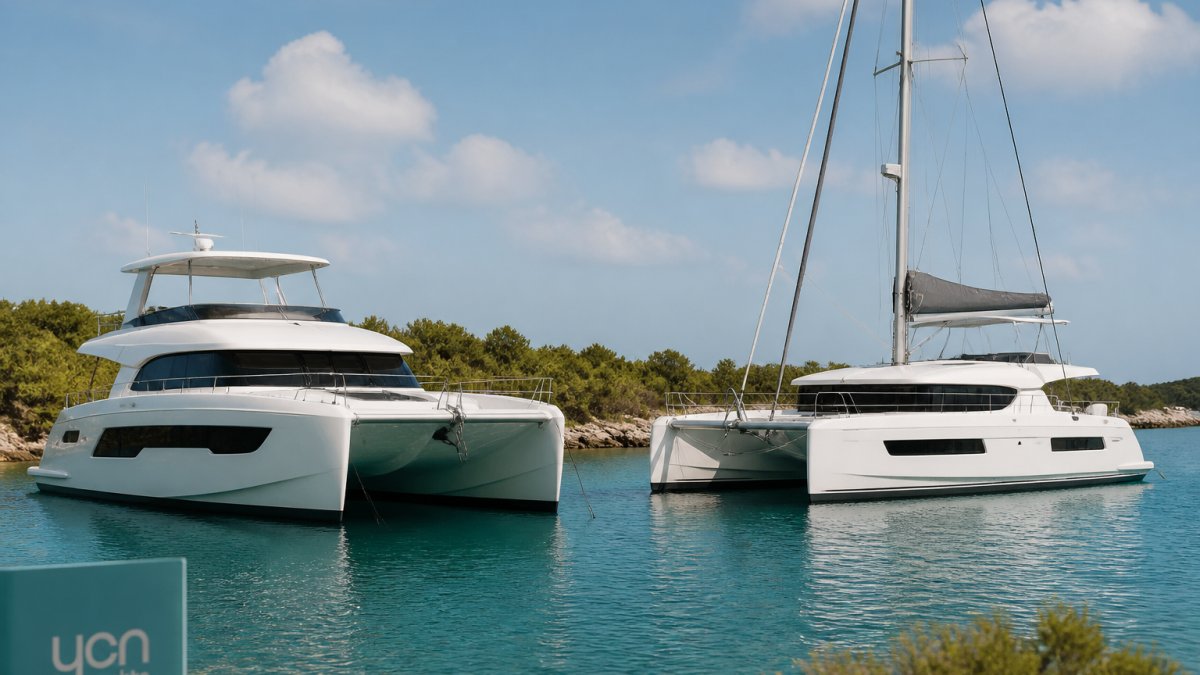
Power Catamaran vs Sailing Catamaran: Which to Charter?
Last Updated: October 26, 2026
Quick Summary
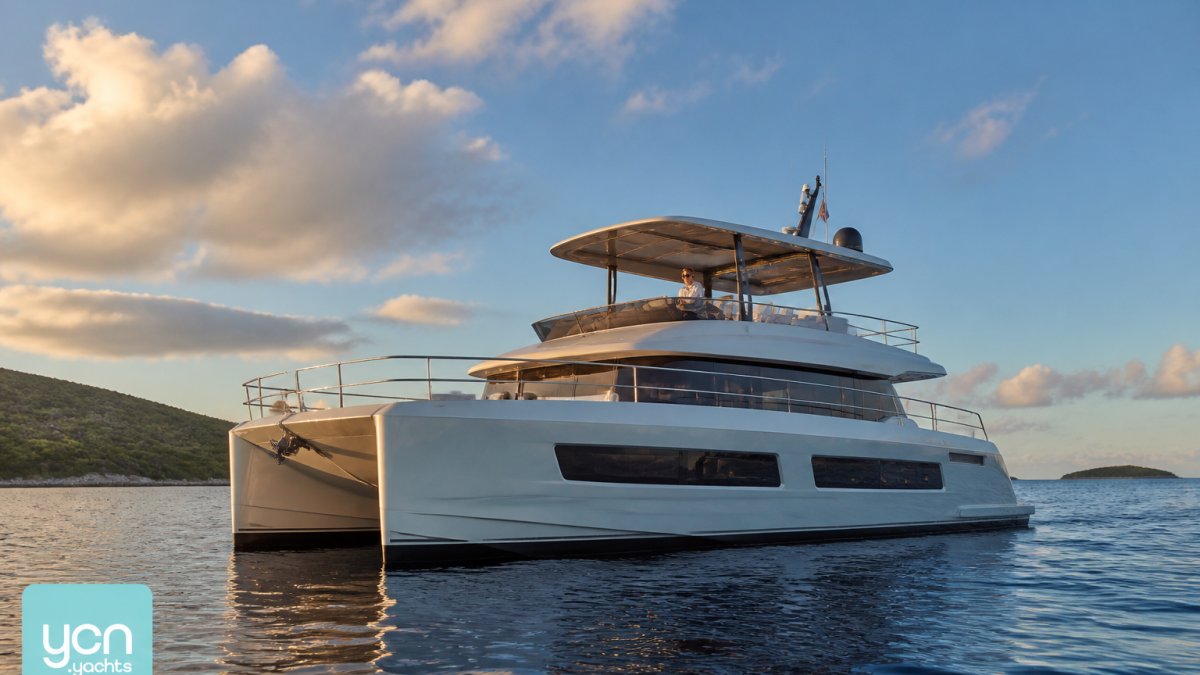
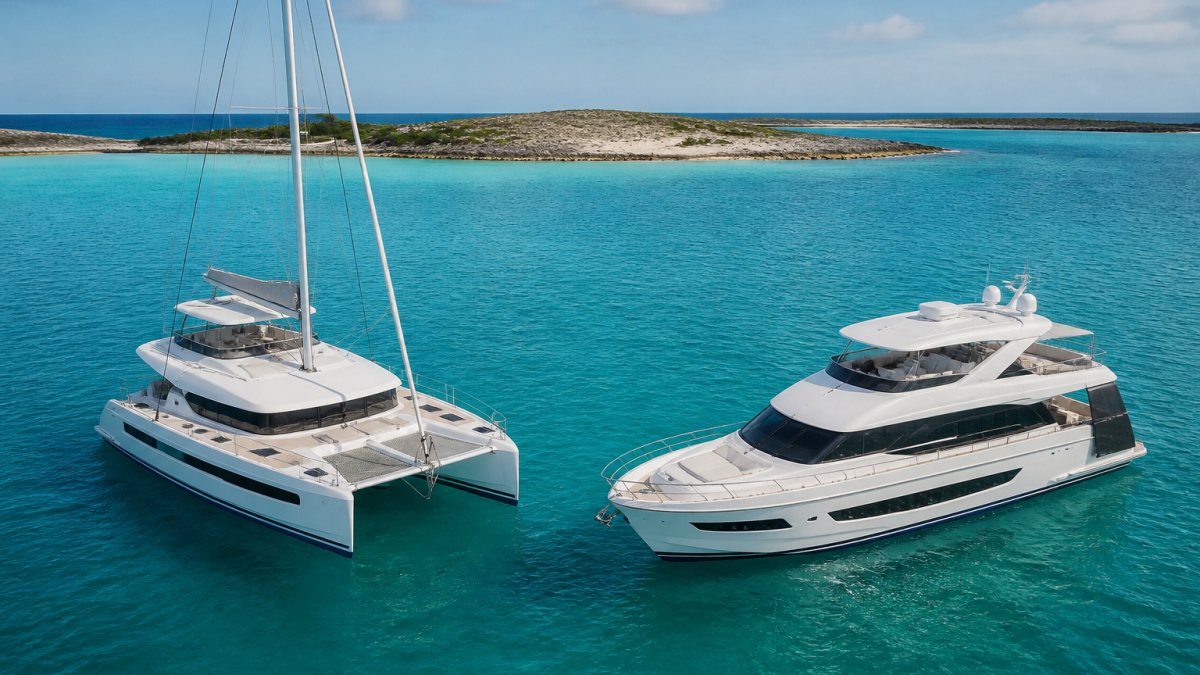
A power catamaran cruises at 10 to 18 knots and suits tight schedules and long distances, while a sailing catamaran makes 6 to 9 knots under sail with lower fuel exposure. Either way, a catamaran charter gives you a wide, stable platform with generous deck space.
- Power catamarans trade wind for engines, giving more range in a shorter window.
- Sailing catamarans run quieter passages and burn less fuel when the breeze is up.
- Twin hulls reduce rolling at anchor, which helps families and seasickness-prone guests.
- Shallow sandbars and reef stops favor a catamaran with a modest draft.
- Longer island itineraries reward power for range or a large sailing cat for comfort.
Table of Contents
- Power Catamaran vs Sailing Catamaran Features at a Glance
- Power Catamaran vs Sailing Catamaran Pros and Cons
- Power Catamaran vs Sailing Catamaran Speed: What to Expect on the Water
- Power Catamaran vs Sailing Catamaran Fuel Consumption and Running Costs
- Why a Catamaran Charter for Families Comes Down to Stability
- Matching the Catamaran to the Itinerary: Sandbars, Reefs and Open Water
- Get a Quote for Your Catamaran Charter
- Frequently Asked Questions
Power Catamaran vs Sailing Catamaran Features at a Glance
Comparing power catamaran vs sailing catamaran features comes down to one question: do you want to arrive quickly or sail slowly? Both hulls give you the same wide, stable platform. Everything else, from speed to deck layout to running costs, splits along that line.
Here is the short answer. A power catamaran trades wind for engines, which means more range in a short window and a firmer schedule. A sailing catamaran trades engine hours for the breeze, which means quieter passages and a slower rhythm. Neither is better in the abstract. The right pick depends on your group, your itinerary, and how much time you actually have on the water.
At YCN Yachts, we match both types to Miami charters and Bahamas itineraries every week, so we see where each one wins and where it frustrates guests. Below, we break down the features that matter before you book a catamaran charter.
| Feature | Power Catamaran | Sailing Catamaran |
|---|---|---|
| Primary propulsion | Twin diesel engines | Sail plan, diesel backup |
| Typical cruise speed | 10-18 knots | 6-9 knots under sail |
| Draft | Often 3-5 feet | Often 4-5 feet |
| Deck space | Full-width flybridge, large aft deck | Wide foredeck lounge, shaded cockpit |
| Fuel exposure | Higher, engine-dependent | Lower, wind-assisted |
| Best for | Tight schedules, long distances | Relaxed days, quiet passages |
Power Catamaran vs Sailing Catamaran Pros and Cons
The power catamaran vs sailing catamaran pros and cons break cleanly into time and money. Power buys you schedule certainty. Sail buys you a quieter day and less fuel burn.
Power catamaran pros:
- Predictable speeds, so a three-stop day actually fits
- Large flybridge and flat decks for groups
- Shallow draft on many models opens sandbars and flats
- Less rolling at anchor than a monohull
Power catamaran cons:
- Fuel is a real line item, especially on longer runs
- Engine noise under way
- Higher charter rates on comparable sizes
Sailing catamaran pros:
- Silent running when the breeze is up
- Lower fuel exposure
- A genuine sailing experience guests remember
Sailing catamaran cons:
- Wind-dependent schedules
- Slower point-to-point times
- Less covered social space on some layouts
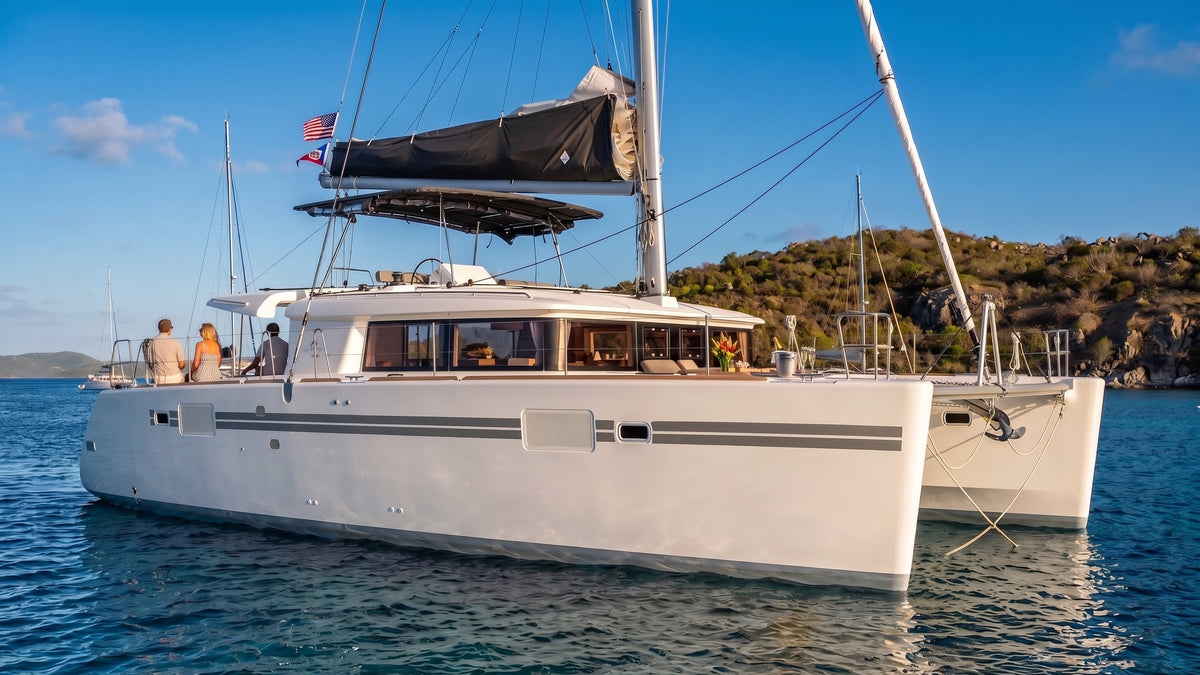
If you want to see how a sailing catamaran actually lays out for a group, look at the 45ft Lagoon Somewhere in our fleet. Its wide foredeck lounge and shaded cockpit show exactly what the sailing side offers.

Power Catamaran vs Sailing Catamaran Speed: What to Expect on the Water
Speed is the clearest divider. A power catamaran typically cruises between 10 and 18 knots, while a sailing catamaran makes 6 to 9 knots under sail and relies on its engines when the wind drops.
That gap changes what a day looks like. On a power cat, you can string together two or three anchorages in an afternoon and still be back at the dock before dark. On a sailing cat, you pick one or two stops and let the passage itself be the point.
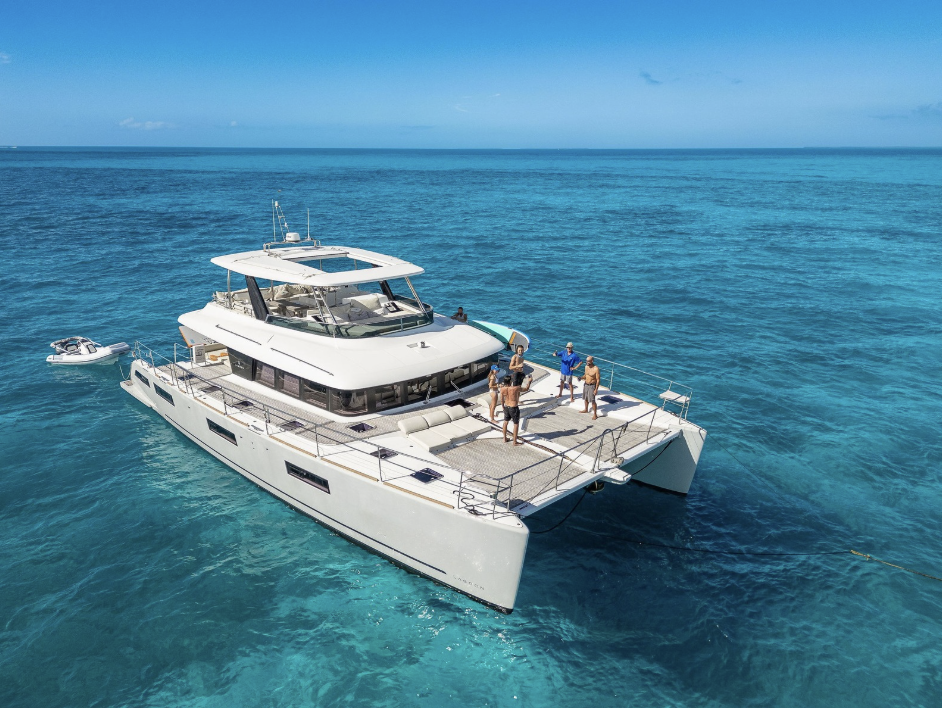
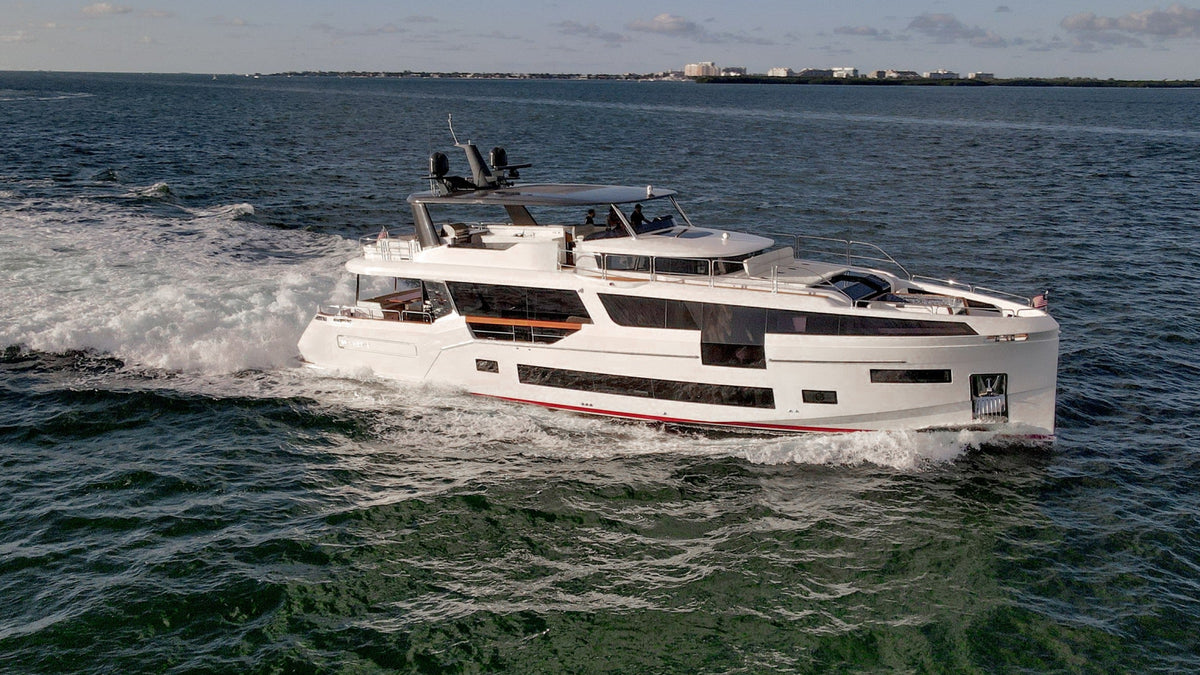
Our 70ft Sunreef Orca runs a relaxed 10-knot cruise with 20 knots on tap, which is enough to move a large group between sandbars without losing the afternoon. Our 53ft Leopard BruSea cruises at 17.5 knots, quick enough to reach Rose Island, Athol Island, and Green Cay from Nassau in a single half day.

The takeaway: if your itinerary has fixed timings, power wins. If the sailing is the experience, speed matters less.
Power Catamaran vs Sailing Catamaran Fuel Consumption and Running Costs
Fuel is where the running-cost conversation actually lives. Power catamarans burn more diesel because the engines do all the work. Sailing catamarans offset much of their propulsion with wind, so fuel exposure is lower on a breezy day.
Charter pricing reflects this. Fuel is a separate consideration on top of the base charter fee. Taxes, crew gratuities, and any provisioning sit outside the quoted charter price as well.
Watch out: guests often compare base rates and stop there. Our guide to yacht charter hidden costs explains the extras that sit outside the quoted rate. Ask what the quote includes before you decide, because a lower headline rate can carry more extras.
Why a Catamaran Charter for Families Comes Down to Stability
A catamaran charter for families succeeds or fails on stability, and this is where both hull types beat a monohull outright. Twin hulls do not roll the way a single hull does, so guests move around comfortably at anchor, drinks stay on the table, and anyone prone to seasickness has a far better day.
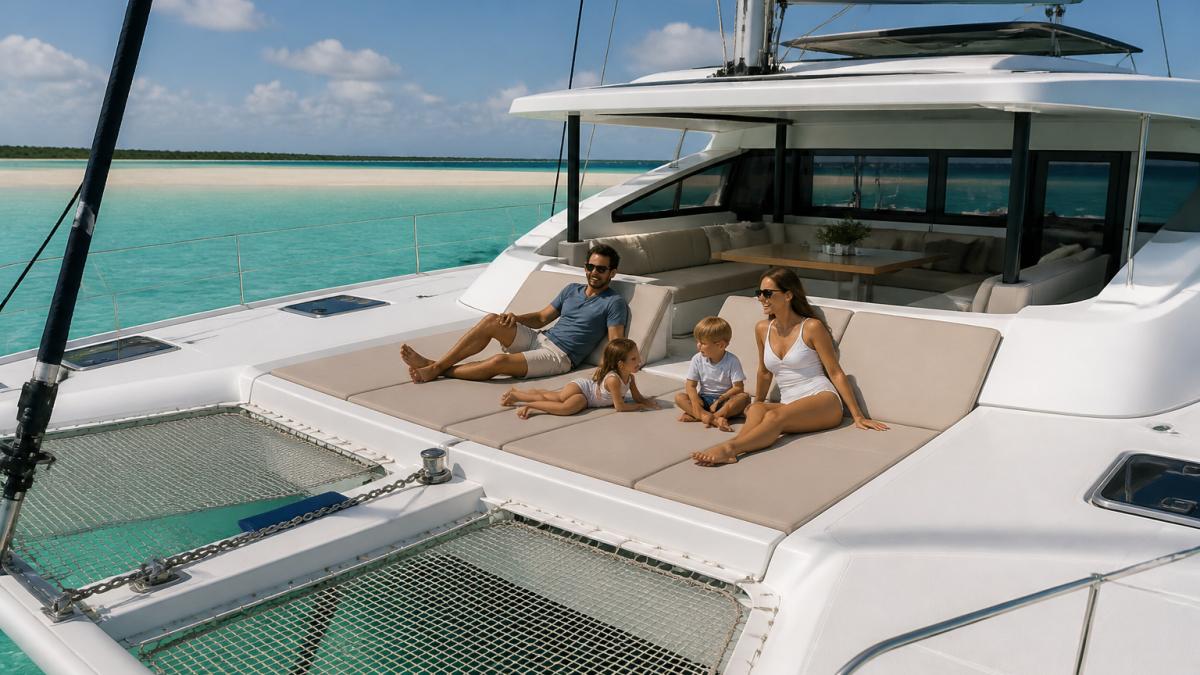
The layout matters as much as the motion. Flat decks mean no steep companionway to negotiate with a child in your arms. Wide cockpits keep the group together instead of splitting them across levels. On our 44ft Aquila Let It Be 3, the flybridge puts the helm beside a sun lounge and dining table, so the captain stays close to the family while everyone enjoys the open air.
For families with young children or mixed-age groups, stability is not a nice-to-have. It decides whether the day works.
Matching the Catamaran to the Itinerary: Sandbars, Reefs and Open Water
Itinerary should pick the boat, not the other way around. Shallow sandbars and reef stops favor a catamaran with a modest draft. Long open-water crossings favor range and engine redundancy.
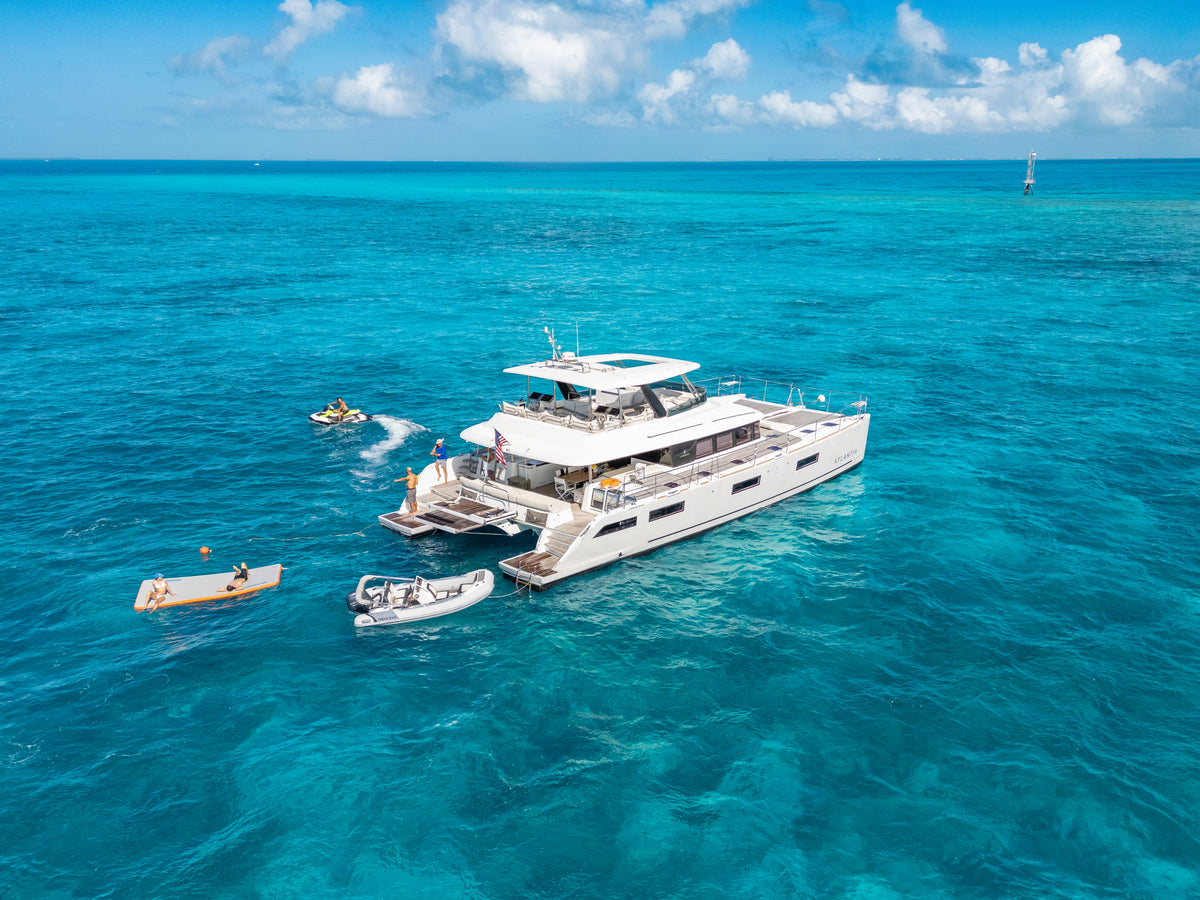
Around Miami, a day on Biscayne Bay or at Haulover Sandbar rarely needs speed. A relaxed power cat or a sailing cat both handle it well. Push toward the Bahamas, and the calculus shifts. Our 65ft Lagoon Atlantia carries the range for multi-day Exumas runs, with six en-suite staterooms and a full toy kit aboard. If the plan points toward the islands, you can explore catamaran charter Bahamas options and request a selection built around your dates and guests.
The pattern we see: short local days suit either type, while longer island itineraries reward power for range or a large sailing cat for comfort under way.
Get a Quote for Your Catamaran Charter
Choosing between the two comes down to your calendar and your group. If you need to cover ground and hit fixed timings, book power. If the sailing is the reason you are out there, book sail. Both give you the stability and deck space that make a catamaran charter worth it.
YCN Yachts operates a fleet across Miami and the Bahamas and connects clients to a network of more than 1,700 term-charter yachts worldwide. We handle yacht selection, crew coordination, and itinerary planning around your dates and guest list. Tell us how you want the day to feel, and we will match the hull type to it.
Request a tailored quote for your catamaran charter and we will come back with options that fit your group, your route, and your budget.
The hardest part of a catamaran charter is not choosing a hull type. It is finding a boat that is genuinely available for your dates with a crew that fits your group. YCN Yachts handles that search for you, with live availability across our Miami and Bahamas operation, access to roughly 1,700 yachts worldwide through our charter network, and a team that coordinates crew, marinas, and itineraries from first inquiry to final dock. Get started with YCN Yachts and charter the catamaran that fits your plan.
Frequently Asked Questions
What is the difference between a power catamaran and a sailing catamaran?
Both use twin hulls, so both are stable and wide. The difference is propulsion. A power catamaran runs on twin diesel engines and cruises at a steady speed regardless of conditions, which suits fixed itineraries and longer distances. A sailing catamaran travels under sail when the wind allows and uses its engines as backup, so the pace depends on the day. Space, deck layout and shallow draft are similar across both, which is why the choice usually comes down to how you want to spend the hours on the water.
Which is more comfortable for a family charter, a power or sailing catamaran?
Both are far more comfortable than a monohull of the same length because the twin hulls limit roll at anchor. Sailing catamarans add a gentle heel under sail, which some guests love and others notice. Power catamarans stay level the whole day, which tends to suit families with young children, older guests or anyone prone to seasickness. Look at deck space too: a wide aft cockpit, shaded seating and a swim platform that sits close to the water matter more for family days than the propulsion type.
Are power catamarans faster than sailing catamarans?
Yes, consistently. Power catamarans hold a set cruise speed all day, so a half-day charter can cover two or three anchorages without watching the clock. Sailing catamarans move well under good wind but slow down when it drops, and the captain may motor to keep to schedule. If your plan includes a long run to a distant reef or a tight timeline, a power catamaran keeps the itinerary predictable. If the point of the day is the sail itself, speed matters less.
Do sailing catamarans need wind to travel?
No. Every sailing catamaran in a charter fleet carries twin diesel engines for maneuvering in and out of the marina and for motoring when the wind is light. What changes is the experience: on a breezy day you travel under sail with the engines off, and on a still day the captain motors at a relaxed pace. Ask about the typical conditions for your dates before booking, since a sailing day is at its best when the forecast offers a steady breeze.













Dejar un comentario
Este sitio está protegido por hCaptcha y se aplican la Política de privacidad de hCaptcha y los Términos del servicio.